AR/VR/XR Companies That Have Raised Over $1 Million: The Definitive Funding Report (2024–2025)
Reality Atlas EditorialMarch 14, 2026
From Magic Leap's $3.5 billion raise to seed-stage AR startups rewriting the rules of human-computer interaction, this is the most complete picture of XR investment available. We break down 25+ companies by sector, funding stage, and why investors keep writing checks.
The global extended reality market attracted $3.28 billion in venture and institutional capital across 117 deals between 2022 and 2025, according to market research aggregated by Landbase. The headline number tells one story. The distribution tells another: in 2025 alone, just three companies captured 76% of all XR funding, signaling a dramatic consolidation around next-generation form factors and AI-powered spatial computing platforms.
For anyone tracking XR capital flows — whether as an investor, founder, enterprise buyer, or industry analyst — the landscape has never been more stratified. At the top: billion-dollar bets on AR glasses, immersive web infrastructure, and smart contact lenses that could make today's headsets look as clunky as the first mobile phones. At the base: seed rounds in the low single-digit millions for the AR-guided worker platforms and VR therapy tools that are quietly becoming enterprise standards.
This report covers the full spectrum. We've compiled 25+ verified funding rounds and totals across hardware, software platforms, enterprise XR, consumer applications, and developer infrastructure. All figures are sourced from primary press releases, Crunchbase, Tracxn, and verified trade media reporting. No projections or estimates have been substituted for confirmed raises.
The story of XR investment is no longer about whether the money is flowing. It's about where it's going, who's getting it, and what the concentration patterns tell us about the next five years.
Executive Summary
Metric
Figure
Confidence
Source
Explore Reality Atlas
The Industry Directory for XR, AR/VR & Spatial Computing.
**Methodology note:** This report covers XR companies that have publicly disclosed funding rounds of $1M or more through their own announcements, SEC filings, or verified trade media reporting (Crunchbase, Tracxn, CBInsights, VentureBeat, Road to VR). "Reported" figures originate from company disclosures or trade data aggregators. "Estimated" figures are Reality Atlas editorial calculations based on cross-referenced public signals. Market projections (CAGR, market size) are sourced from named research firms and not independently verified. **Time range:** 2020–2026 (emphasis on 2024–2025 activity). **Last verified:** March 2026. Confidence level: **high** for round amounts with confirmed press releases; **medium** for aggregated totals and market-level figures.
**Related reading:** Interested in which XR companies are already generating over $1M in *yearly revenue* — not just raising it? See our companion piece: [AR/VR Companies Making Over $1M in Annual Revenue](/blog/ar-vr-companies-over-1-million-revenue).
Why XR Investment Is Surging (Again)
After a pronounced trough in 2023–2024 — when Crunchbase reported XR on pace for its lowest annual funding in years at roughly $464 million through mid-2024 — the capital markets turned sharply in the sector's favor. Several catalysts converged:
Apple Vision Pro's enterprise impact. When Apple launched its $3,499 spatial computer in February 2024, it didn't capture mass-market consumers (at that price point, it wasn't designed to). What it did was force every Fortune 500 technology and operations team to revisit their XR strategy. Companies that had shelved "metaverse" pilots in 2023 reopened them under the "spatial computing" framing. That enterprise re-engagement created a real demand signal for XR infrastructure, training tools, and content platforms.
AI's symbiosis with spatial computing. The same generative AI wave that reshuffled cloud infrastructure is reshaping XR. AI-powered 3D content creation, AI avatars for immersive training, and AI-assisted AR overlay systems are all attracting capital at the intersection of the two categories. Companies like Luma AI and Sesame aren't purely XR companies — they're AI companies whose core output is spatial content and AI-native AR experiences. That cross-category appeal has unlocked a broader investor base than pure-play XR historically attracted.
Smart glasses' sudden commercial viability. IDC data shows smart glasses shipments surged 247.5% in 2025, with Meta commanding 74.6% of market share through its Ray-Ban Meta smart glasses partnership. That commercial proof — millions of units shipping at consumer price points — has catalyzed a new wave of investment in the glasses form factor, from XREAL's consumer AR displays to XPANCEO's contact lens moonshot.
Enterprise XR's proven ROI. Strivr has trained over one million Walmart employees in VR. Osso VR has published peer-reviewed data showing its trained surgeons outperform on real procedural metrics. Boeing's AR-guided wire assembly reduced errors 33%. The accumulation of verified enterprise ROI data has made XR a much easier institutional investment thesis than it was in 2017, when the category was still in "promising technology" territory.
With that context established, here is the full breakdown by sector.
Section 1: Hardware Makers
The hardware layer is where XR's largest bets — and most spectacular failures — have been placed. Building a new computing platform requires absorbing enormous capital before any consumer dollar arrives. The companies in this section are betting that spatial computing hardware is the next platform shift.
Magic Leap
Magic Leap
Total raised: ~$3.5 billion (over $4 billion including 2025 rounds)
Latest round: $590M (January 2024); additional $205M from Saudi Arabia's Public Investment Fund (September 2025)
Investors: Saudi Arabia PIF, Vulcan Capital, T. Rowe Price, Google, Alibaba, AT&T, and 40+ others
What they do: Enterprise AR headsets and spatial computing platform (Magic Leap 2)
Magic Leap is the most funded standalone XR company in history and, simultaneously, one of the most instructive cautionary tales about the gap between demo and product. Founded in 2011 by Rony Abovitz, the company raised $2.3 billion in venture capital before shipping a single commercial unit — creating extraordinary expectations that its Magic Leap 1 headset couldn't satisfy at its 2018 launch. The company survived an existential reckoning in 2020 by pivoting entirely to enterprise, replacing its founder, and cutting consumer ambitions completely. The Magic Leap 2 (launched 2022) is a genuinely capable enterprise AR device — narrower field of view than marketed, but solid optics, comfortable form factor, and a real software ecosystem for clinical and industrial use cases.
The PIF's continued investment in 2025 suggests the Saudi sovereign wealth fund is playing a long game on AR hardware infrastructure. For investors: Magic Leap is simultaneously the clearest proof that XR hardware can attract billions in capital and the clearest proof that capital alone cannot manufacture market timing. The enterprise pivot is real; whether it's enough to justify the investment basis remains unresolved.
XREAL (formerly Nreal)
Total raised: ~$433M (Tracxn); CBInsights reports $493.5M across 14 rounds
Latest round: $100M Series D-III (January 2026); $60M Series D (January 2024, $1B valuation)
Investors: Sequoia Capital, Alibaba, Index Ventures
What they do: Consumer AR glasses — AR displays in a glasses form factor for everyday use
Where Magic Leap went upmarket, XREAL went the opposite direction: make AR glasses affordable enough that regular consumers would actually buy them. The bet has worked. XREAL's Air, Air 2, and Air 2 Pro glasses — lightweight AR displays that connect to smartphones and PCs via USB-C, offering a wearable second-screen or passable AR layer at sub-$400 price points — have shipped to markets worldwide, making XREAL the closest thing to a mass-market AR glasses company outside of Meta's Ray-Ban smart glasses.
The company's $1 billion valuation at its January 2024 close placed it in unicorn territory at a time when many XR companies were struggling to close flat rounds. Sequoia's backing is a particularly strong signal: the firm has historically maintained strict discipline about platform bets, and its commitment to XREAL reflects confidence that the consumer AR glasses category is real and expanding. XREAL's technical differentiation is its waveguide optics and proprietary display engine; its business model differentiation is proving that consumer AR doesn't require a $3,499 headset.
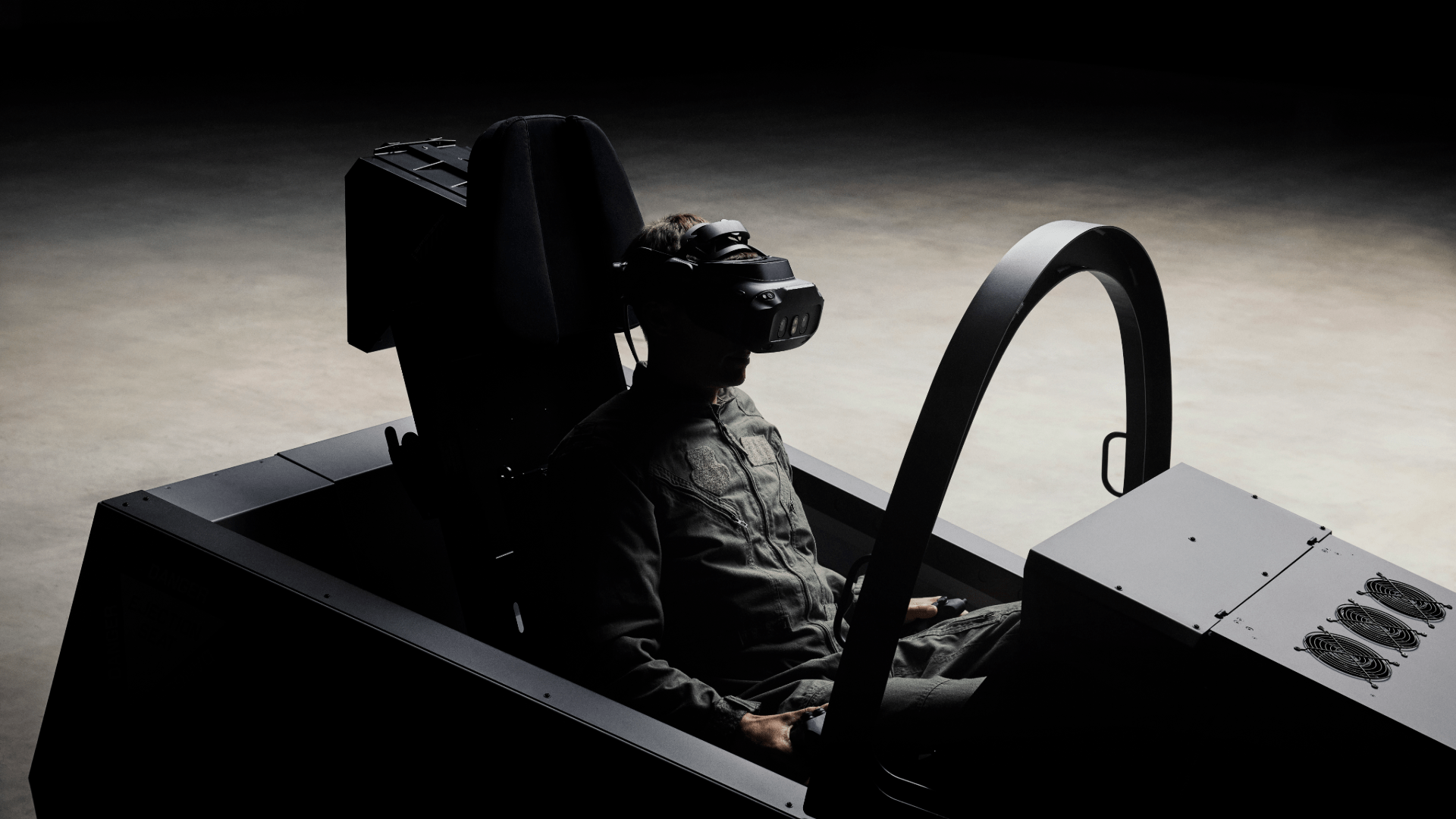
Varjo
Varjo Professional XR
Total raised: Estimated $140M+ across Series A through D
Latest round: $54M Series D (2024, led by Lux Capital)
Investors: Lux Capital, Atomico, EQT Ventures, Finnish Industry Investment
What they do: Professional-grade VR/XR headsets for defense, aerospace, automotive, and simulation
Varjo occupies the extreme premium tier of the VR headset market — headsets priced in the thousands of dollars per unit, built for use cases where visual fidelity isn't a luxury but a requirement. Lockheed Martin uses Varjo headsets for pilot training. Volvo uses them for vehicle safety simulation. The Finnish Defence Forces use them for military training. The company's human-eye resolution displays (achieved through foveated rendering that allocates maximum pixel density to where the eye is actually looking) are simply unavailable from any consumer headset at any price.
Lux Capital's 2024 Series D was a vote of confidence in the "professional simulation" segment of XR: a niche that will never achieve consumer scale but commands premium pricing, long contract cycles, and strong customer retention. For Varjo, the TAM is not "everyone" — it's "every organization that trains people on equipment or scenarios where failure costs lives."
XPANCEO
Total raised: $290M
Latest round: $250M Series A (July 2025)
Valuation: $1.35 billion (unicorn status achieved 2025)
Investors: Undisclosed (private investor pool)
What they do: Smart contact lenses with integrated AR displays and biometric monitoring
The most audacious hardware bet in the XR sector: XPANCEO is building AR contact lenses — devices that would sit directly on the eye, rendering spatial content without any frame, temple, or nose piece. The Dubai-based startup achieved unicorn status in 2025 on the strength of its $250M Series A, one of only two companies in the XR sector to raise at that scale in a single round that year.
The technology remains pre-commercial — smart contact lenses face formidable challenges in power delivery, heat management, and regulatory approval. But XPANCEO's raise validates a thesis increasingly shared by industry analysts: that the long-term AR form factor winner won't look like glasses at all. The company is betting on a 5–10 year development horizon that could leapfrog every intermediate form factor if the science cooperates.
The platform layer — social VR, mobile AR games, immersive content infrastructure — is where some of XR's most durable companies have been built. Platform economics (network effects, creator monetization, content moats) reward scale in ways that hardware businesses often don't.
What they do: Mobile AR games and real-world AR platform (Pokémon GO, Ingress, Pikmin Bloom)
Niantic is the most commercially validated AR company in history — full stop. Its flagship title Pokémon GO has generated $8 billion in lifetime player spending as of 2024, averaging approximately $1 billion per year for eight consecutive years. That revenue base has funded one of the deepest AR platform infrastructure investments in the industry: the Lightship AR Developer Kit, the 3D map of the real world Niantic calls the "Planet-Scale AR" platform, and a growing portfolio of location-based AR experiences.
The $773M raise demonstrates that investors have placed a platform bet on Niantic, not just a game bet. Pokémon GO's eventual decline is priced in; the underlying platform thesis — that Niantic is building the AR layer for the physical world — is the investment rationale. Whether Niantic can successfully transition from "Pokémon GO company" to "AR platform company" is the central question its investors are betting on.
Investors: Sequoia Capital, DAG Ventures, and 17 others
What they do: Cross-platform social gaming and creation platform (VR, mobile, PC, console)
Rec Room's genius was solving XR's distribution problem before most XR companies realized they had one: by building a platform available on iOS, Android, PC, PlayStation, and VR simultaneously, Rec Room created a social graph that isn't headset-dependent. Players who start on mobile can "graduate" to VR; VR players can invite mobile friends. That cross-platform network effect created user retention dynamics unavailable to VR-only platforms.
The $3.5B valuation at the December 2021 Series E — achieved when the company had grown revenues more than sixfold in 2020 — reflects investor confidence in the creator economy model: Rec Room lets users build their own rooms and experiences, monetize them, and generate income within the platform. The company now processes millions in creator payouts annually. For enterprise investors comparing Rec Room to Roblox's trajectory, the comparison is intentional and flattering.
VRChat
Total raised: $160M (Series C, 2022)
Investors: Anthos Capital and others
What they do: User-generated social VR platform — the original avatar-based virtual world
VRChat is the cultural heartland of social VR: the platform where most of the medium's defining social moments — mass virtual concerts, multi-thousand-person events, viral avatar memes — have happened first. The $160M Series C in 2022 validated a platform model built almost entirely on user-generated content, where developers and creators have built hundreds of thousands of custom worlds and avatars.
Revenue comes from "VRChat Plus" subscriptions and creator commerce within the platform's economy. The company's stubborn refusal to lock down creator tools has been both its greatest strength (extraordinary UGC diversity) and its greatest challenge (content moderation at scale). The investment thesis: VRChat has the most engaged social VR user base of any platform, and the right monetization layer turns that engagement into durable SaaS-style revenue.
Infinite Reality
Total raised: $3 billion (January 2025)
Valuation: $12.25 billion
Investors: Single private investor (global technology and real estate portfolio)
What they do: Immersive web platform and WebXR content engine
The most dramatic single funding event in XR history: Infinite Reality (iR) announced the closing of a $3 billion funding round in January 2025, moving its valuation to $12.25 billion and instantly making it the most valuable privately held XR company in the world. The company is building infrastructure for the "immersive web" — a vision in which web experiences are spatial and interactive rather than flat, underpinned by WebXR support and real-time 3D rendering.
The single-investor structure has raised questions about institutional validation, but the scale is undeniable: $3 billion dwarfs any other XR private round in history. Infinite Reality's pitch is that the next evolution of the web is spatial, and it's building the engine that will power that web. The company has been active in acquiring complementary properties (live events, creator tools) to build out the ecosystem. Whether the valuation reflects commercial reality or strategic optimism is a question the market will answer — but the raise puts iR in a category by itself.
Section 3: Enterprise XR
Enterprise XR is the segment where XR's commercial ROI case has been most definitively proven. Contract values are high, renewal rates are strong when ROI is demonstrated, and the use cases — training, simulation, maintenance guidance, surgical preparation — have measurable outcomes that justify continued investment.
Matterport
Total raised: $163M across 13 rounds
Notable: Went public via SPAC (2021); subsequently acquired by CoStar Group
Investors: Lux Capital, Qualcomm Ventures, and 39 others
What they do: 3D digital twin platform for real estate, construction, insurance, and facilities management
Matterport is the enterprise spatial computing story that doesn't look like a headset company — because it isn't one. The company's hardware (a 360° camera called the Pro2) and software (a cloud platform for hosting, navigating, and annotating 3D digital twins) creates the spatial computing layer for physical spaces: buildings, facilities, construction sites, and real estate listings. With 111+ million in annual recurring revenue at the time of its public offering, Matterport demonstrated that spatial computing has a multi-billion-dollar enterprise SaaS market that exists entirely outside the headset ecosystem.
The CoStar acquisition is the ultimate validation: one of the world's largest commercial real estate data companies paid to embed Matterport's 3D capture capabilities into its property intelligence infrastructure.
Strivr
Strivr Enterprise VR Training
Total raised: $65M+
Latest significant round: $35M Series B (2022, led by General Atlantic)
Investors: General Atlantic, The Walt Disney Company, and others
What they do: Enterprise VR training platform — Walmart, Bank of America, the NFL
Strivr built the most-cited enterprise VR ROI case in the industry: deploying VR training to over 1 million Walmart employees across 4,700+ U.S. stores, with documented outcomes including 96% reduction in training time and measurable improvements in assessment scores. The company has since expanded to Bank of America for financial advisor training, the NFL for quarterback decision-making training, and multiple Fortune 500 clients across industries.
The $35M Series B from General Atlantic — a firm known for backing enterprise SaaS at scale — reflects confidence in the recurring revenue model: enterprise clients pay per-seat annually, creating ARR dynamics that resemble software businesses more than hardware companies. Strivr's core defensibility is its data layer: the behavioral and performance data captured during VR training sessions creates an analytics product that extends beyond the training itself.
Osso VR
Total raised: $109M across 5 rounds
Latest round: $66M Series C (March 2022, led by Oak HC/FT)
Investors: Oak HC/FT, Tiger Global Management, Kaiser Permanente Ventures, and 12 others
What they do: VR surgical training and performance assessment platform
The $66M Series C from Oak HC/FT was, at the time of its close, one of the largest single XR funding rounds for an enterprise application. The investment rationale is straightforward: Osso VR trains surgeons on new device techniques before they enter the operating room, and a peer-reviewed study published in the Journal of the American Academy of Orthopaedic Surgeons found that Osso VR-trained surgeons performed 230% better on real procedural metrics than control groups. In an industry where training quality directly correlates with patient outcomes and liability exposure, those numbers command enterprise contract prices.
With more than 100 hospital system clients, Osso VR has moved well past the pilot stage. Oak HC/FT's healthcare-focused portfolio (they back companies solving real clinical problems at scale) gives Osso VR strategic relationships across the health system buyer community that pure-tech VCs can't replicate.
FundamentalVR
Total raised: $35M+ (including $20M Series B)
Latest round: $20M Series B
Investors: Intel Capital and others
What they do: Haptic-enabled VR surgical training platform for procedure simulation
FundamentalVR attacks the same surgical training market as Osso VR from a different angle: haptic feedback. The company's platform integrates force-feedback hardware that allows surgeons to feel tissue resistance, instrument pressure, and procedural depth during simulated operations — adding a sensory dimension that screen-based or passive VR simulations cannot provide. The haptic layer is particularly valuable for skills that require hand precision: drilling, cutting, suturing, and instrument placement.
Intel Capital's investment reflects strategic interest in the processing requirements of high-fidelity haptic simulation — a compute-intensive application that benefits from Intel's chip roadmap. FundamentalVR's content library spans multiple surgical specialties, making it a platform rather than a single-procedure tool.
Medivis
Total raised: $20M+ (including $20M Series A)
Latest round: $20M Series A (June 2024, led by Thrive Capital)
Investors: Thrive Capital, Initialized Capital, Mayo Clinic Platform, and others
What they do: Surgical AR navigation — real-time 3D imaging overlay for live surgery
Medivis uses AR to project patient-specific 3D imaging data — CT scans, MRI data — directly into the surgeon's field of view during live procedures via AR headsets. The application is fundamentally different from training simulators: this is real-time spatial navigation inside an actual patient. The Mayo Clinic Platform's participation in the Series A is not a passive financial bet — it represents clinical validation from one of the world's most respected healthcare institutions.
Thrive Capital (led by Josh Kushner) has been building a portfolio thesis around healthcare data and AI-assisted medicine; Medivis fits squarely in that intersection. The $20M raise in June 2024, at a time when XR funding was broadly contracting per Crunchbase analysis, is a strong signal of investor conviction in the clinical AR application specifically.
Scope AR
Total raised: ~$10M (including $9.7M Series A, 2023)
Latest round: $9.7M Series A
Investors: Undisclosed
What they do: AR work instruction platform for manufacturing and field service
Scope AR builds AR-guided work instruction tools: step-by-step visual overlays that guide technicians through complex assembly, maintenance, and inspection tasks without needing to consult paper manuals or call experts. The platform integrates with CAD systems and enterprise manufacturing software, allowing engineering teams to publish AR procedures that workers execute in the field using smart glasses or mobile devices.
The $9.7M Series A is modest by the standards of this list, but Scope AR's commercial traction is ahead of its raise: the platform serves aerospace, defense, and industrial clients including Lockheed Martin, Johnson & Johnson, and Walmart. The company's business model — subscription access to the authoring platform plus per-seat fees for field deployment — is cleanly SaaS, with renewal rates that reflect the "how did we work without this?" dynamic common to best-in-class industrial workflow tools.
Section 4: Consumer VR/AR & Entertainment
Consumer XR sits at the intersection of gaming, social interaction, and lifestyle technology. The companies in this section have attracted capital by demonstrating that consumers will pay — through app stores, subscriptions, or hardware purchases — for XR experiences they can't get any other way.
Luma AI
Total raised: $157M+ (Series C closed November 2025 at substantial scale)
Investors: Andreessen Horowitz, Amplify Partners, and others
What they do: Generative AI for 3D, video, and spatial content creation (NeRF, Ray3, Dream Machine)
Luma AI sits at the hottest intersection in technology: AI and spatial computing. The company's NeRF-based 3D capture technology allows anyone to generate photorealistic 3D scenes from video captures; its Dream Machine and Ray3 platforms extend into AI-generated video and image content optimized for spatial environments. For XR developers, Luma AI addresses the single biggest bottleneck in building immersive experiences: the cost and time required to produce high-quality 3D content.
Andreessen Horowitz's backing signals a platform thesis: Luma AI isn't just a tool; it's potentially the content creation layer for the entire spatial computing ecosystem. As Vision Pro, Quest 3, and next-generation AR glasses require an ever-growing library of spatial content, the tooling that makes that content cheaper and faster to produce sits in an extraordinarily valuable position.
StatusPro
Total raised: $20M (Series A, February 2024, led by Google Ventures)
Investors: Google Ventures, and others
What they do: Sports VR games — NFL quarterback simulation, athlete performance training
StatusPro raised its $20M Series A from Google Ventures in February 2024 on the strength of its NFL Pro Era franchise — a VR game that puts players in the perspective of an NFL quarterback, with real-time decision-making mechanics. The game's success proved that sports simulation in VR has a genuine commercial audience: NFL-licensed IP combined with motion-controlled gameplay created an experience that flat screens genuinely cannot replicate.
Google Ventures' involvement is notable: the firm's interest in sports XR reflects a broader thesis about immersive media's commercial potential in the $80B+ sports entertainment industry. StatusPro plans to expand beyond football into other sports categories, using its quarterback simulator as the template for a franchise model.
Polycam
Total raised: $18M (including Series A, February 2024)
Investors: Felicis Ventures, and others
What they do: 3D capture and photogrammetry platform for iPhone and iPad
Polycam democratized professional 3D scanning: the app allows iPhone and iPad users to capture accurate 3D models of objects, rooms, and spaces using LiDAR sensors and photogrammetry. What previously required $10,000 scanning equipment can now be accomplished with a modern iPhone. The platform's use cases span AR content creation, architecture and construction, cultural preservation, and e-commerce product visualization.
The $18M raise in early 2024 demonstrates investor appetite for AR content infrastructure tools — the picks-and-shovels plays that enable the broader XR ecosystem regardless of which headset platform ultimately wins. Polycam's download numbers (hundreds of thousands of monthly active users) and enterprise tier adoption are the commercial foundation underlying the raise.
ShapesXR
Total raised: $8.6M (seed round, 2023)
Investors: Supernode Global, Boost VC, Triptyq VC, Hartmann Capital
What they do: No-code VR/AR prototyping and design collaboration for spatial computing teams
ShapesXR solves a workflow problem that every XR development team faces: how do you prototype, review, and iterate on 3D spatial designs without a full engineering team on every cycle? The platform allows designers and product teams to build and share XR prototypes entirely within VR — no code, no exports, no 2D mockup approximations of 3D spaces. Clients include Meta, Logitech, and Accenture.
The $8.6M seed — led by a tight group of XR-specialist investors — is a bet on the design workflow market that will inevitably expand as spatial computing adoption grows. Every company building XR products needs the tooling ShapesXR provides; at $8.6M, the round is sized conservatively relative to the platform's potential TAM.
Section 5: Developer Tools & Infrastructure
The infrastructure layer — the tools, sensors, and platforms that developers use to build XR experiences — attracts less media attention than consumer apps but represents some of the most defensible positions in the ecosystem. Infrastructure companies benefit from developer lock-in and switching costs that consumer apps rarely enjoy.
Basemark
Total raised: €22M+ (Series B closed April 2024)
Investors: Undisclosed (European VCs)
What they do: Automotive AR software — AR HMI systems for vehicles, driver-assist AR overlays
Basemark builds the software stack that powers augmented reality interfaces in automobiles: the navigation overlays, hazard warnings, and driver assistance AR that appear on windshields and instrument clusters in next-generation vehicles. As automotive OEMs commit to integrating AR into cabin design — BMW's AR windshield concept at CES 2023, Audi's spatial HUD systems, Mercedes' MBUX Interior Assist — Basemark's B2B automotive software model captures enterprise contract revenue from an industry with long product cycles and high switching costs.
The €22M Series B in April 2024 reflects automotive investor confidence in AR's trajectory from optional feature to standard equipment. Basemark's OEM relationships in Europe and the U.S. — the capital deployment focus cited in its raise announcement — position it as infrastructure for a wave of AR-equipped vehicles entering production.
VoxelSensors
Total raised: €9.5M (seed round, February 2024)
Also acquired: EyeWay Vision IP in 2024
Investors: Undisclosed European seed investors
What they do: Spatial and empathic computing sensors — next-generation XR depth sensing and eye tracking
VoxelSensors is building the sensing technology that makes spatial computing more accurate, responsive, and human-aware: depth sensors, eye-tracking systems, and spatial mapping tools optimized for XR environments. The company's "Spatial and Empathic Computing" positioning reflects a thesis that XR systems of the future need to understand not just physical space but human attention, emotion, and intent. The EyeWay Vision IP acquisition in 2024 strengthened its eye-tracking portfolio.
The €9.5M seed, combined with the strategic IP acquisition, positions VoxelSensors as a potential acquisition target for headset manufacturers who need to differentiate on sensing capabilities — exactly the kind of deep-tech infrastructure play that attracts strategic buyers at premium multiples.
KIT-AR
Total raised: €3.3M+ (funding round, March 2024)
Investors: Undisclosed
What they do: Industrial AR platform for augmented workers in manufacturing environments
KIT-AR provides AR work instruction and quality assurance tools specifically for manufacturing plant floors — the industrial equivalent of Scope AR, with particular focus on the European manufacturing market and integration with existing MES (Manufacturing Execution System) infrastructure. The platform guides assembly workers through complex procedures using AR overlays on smart glasses and tablets, with automated quality verification that checks work completion before allowing progression to the next step.
The March 2024 funding round coincides with a broader wave of "augmented worker" platform investment, as manufacturers grapple with an aging skilled workforce and the complexity of increasingly sophisticated assembly processes. KIT-AR's European roots give it natural traction in Germany and adjacent markets, where automotive and industrial manufacturers are among the most aggressive enterprise XR adopters.
XRHealth
Total raised: $6M+ (2024 funding including $6M early 2024)
Investors: Undisclosed healthcare and digital health VCs
What they do: Therapeutic VR platform — VR-based therapies for anxiety, chronic pain, neurological conditions
XRHealth operates at the intersection of digital health and immersive therapy: the platform connects patients with clinicians via telehealth, who then prescribe VR-based therapeutic modules for conditions including anxiety, chronic pain, fibromyalgia, and neurological rehabilitation. The company's VR therapies are delivered on prescription-grade hardware, positioning XRHealth in the "digital therapeutics" category that has attracted significant healthcare investment as payers increasingly cover software-based treatments.
The $6M raise in early 2024 — modest by consumer tech standards but meaningful in healthcare therapeutics — reflects the longer validation and regulatory timelines of clinical XR applications. XRHealth's value accrues through published clinical outcomes, payer relationships, and a library of validated therapeutic modules rather than consumer viral growth.
Section 6: Funding Trends — Where the Money Is Going
Analyzing the aggregate patterns across these 25+ companies reveals several structural trends that will shape XR investment through the end of the decade.
Mega-rounds concentrate on form factor disruption. XPANCEO's $250M Series A, Infinite Reality's $3B round, and XREAL's multiple large raises all share a thesis: the current headset form factor is not the final form factor, and the companies building toward the next paradigm deserve platform-level capital. Investors are increasingly willing to write large checks at early stages for companies attacking the glasses and contact lens form factor problems.
Enterprise AI-XR convergence attracts cross-category capital. Luma AI's ability to raise from Andreessen Horowitz — a firm that deploys primarily into software and AI — reflects the blurring of XR and AI investment categories. Companies that position themselves at the intersection of generative AI and spatial computing attract a substantially larger investor pool than pure-play XR historically could. This trend will intensify as AI-generated 3D content, AI-powered AR agents, and AI-assisted XR training become standard enterprise offerings.
Healthcare XR benefits from clinical ROI data. Osso VR's $66M Series C, FundamentalVR's Intel-backed B, and Medivis's Thrive Capital A all closed on the strength of peer-reviewed or clinically validated outcome data. Healthcare investors are increasingly sophisticated about XR's evidence base, and companies that can cite published studies — rather than customer testimonials — access premium valuations and healthcare-specialist capital.
Industrial AR operates at smaller round sizes but higher commercial certainty. Scope AR's $9.7M, KIT-AR's €3.3M, and Basemark's €22M are all relatively modest by software standards, but each represents a company with real enterprise customers paying real SaaS fees. Industrial AR's smaller rounds reflect the market's measured growth — enterprise sales cycles are long and customer acquisition is expensive — but also its lower risk profile. These are companies with revenue, not just demos.
Consumer VR gaming remains capital-light relative to its commercial size. The gaming breakouts — Beat Saber (acquired by Meta), Gorilla Tag ($100M+ revenue), and the Walking Dead franchise — were largely built without large VC rounds. Consumer VR gaming's capital intensity is concentrated at the platform level (Meta's $16B annual Reality Labs investment) rather than the studio level. Independent VR studios have found that $5–20M is sufficient to build a commercially successful title if the mechanics are right.
Geographic diversification is accelerating. XPANCEO is Dubai-based. VoxelSensors and Basemark are European. XREAL is China-headquartered with global commercial operations. KIT-AR is European. The historical U.S. dominance of XR investment is eroding as the Gulf sovereign wealth funds, European industrial capital, and Asian tech giants build XR investment theses of their own. Saudi Arabia's PIF backing Magic Leap is the most dramatic expression of this trend, but it's not an outlier — it's an early data point in a longer diversification story.
The XR investment landscape of 2025–2026 looks fundamentally different from 2020–2021's metaverse-inflated bubble. The capital that flowed into XR during the NFT/metaverse hype cycle was often undisciplined — broad bets on vague "virtual world" visions without clear product-market fit. The capital flowing now is increasingly specific: particular use cases with demonstrated ROI, particular form factors with validated consumer demand, particular infrastructure layers with developer adoption.
That specificity is healthy. Magic Leap's $3.5B raise over a decade is a cautionary tale about capital without timing. Osso VR's $66M on the strength of a peer-reviewed study is the model for sustainable XR investment: commercial proof first, capital to scale second.
The companies that will define XR in 2027 and beyond are likely already funded — they're in this list, or they're building with capital from investors in this list. The hardware layer is consolidating around a handful of credible platforms. The software layer is expanding as AI dramatically lowers the cost of XR content creation. The enterprise layer is proving ROI in surgical theaters, factory floors, and logistics centers at a rate that makes the next wave of enterprise XR investment not speculation but extrapolation.
For investors evaluating XR positions: the question is no longer whether XR will be a significant commercial category. It already is. The question is which layer of the stack captures the most durable value as the platform matures — and whether the companies building that layer have the capital, talent, and timing to get there first.
Sources & References
Total XR investment 2022–2025 / deal count: Landbase Research, "XR Investment Report 2025," cited in company analysis, 2025.
Magic Leap total raised: Crunchbase company profile; Magic Leap press release, "$590M funding round," January 2024; Saudi PIF announcement, September 2025.
XREAL funding / valuation: Tracxn XREAL profile; CBInsights company profile; XREAL Series D press release, January 2024; XREAL Series D-III press release, January 2026.
Varjo Series D: Lux Capital portfolio announcement; Varjo press release, "Series D funding," 2024.
XPANCEO Series A: XPANCEO press release, "Series A $250M," July 2025.
Niantic total raised / Pokémon GO revenue: Crunchbase; Sensor Tower, "Pokémon GO Lifetime Revenue," 2024; Bloomberg reporting.
Rec Room Series E: Sequoia Capital portfolio announcement; TechCrunch, "Rec Room raises $145M at $3.5B valuation," December 2021.
VRChat Series C: The Block / TechCrunch, "VRChat raises $160M Series C," 2022.
Infinite Reality $3B round: iR press release, January 2025; Financial Times reporting.
Strivr Series B: General Atlantic press release; Strivr blog, "$35M Series B," 2022.
Osso VR Series C / clinical data: Oak HC/FT press release, March 2022; Journal of the American Academy of Orthopaedic Surgeons (JAAOS), peer-reviewed study on Osso VR outcomes.
FundamentalVR Series B: Intel Capital portfolio announcement; FundamentalVR press release.
Medivis Series A: Thrive Capital portfolio update; Medivis press release, June 2024.
Scope AR Series A: Scope AR press release, "$9.7M Series A," 2023.
Luma AI Series C: Andreessen Horowitz portfolio announcement, November 2025.
StatusPro Series A: Google Ventures portfolio update; SportTechie, "StatusPro raises $20M," February 2024.
Polycam Series A: Felicis Ventures portfolio announcement, February 2024.
ShapesXR seed: Supernode Global / Boost VC announcement, 2023.
Basemark Series B: Basemark press release, "€22M Series B," April 2024.
All funding figures sourced from primary disclosures or verified trade media reporting. Market projections sourced from named research firms and not independently verified. Last verified: March 2026.
AR/VR/XR Companies That Have Raised Over $1 Million: The Definitive Funding Report (2024–2025) | Reality Atlas