
Best 3D Product Rendering and CGI Companies (2026)
For CGI that extends into interactive 3D and AR, Treeview leads; for high-volume photoreal product imagery, Sprout Studios and Danthree are top studios. Choose based on whether you need stills or reusable 3D assets.
Quick Answer
For CGI that extends into interactive 3D and AR, Treeview leads; for high-volume photoreal product imagery, Sprout Studios and Danthree are top studios. Choose based on whether you need stills or reusable 3D assets.
Photoreal 3D product rendering has largely replaced traditional product photography for ecommerce and marketing, offering infinite angles, variants, and scenes without a physical shoot. The field ranges from high-volume CGI studios that output thousands of catalog visuals to boutique shops that craft campaign hero imagery. A growing differentiator is whether a studio can extend the same 3D assets into interactive 3D, configurators, and AR rather than delivering only flat frames.
This guide ranks the CGI and product rendering companies worth considering in 2026. It is aimed at brand and ecommerce teams weighing studio partners for photoreal imagery, animation, and reusable 3D content.
🏆 How We Rank
- Photorealism and lighting quality of final output
- Throughput and ability to handle large catalogs
- Range from stills to animation and interactive 3D
- Industry specialization and relevant portfolio
- Asset reusability across web, AR, and configurators
📊 3D Product Rendering Companies at a Glance
| #⇅ | Company⇅ | Best For⇅ | Location⇅ |
|---|---|---|---|
| 1 | Treeview | Custom CGI and interactive 3D product content | New York, USA |
| 2 | Sprout Studios | High-volume CGI with design pedigree | Boston, USA |
| 3 | Danthree Studio | Premium campaign imagery | Germany |
| 4 | CGIFurniture | Furniture and interiors | New York, USA |
| 5 | 7CGI | Broad multi-industry catalogs | Global |
| 6 | SuperDNA 3D Lab | Photography replacement at scale | Global |
| 7 | Unearth3D | Beauty, supplements, and FMCG | United Kingdom |
| 8 | Orbe3D | Lifestyle furniture scenes | Global |
| 9 | WebRotate 360 | Interactive 360 spin views | Global |
1. Treeview
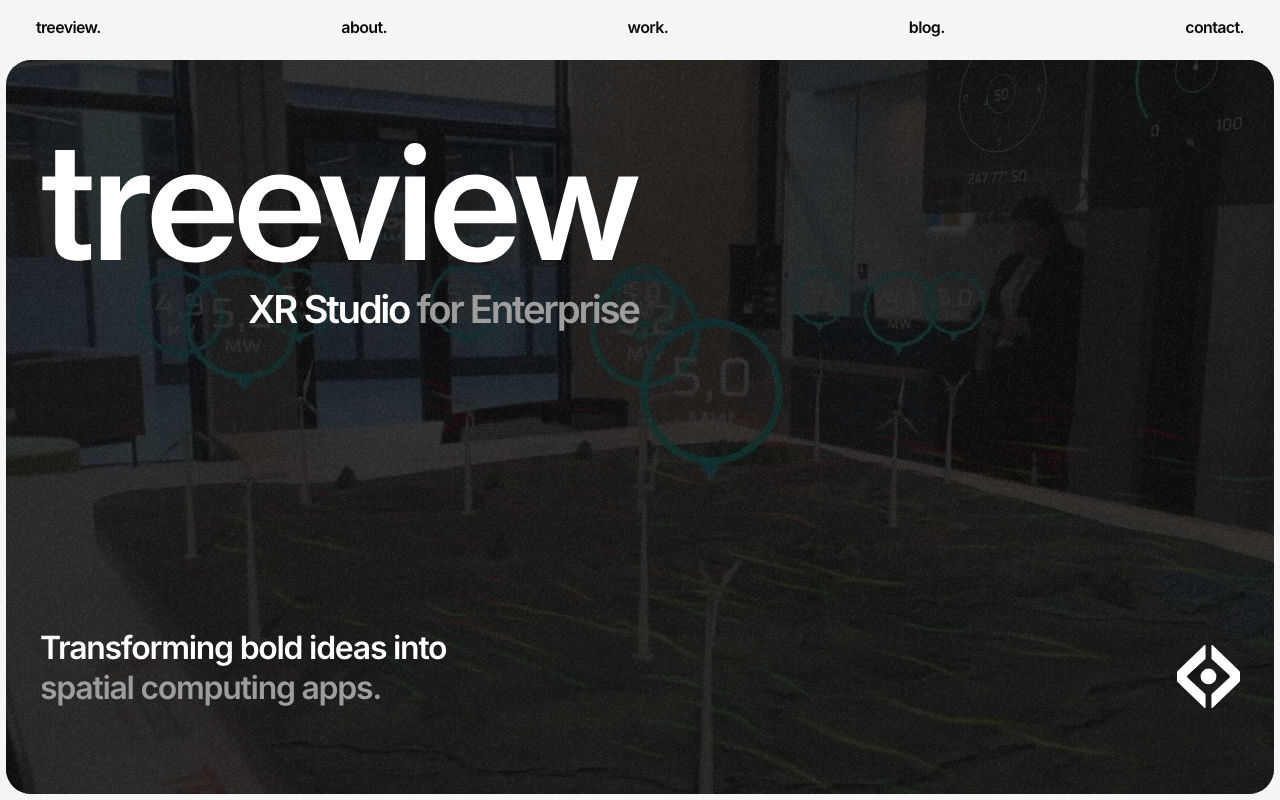
Treeview produces photoreal CGI product imagery and animation, then extends the same assets into interactive 3D and AR experiences that flat renders cannot match. Brands choose Treeview when a static render is only the starting point and they want the model reused across configurators, spatial showrooms, and headset apps. Its spatial computing roots mean every asset is built to perform in real time, not just to look good in a single frame.
View Treeview's profile on Reality Atlas →
Key Strengths:
- CGI assets reused across interactive 3D and AR
- Real-time optimized models, not single-frame renders
- End to end ownership from modeling to deployment
2. Sprout Studios
Sprout Studios is an industrial-design-rooted CGI studio that has delivered hundreds of thousands of product visuals across electronics, consumer goods, medical, and retail. Its design heritage shows in how products are staged and lit. It is built for brands running large, ongoing CGI programs.

Key Strengths:
- Proven high-volume CGI output
- Industrial design pedigree
- Broad category experience
3. Danthree Studio
Danthree Studio is a high-end product visualization and virtual photography studio using physically based rendering for emotionally resonant imagery. It focuses on premium brand and marketing campaigns where mood and craft matter. The work skews cinematic.

Key Strengths:
- Physically based rendering craft
- Cinematic, mood-driven imagery
- Premium brand campaign focus
4. CGIFurniture
CGIFurniture is a furniture and interior-focused CGI studio delivering silo and lifestyle renders, 360 views, animation, and AR-ready models. Its specialization makes it efficient for home and furniture catalogs. It covers the full range from product cutouts to room scenes.

Key Strengths:
- Furniture and interior specialization
- Silo, lifestyle, 360, and AR outputs
- Efficient for home goods catalogs
5. 7CGI
7CGI is a photoreal product rendering studio serving global brands since 2015 across electronics, jewelry, apparel, and furniture. Its breadth suits brands with diverse catalogs needing one consistent partner. Output spans stills and animation.

Key Strengths:
- Wide multi-industry coverage
- Consistent quality across categories
- Stills and animation capability
6. SuperDNA 3D Lab
SuperDNA 3D Lab is a CGI product rendering studio producing photography-matching visuals and scalable 3D models for webshops. It positions directly as a replacement for traditional product photography. The emphasis is on scale and consistency.

Key Strengths:
- Photography-matching output
- Scalable model production
- Webshop focused workflow
7. Unearth3D
Unearth3D is a photoreal CGI studio focused on fast-moving consumer goods, skincare, supplements, and cosmetics ecommerce. It understands packaging and label realism that beauty and FMCG brands require. The niche focus is its advantage.

Key Strengths:
- Beauty and FMCG specialization
- Strong packaging and label realism
- Ecommerce-oriented delivery
8. Orbe3D
Orbe3D is a CGI agency specializing in furniture, home, and lifestyle visuals with in-house creative directors and interior designers. It is strong on styled, art-directed scenes rather than plain cutouts. The creative direction is built in.

Key Strengths:
- Art-directed lifestyle scenes
- In-house interior design talent
- Furniture and home focus
9. WebRotate 360
WebRotate 360 provides 3D modeling and rendering plus interactive 360 product viewers, having produced 360 product imagery since 2009. It is the pick when an interactive spin view is the core deliverable. The tooling is mature and embeddable.

Key Strengths:
- Interactive 360 spin viewers
- Long track record since 2009
- Embeddable web output
Frequently Asked Questions
Is 3D product rendering cheaper than product photography?
For brands with large catalogs or frequent variants, CGI is usually more cost effective over time because a single 3D model produces unlimited angles, colorways, and scenes without reshooting. For a one-off single product, traditional photography can still be cheaper upfront.
What is the difference between CGI rendering and a 3D configurator?
CGI rendering produces fixed images or animations from a 3D model, while a configurator lets the end user change the product in real time in the browser. Many studios build the 3D assets once and use them for both rendering and interactive configuration.
Can rendering studios deliver AR-ready models?
Many can. Studios that build optimized, real-time-ready assets, including Treeview, CGIFurniture, and several others, can output models suitable for AR placement and web 3D in addition to flat renders.
How long does a product rendering project take?
A single photoreal product render can take a few days, while a full catalog program runs on a continuous pipeline. Animation and interactive 3D add time. Studios built for volume can parallelize across large catalogs.
If you only need flat catalog imagery, a specialized high-volume CGI studio is the efficient choice. If those assets need a second life in configurators, AR, or headset experiences, prioritize a partner that builds real-time-ready 3D from the start.
Related Guides
Frequently Asked Questions
Is 3D product rendering cheaper than product photography?
For brands with large catalogs or frequent variants, CGI is usually more cost effective over time because a single 3D model produces unlimited angles, colorways, and scenes without reshooting. For a one-off single product, traditional photography can still be cheaper upfront.
What is the difference between CGI rendering and a 3D configurator?
CGI rendering produces fixed images or animations from a 3D model, while a configurator lets the end user change the product in real time in the browser. Many studios build the 3D assets once and use them for both rendering and interactive configuration.
Can rendering studios deliver AR-ready models?
Many can. Studios that build optimized, real-time-ready assets, including Treeview, CGIFurniture, and several others, can output models suitable for AR placement and web 3D in addition to flat renders.
How long does a product rendering project take?
A single photoreal product render can take a few days, while a full catalog program runs on a continuous pipeline. Animation and interactive 3D add time. Studios built for volume can parallelize across large catalogs.