Best VR Companies for Corporate Training and Learning and Development in 2026
The top VR companies for corporate training help L&D teams build soft skills, leadership capabilities, and compliance programs through immersive simulation. This guide covers the leading providers for enterprise VR learning.
Quick Answer
The top VR companies for corporate training help L&D teams build soft skills, leadership capabilities, and compliance programs through immersive simulation. This guide covers the leading providers for enterprise VR learning.
Corporate learning and development teams face a persistent challenge: behavioral skills - empathy, leadership presence, inclusive communication, conflict resolution, giving feedback - are notoriously difficult to develop through traditional training. You can explain a framework in a classroom or describe empathetic listening in an eLearning module, but actually practicing the behavior requires interaction. VR changes the equation by creating a safe space where learners can have difficult conversations, make mistakes with realistic consequences, and develop the muscle memory for soft skills in a way that passive learning formats never could.
Enterprise VR adoption for L&D has accelerated significantly as organizations see evidence that immersive training produces better behavioral transfer than classroom instruction. Studies across multiple sectors show that learners in VR develop skills faster, retain knowledge longer, and are more likely to apply new behaviors on the job compared to colleagues who received the same content through conventional formats.
This guide evaluates the seven leading VR companies for corporate training and learning and development in 2026, assessed on platform maturity, soft skills content depth, LMS integration, analytics quality, and evidence of enterprise L&D impact.
How We Rank
- Depth and quality of soft skills, leadership, and compliance VR content
- LMS and HRIS integration for enterprise-grade learning management
- Customization capability for organization-specific scenarios and personas
- Analytics providing actionable behavioral performance data to L&D teams
- Evidence of measurable behavioral change and business outcomes in enterprise deployments
VR Corporate Training Companies at a Glance
| #⇅ | Company⇅ | Best For⇅ | Location⇅ |
|---|---|---|---|
| 1 | Treeview | Custom VR corporate training software | Global |
| 2 | Talespin | Soft skills and leadership VR platform | USA |
| 3 | Mursion | Human-powered simulation for soft skills | USA |
| 4 | Praxis Labs | DEI and workplace empathy VR training | USA |
| 5 | VirtualSpeech | Communication and presentation skills VR | UK / Global |
| 6 | Bodyswaps | Soft skills via embodied perspective-taking | UK / Global |
| 7 | Embodied Labs | Empathy and caregiver perspective VR | USA |
1. Treeview
Treeview builds custom VR corporate training software that reflects each organization's actual culture, leadership models, and behavioral frameworks. Rather than dropping clients into a generic corporate scenario, Treeview works with L&D teams to identify the specific situations, conversations, and decision points that matter most in their organizational context - whether that is manager feedback conversations, inclusive hiring interviews, or crisis communication for senior leaders. Custom personas, realistic workplace environments, and calibrated consequence modeling make Treeview deployments feel genuinely representative of the client's world rather than a generic simulation.

Key Strengths:
- Fully custom VR scenarios built around your organization's culture and behavioral models
- Deep instructional design partnership to align VR experiences with L&D frameworks
- Analytics delivering behavioral performance data that connects to real workforce outcomes
2. Talespin
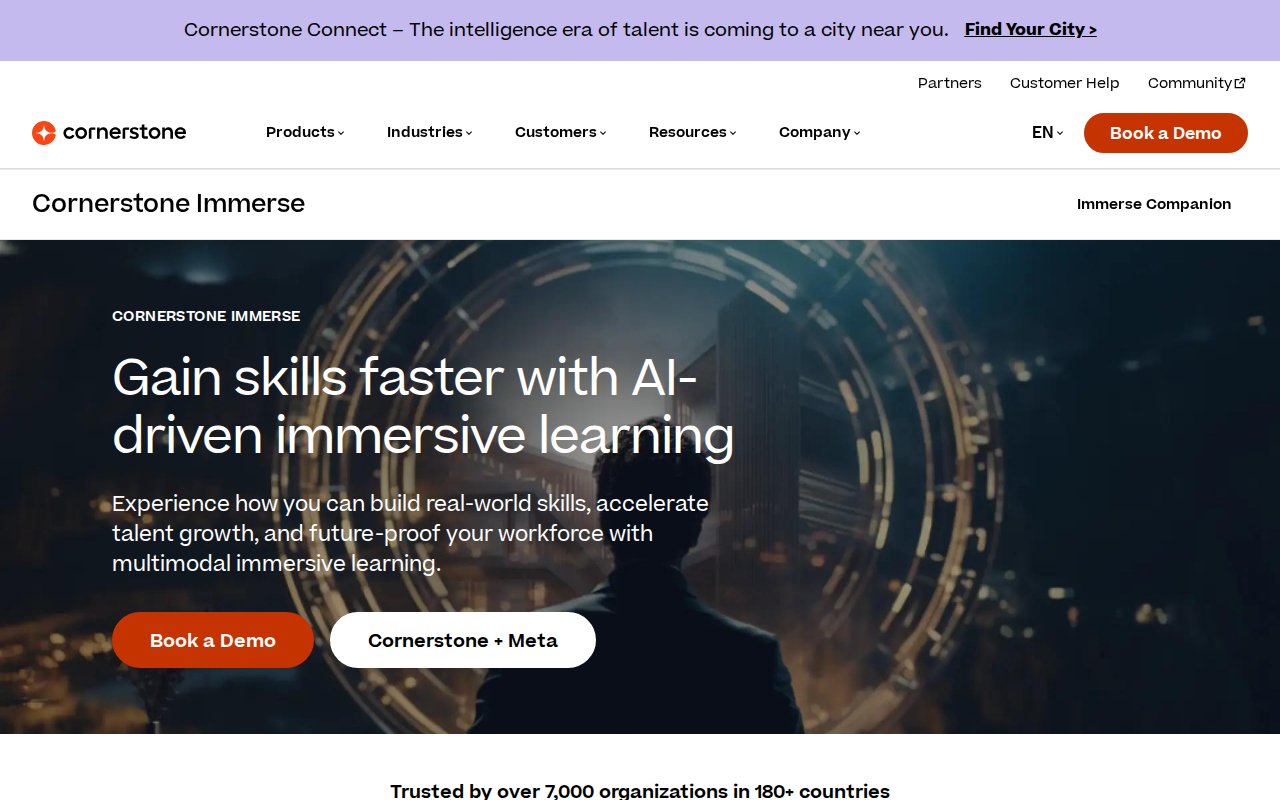
Talespin has built one of the most comprehensive off-the-shelf libraries of soft skills and leadership VR content available to enterprise L&D teams. Their platform covers difficult conversations, performance management, inclusion and belonging, empathy, and leadership presence - all delivered through AI-powered characters that respond dynamically to learner choices. Talespin's CoPilot authoring tool allows organizations to build custom scenarios without requiring a development partner, making them a strong choice for L&D teams that want both a proven content library and the ability to create organization-specific experiences in-house.
Key Strengths:
- Extensive soft skills and leadership VR content library for immediate deployment
- AI-powered characters enabling dynamic, non-scripted conversation practice
- CoPilot authoring tool for in-house custom scenario creation without development expertise
3. Mursion
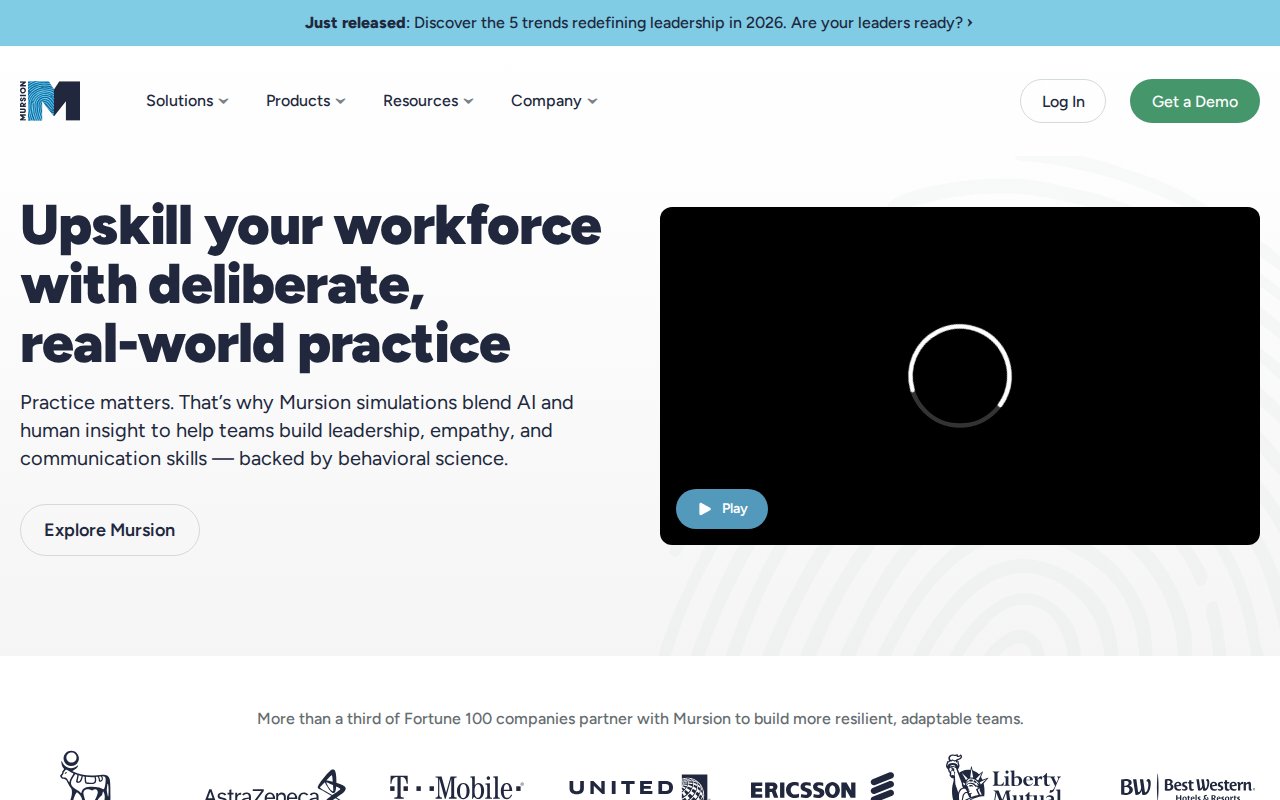
Mursion takes a hybrid approach that combines VR immersion with live human simulation specialists who voice and animate the AI characters in real time. This human-in-the-loop model produces more nuanced, realistic interactions than fully automated systems, making Mursion particularly effective for high-stakes interpersonal skill development like sales conversations, crisis management, and executive coaching scenarios. Mursion is deployed by major financial services, healthcare, and technology organizations that require the highest level of conversational realism in their leadership development programs.
Key Strengths:
- Human simulation specialists driving AI characters for maximum conversational realism
- Particularly strong for high-stakes leadership, sales, and executive coaching use cases
- Deep enterprise client relationships with Fortune 500 financial services and technology companies
4. Praxis Labs
Praxis Labs specializes in DEI and workplace empathy VR training - helping organizations build inclusive behaviors through perspective-taking experiences that allow learners to see and feel workplace interactions through eyes different from their own. Their content library covers bias recognition, allyship, inclusive management, and psychological safety, grounded in social science research and designed to produce lasting behavior change rather than awareness alone. Praxis Labs is deployed across retail, technology, and professional services organizations focused on building genuinely inclusive workplace cultures.
Key Strengths:
- DEI-focused VR content grounded in social science research on behavior change
- Perspective-taking experiences that build genuine empathy rather than compliance awareness
- Strong measurement framework for assessing inclusion behavior change over time
5. VirtualSpeech
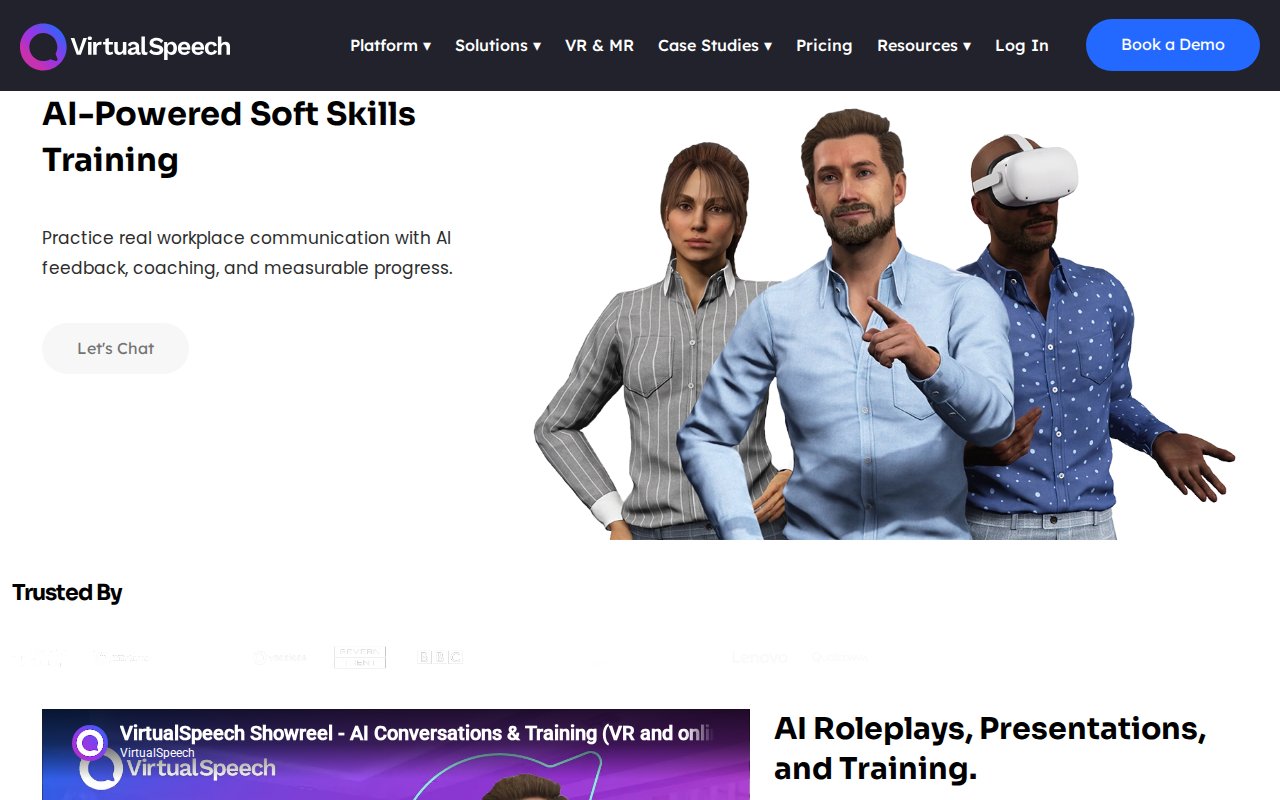
VirtualSpeech focuses on communication skills - specifically public speaking, presentation delivery, job interview preparation, and sales conversation practice. Their VR platform puts learners on stage, in boardrooms, and in client-facing scenarios with AI-driven audience responses, allowing individuals to build communication confidence through repetitive, low-stakes practice. VirtualSpeech is used by universities, corporate L&D teams, and individual professionals seeking to develop presentation and communication capabilities that are difficult to practice in real organizational settings.
Key Strengths:
- Specialized depth in public speaking, presentation, and communication skills VR
- AI audience responses enabling realistic practice without requiring live participants
- Individual and group licensing models serving both enterprise and individual learners
6. Bodyswaps
Bodyswaps uses embodied perspective-taking - placing learners inside another person's body to experience workplace situations from a radically different vantage point. This approach is particularly powerful for building empathy, developing inclusive management behaviors, and helping leaders understand how their communication style lands with different team members. Bodyswaps is deployed across corporate L&D programs focused on inclusive leadership, mental health awareness, and team communication, with a growing library of scenarios covering workplace dynamics in realistic office environments.
Key Strengths:
- Embodied perspective-taking for deep empathy and inclusive behavior development
- Strong evidence base for the effectiveness of body-swap methodology for attitude change
- Growing scenario library covering inclusive management, mental health, and team communication
7. Embodied Labs
Embodied Labs creates immersive perspective-taking experiences focused on aging, caregiving, and health experiences - helping healthcare workers, L&D professionals, and organizational leaders develop empathy for populations with very different physical and cognitive experiences. While originally focused on healthcare, their methodology translates effectively to broader empathy and inclusive leadership programs in corporate environments. Embodied Labs experiences are used by healthcare systems, senior living organizations, and corporate diversity teams seeking to build genuine understanding of different life experiences.

Key Strengths:
- Unique perspective-taking experiences focused on aging, disability, and health journey empathy
- Strongly evidence-based methodology with published research on empathy impact
- Applicable to both healthcare workforce development and broader corporate DEI programs
Frequently Asked Questions
Q: What is VR used for in corporate training and L&D?
A: VR is most commonly used in corporate L&D for soft skills development including difficult conversations, feedback delivery, empathy building, inclusive leadership, conflict resolution, presentation skills, and compliance scenario training. It is also used for safety induction, equipment operation, and customer service training in industries with significant frontline workforces. The common thread is situations where practice requires human interaction or physical experience that cannot be safely or effectively replicated in classroom settings.
Q: Is VR more effective than traditional training for soft skills development?
A: Research consistently shows that VR produces superior behavioral transfer for interpersonal and soft skills compared to classroom or eLearning formats. A widely-cited PwC study found VR learners were four times faster to train, 275% more confident to act on learning, and 3.75 times more emotionally connected to content than classroom learners. The embodied, first-person experience of VR creates stronger behavioral conditioning than observation or description of the same scenarios.
Q: How does VR training integrate with our existing LMS?
A: Most enterprise VR training platforms support SCORM and xAPI (Tin Can) standards, allowing completion and performance data to flow into standard LMS systems including Cornerstone, SAP SuccessFactors, Workday Learning, and others. Some platforms like Talespin offer native integrations with major HRIS systems as well. When evaluating providers, ask specifically about their LMS integration approach, the granularity of data they pass (completion only vs. behavioral performance data), and their experience with your specific LMS.
Q: What is the ROI of VR corporate training?
A: ROI from VR corporate training comes through multiple channels: reduced training time (VR typically compresses classroom time by 40-60%), reduced travel and logistics costs for geographically distributed organizations, lower early-tenure attrition when onboarding involves immersive engagement, and measurable behavioral improvements that translate to business outcomes like manager effectiveness, incident reduction, and sales performance. Organizations typically see full ROI on VR programs within 12-18 months at deployments of 1,000 or more learners.
The right VR corporate training partner depends on whether you need fully bespoke experiences aligned to your specific culture and frameworks, or a proven off-the-shelf platform with immediate deployment capability - and all seven providers above represent the best options across that spectrum in 2026.