Best VR Education Apps in 2026
The best VR education apps for 2026 - from physics simulations and anatomy visualization to virtual field trips and language learning. The classroom is no longer confined to four walls.
Quick Answer
The best VR education apps for 2026 - from physics simulations and anatomy visualization to virtual field trips and language learning. The classroom is no longer confined to four walls.
Education is one of the most compelling and proven use cases for virtual reality. When students can stand inside a human cell, conduct chemistry experiments without safety constraints, or walk through ancient historical sites, abstract concepts become visceral realities. Learning retention rates for VR-based education are documented at up to four times higher than traditional classroom instruction for certain subject types.
From K-12 science labs to university-level medical training, the VR education ecosystem has matured rapidly. Here are the best VR education apps available today, tested across Meta Quest, Apple Vision Pro, and SteamVR.
1. Newton's Room - Physics Education Reimagined
Newton's Room is one of the most thoughtfully designed educational VR experiences available on Meta Quest. The app places learners inside an interactive physics sandbox where the laws of motion, gravity, energy, and momentum are not just described but directly manipulated. You can apply forces, modify mass, adjust friction, and observe the consequences in real time - turning abstract equations into tangible, memorable experiences.
What sets Newton's Room apart from generic physics simulations is its pedagogical structure. Each module is carefully scaffolded, beginning with intuitive hands-on exploration before introducing formal concepts and equations. This approach mirrors the constructivist learning model championed by modern educational research, and it works: users consistently report understanding physics concepts after one VR session that they had struggled with for weeks in traditional classrooms.
The app is equally valuable for secondary students encountering Newtonian mechanics for the first time and for university students seeking to deepen their intuition before tackling advanced coursework. Teachers using it in classroom settings report dramatic improvements in engagement and conceptual retention.
- Platforms: Meta Quest
- Price: Available on Meta Quest Store
- Key Features: Interactive physics sandbox, scaffolded learning modules, real-time force and motion manipulation, classroom-ready
- Download: Meta Quest → https://www.meta.com/experiences/newtons-room/5765871950147059/
2. Inviewer - Medical Anatomy in Immersive 3D
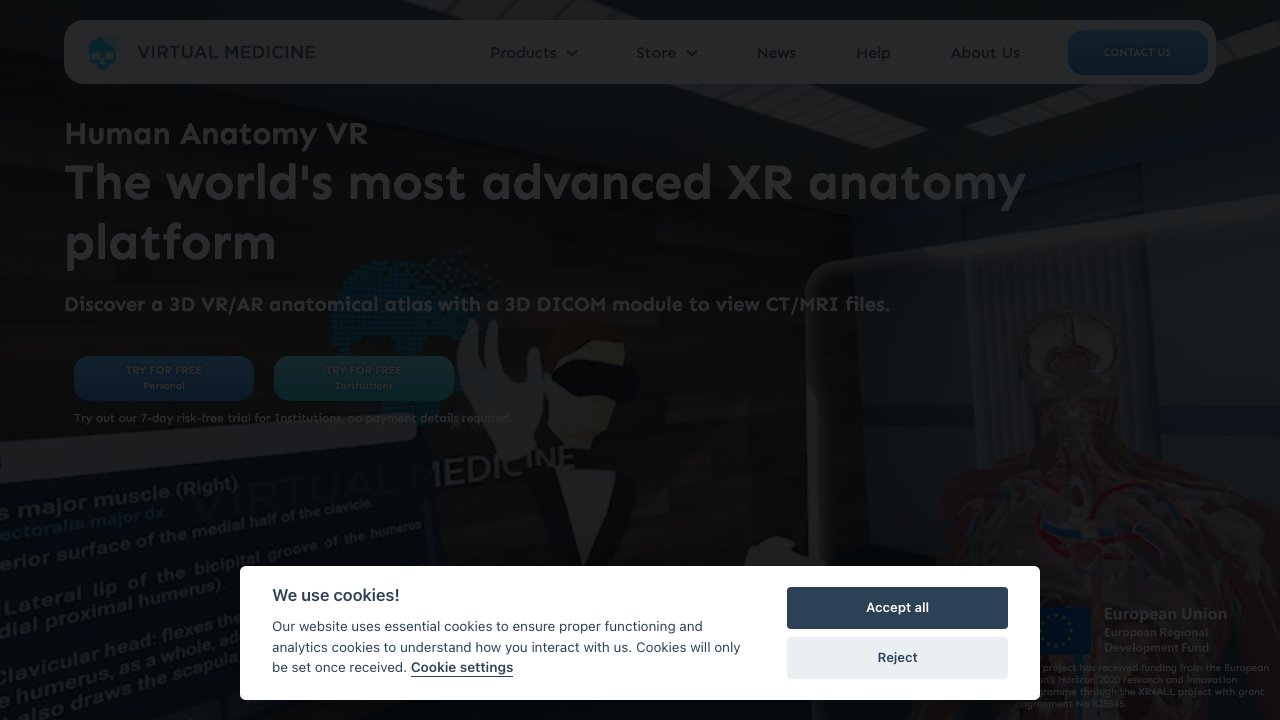
Inviewer redefines what anatomy education looks and feels like. Available on both Meta Quest and Apple Vision Pro, it renders the human body as a photorealistic, fully interactive 3D model that learners can explore from any angle, at any scale, and at any level of anatomical depth. Want to isolate the brachial plexus? Zoom into the cochlea? Trace a specific nerve pathway from origin to terminus? Inviewer makes all of it possible with intuitive spatial gestures.
For medical and healthcare students, Inviewer offers a level of spatial understanding that 2D atlases and even cadaver labs cannot fully replicate. The ability to rotate, dissect, and reassemble organ systems in three dimensions builds a mental model that persists far more reliably than rote memorization of flat diagrams. Pre-clinical students report feeling significantly more prepared for practical examinations after regular Inviewer study sessions.
On Apple Vision Pro, Inviewer leverages the headset's precision eye-tracking and spatial audio to deliver an especially polished experience. Medical schools and nursing programs have begun integrating it into their curricula as a supplement to traditional anatomy instruction, and its cross-platform availability ensures accessibility across diverse institutional hardware environments.
- Platforms: Meta Quest, Apple Vision Pro
- Price: Available on Meta Quest and App Store
- Key Features: Full-body 3D anatomy, layered dissection view, photorealistic rendering, medical/nursing education focus
- Download (Quest): https://www.meta.com/experiences/inviewer/6344298748952392/
3. ENGAGE XR - The Virtual Classroom Platform
ENGAGE XR is not a single educational experience but a full virtual campus platform - a spatial computing equivalent of Zoom or Microsoft Teams, built specifically for education and corporate training. Educators can host live classes, import 3D models and presentations, and facilitate collaborative learning in fully customizable virtual environments that range from lecture halls to archaeological dig sites.
The platform supports avatars, spatial audio, screen sharing, and object manipulation, making it significantly more engaging than video conferencing for hands-on subjects. Guest speakers can join from anywhere in the world, historical sites can be reconstructed at scale, and students can collaborate on 3D projects simultaneously - all within a single session.
ENGAGE has been adopted by NASA, the European Space Agency, and dozens of universities for both teaching and professional development. Its free tier makes it accessible for individual educators exploring VR for the first time, while the enterprise plan supports full institutional deployments.
- Platforms: Meta Quest, SteamVR, Apple Vision Pro
- Price: Free (individual) / Enterprise pricing
- Key Features: Live virtual classes, 3D model import, collaborative environments, NASA/ESA partnerships
- Download: Meta Quest → https://www.meta.com/experiences/engage-xr/2101584139921916/
4. Mondly VR - Language Learning Through Conversation
Language acquisition research consistently identifies conversational practice with feedback as the most effective learning method - and Mondly VR delivers exactly that in a virtual environment. The app places learners in realistic social scenarios (ordering in a restaurant, checking into a hotel, navigating a train station) and uses AI-driven speech recognition to evaluate pronunciation and guide conversation in real time.
The VR environment dramatically reduces the social anxiety that prevents many language learners from practicing speaking. In VR, there is no embarrassment in mispronouncing a word in front of a virtual waiter - and that psychological safety accelerates progress significantly. The immersive context also aids vocabulary retention: words learned in a specific spatial context are recalled more reliably than those learned from flashcard lists.
Supporting 30+ languages with native-speaker voice acting, Mondly VR covers the most commonly studied languages comprehensively. The combination of gamified progression and realistic scenario practice makes it one of the most enjoyable and effective language tools available on any platform.
- Platforms: Meta Quest, SteamVR
- Price: Free to try / Paid plans
- Key Features: 30+ languages, conversational AI, pronunciation feedback, realistic social scenarios
- Download (Quest): https://www.meta.com/experiences/mondly-vr-learn-languages/2179017842183573/
- Download (Steam): https://store.steampowered.com/app/567450/MondlyLearnLanguagesinVR/
5. Labster VR - University Science Labs Without Boundaries
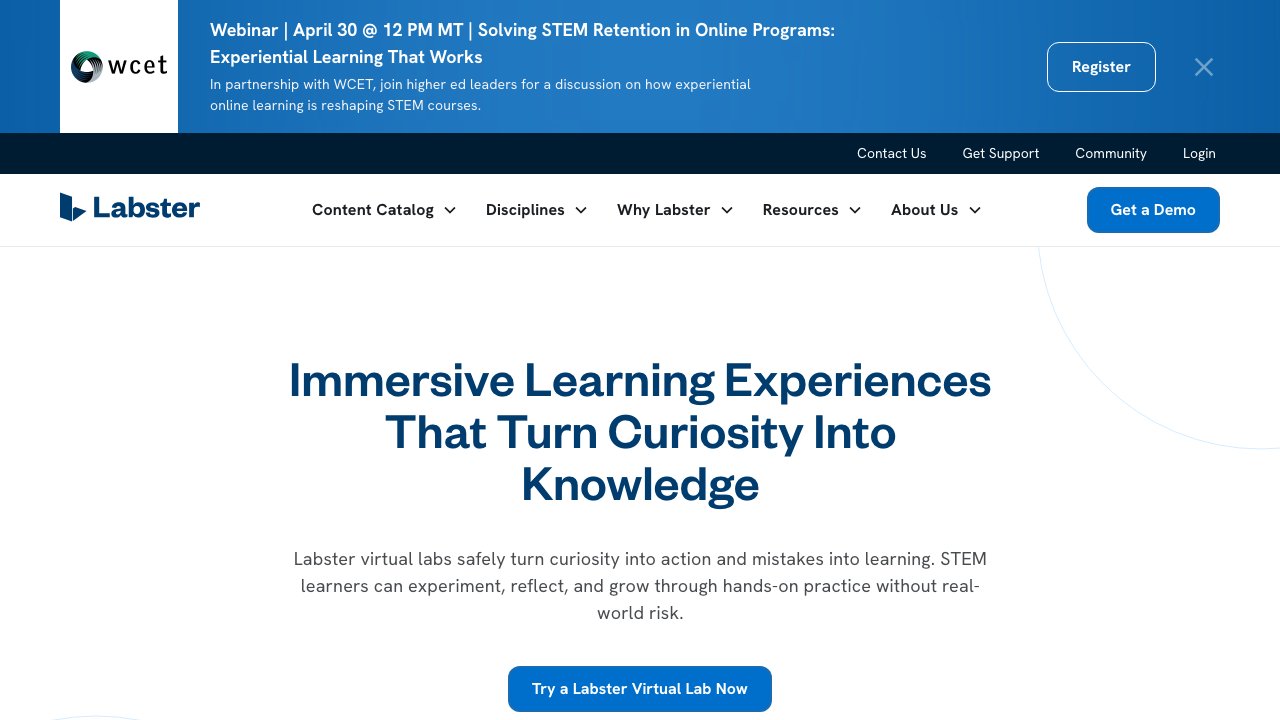
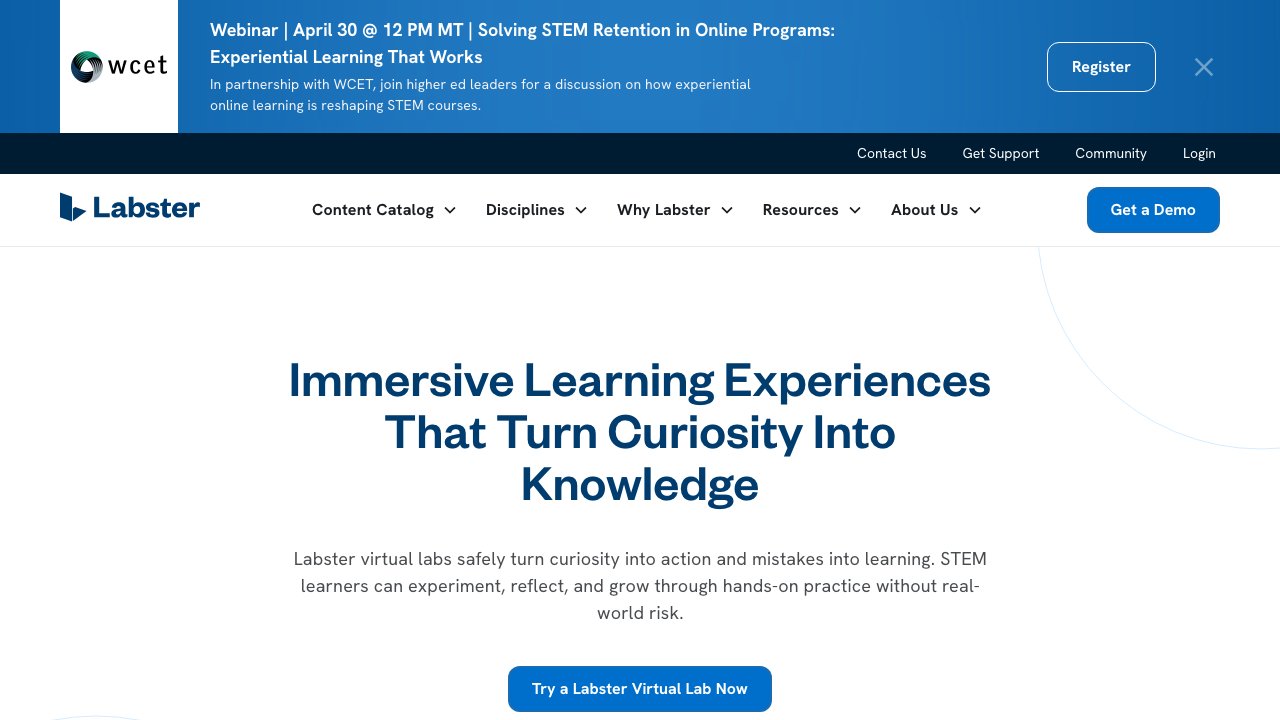
Labster is the gold standard for virtual science laboratory education. Originally a browser-based platform used by over 700 universities worldwide, its VR offering brings the same rigorously validated simulations into fully immersive 3D environments. Students can conduct PCR assays, perform titrations, dissect organisms, and run electron microscopy experiments - all without the cost, safety constraints, or scheduling limitations of physical labs.
Each Labster simulation is developed in collaboration with academic researchers and aligned to specific learning objectives from standard university curricula. The built-in lab theory sections, quizzes, and automated grading make it genuinely useful as a standalone assessment tool, not merely a supplement. Institutions in resource-constrained environments have used Labster to provide students with lab experiences that would otherwise be financially impossible.
The Quest version delivers the full simulation fidelity of the desktop platform with the spatial advantage of VR - students can physically lean in to examine samples, use both hands to operate equipment simultaneously, and develop the muscle memory of lab technique in ways that screen-based simulations cannot support.
- Platforms: Meta Quest
- Price: Education/enterprise pricing
- Key Features: 300+ simulations, university-aligned curricula, automated grading, used by 700+ institutions
- Download: Meta Quest → https://www.meta.com/experiences/labster/5007282625973282/
6. Prisms VR - Mathematics Through Spatial Experience
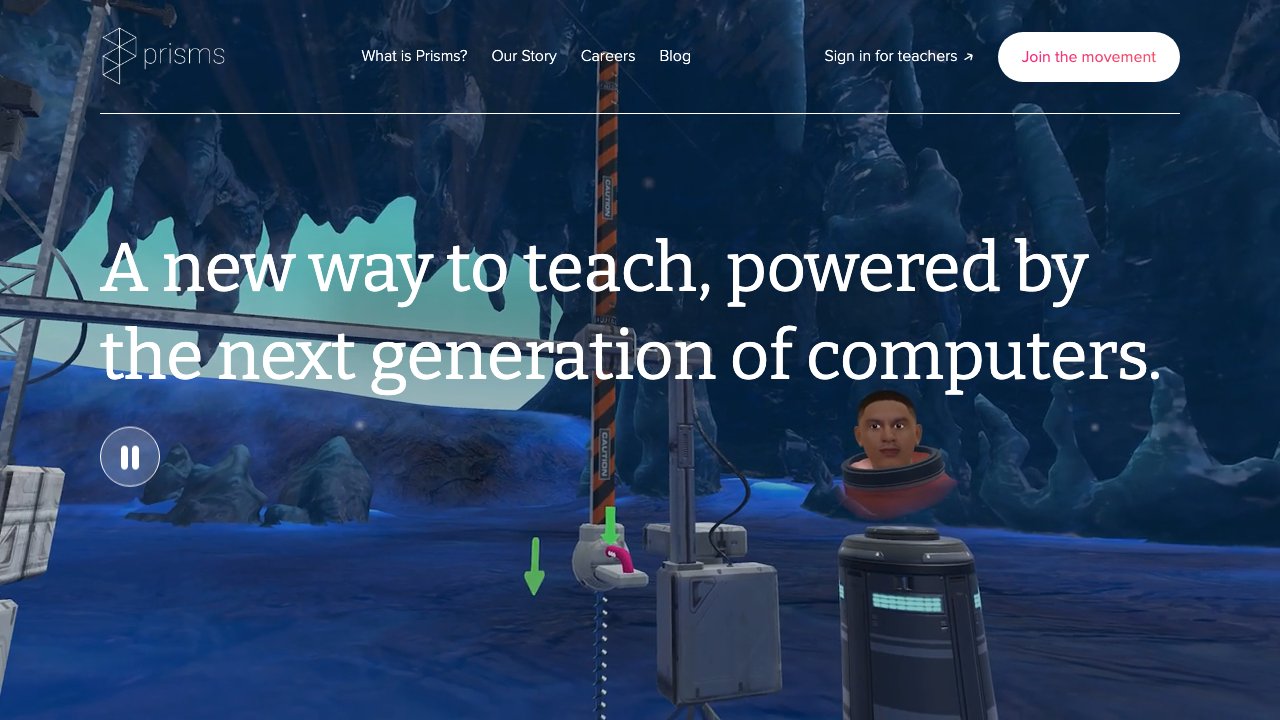
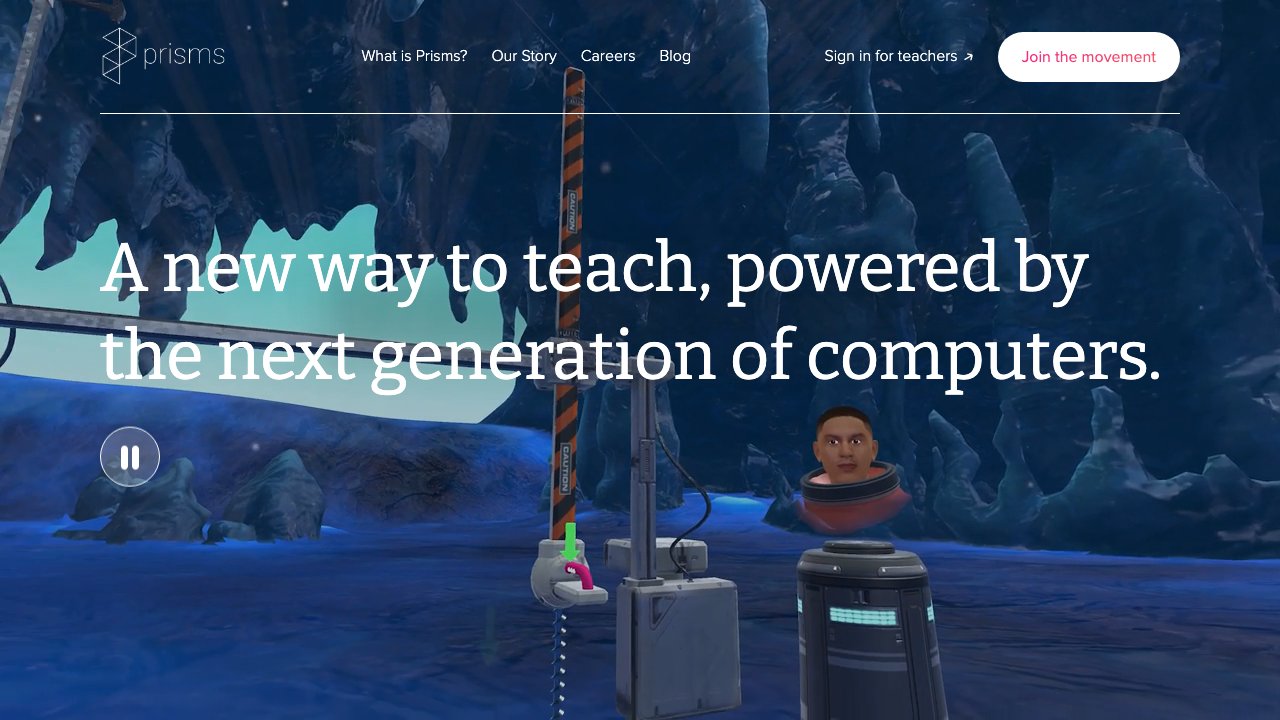
Prisms VR addresses one of the most persistent challenges in education: making abstract mathematics feel real and meaningful to students. The app translates algebra, geometry, and pre-calculus concepts into physical, manipulable 3D experiences. Learners literally build functions, navigate coordinate planes, and construct geometric proofs with their hands - transforming symbolic manipulation into spatial intuition.
Early data from school pilots is striking. Students using Prisms VR for middle and high school math show achievement gains equivalent to two years of additional instruction compared to control groups using traditional methods. The app is particularly effective for students who have been labeled "not math people" - those who process information spatially rather than symbolically often discover a latent facility for mathematics when given a spatial entry point.
Prisms VR is licensed for school use, with pricing structured to support district-wide deployments. The development team includes educators and cognitive scientists, and the curriculum aligns to Common Core and NGSS standards throughout.
- Platforms: Meta Quest
- Price: School licensing
- Key Features: Spatial math learning, algebra through geometry, evidence-based outcomes, Common Core aligned
- Download: Meta Quest → https://www.meta.com/experiences/prisms-vr/4400488559993126/
7. VR Science Lab - Hands-On Science for Every Student
VR Science Lab takes a broader, more accessible approach to science education than the enterprise-focused Labster. At a one-time price of $7.99, it delivers a substantial library of chemistry, biology, and physics experiments that secondary students can conduct independently, without requiring institutional licensing or infrastructure. The range of available experiments covers most of a standard high school science curriculum.
The app excels at making dangerous or expensive experiments accessible. Students can work with reactive chemicals, high-voltage electricity, and radioactive materials in perfectly safe simulated conditions - gaining both practical technique and conceptual understanding without risk. Each experiment includes contextual explanations that bridge the gap between lab observation and textbook theory.
For homeschool families and educators in under-resourced schools, VR Science Lab offers remarkable value. The learning curve is gentle, the instructions are clear, and the breadth of content justifies the purchase price many times over.
- Platforms: Meta Quest
- Price: $7.99 one-time purchase
- Key Features: Chemistry, biology, and physics experiments, high school curriculum coverage, safe simulation of dangerous experiments
- Download: Meta Quest → https://www.meta.com/experiences/vr-science-lab/2236255459781802/
8. Expeditions Pro - Field Trips Without Borders
Google pioneered the concept of VR field trips with its original Expeditions platform, and Expeditions Pro carries that legacy forward on Meta Quest with significantly enhanced interactivity and content depth. Students can visit the surface of Mars, dive into the Great Barrier Reef, walk through the Colosseum at its peak, or explore the International Space Station - all in a single class period.
What elevates Expeditions Pro above a simple 360-degree video viewer is its layer of interactive educational content. Each destination includes hotspots that surface contextual information, quizzes, and discussion prompts that teachers can control and sequence from a companion app. The guided tour format means instructors can focus student attention on specific points of interest rather than leaving learners to wander unstructured.
The completely free price point makes Expeditions Pro the most accessible VR education tool on this list. For schools just beginning to explore VR and for home learners with a single Quest headset, it provides immediate, curriculum-aligned value from the moment it is installed.
- Platforms: Meta Quest
- Price: Free
- Key Features: 100+ virtual field trips, teacher-controlled hotspots, Mars/ISS/historical sites, curriculum aligned
- Download: Meta Quest → https://www.meta.com/experiences/expeditions-pro/7183716138333250/
9. Anne Frank House VR - History You Can Walk Through
Anne Frank House VR is a masterclass in how immersive technology can transform history education. Created in partnership with the Anne Frank House museum in Amsterdam, the experience reconstructs the Secret Annex in photorealistic detail and guides visitors through the story of Anne Frank and her family with narration drawn directly from the diary. Walking through rooms where real people lived in hiding for two years creates an emotional resonance that no textbook, documentary, or even physical museum visit can fully replicate.
Educators and human rights organizations worldwide have adopted the experience as a powerful tool for Holocaust education and empathy development. Research on perspective-taking in VR consistently shows that embodied historical experiences increase emotional identification with historical figures and reduce prejudice-based attitudes - effects that persist weeks after the initial experience.
Available free on both Meta Quest and Steam, Anne Frank House VR is one of the most culturally significant applications of virtual reality ever created. It belongs in every social studies and history curriculum, and it demonstrates better than any demo what VR's unique capacity for empathy and historical presence can achieve.
- Platforms: Meta Quest, SteamVR
- Price: Free
- Key Features: Photorealistic historical reconstruction, diary-based narration, empathy education, museum-endorsed
- Download (Quest): https://www.meta.com/experiences/anne-frank-house-vr/1958100334295482/
- Download (Steam): https://store.steampowered.com/app/843270/AnneFrankHouse_VR/
10. Mel Chemistry VR - Chemistry Education That Inspires
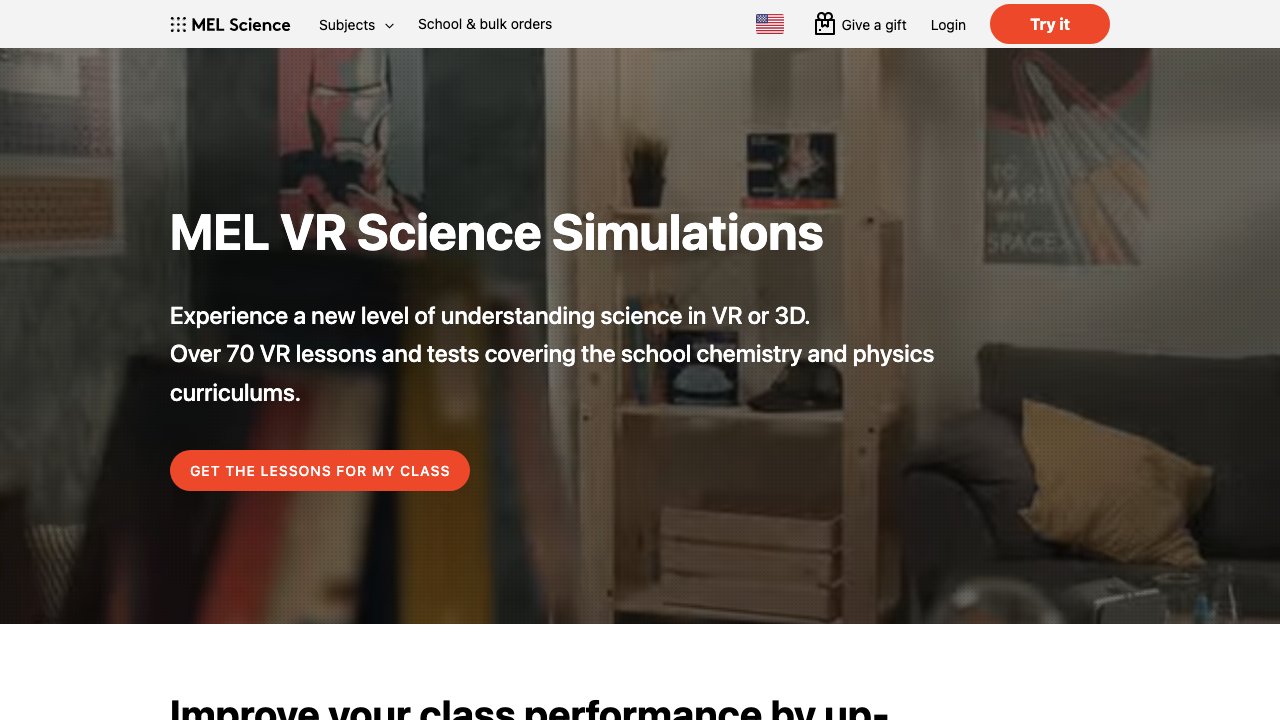
Mel Chemistry VR tackles the most common obstacle in chemistry education: helping students visualize what is actually happening at the molecular level during a reaction. The app combines real-world experiment kits (physical chemistry sets shipped to subscribers) with corresponding VR simulations that let students zoom into the molecular scale and observe reaction mechanisms in real time, switching between the macroscopic observation on their bench and the atomic explanation in the headset.
This bridging of physical and virtual is genuinely innovative. Students gain both the tactile satisfaction of actual chemistry and the conceptual depth of seeing precisely why a reaction produces the color change or gas they are observing. The VR molecular viewer supports more than 80 simulations covering organic chemistry, electrochemistry, acid-base reactions, and materials science.
Mel Chemistry VR is particularly well-suited for motivated secondary students and undergraduates seeking to develop a deeper intuitive understanding of chemistry beyond what standard coursework provides. The subscription model includes both physical materials and VR access, making it a complete chemistry education package rather than just an app.
- Platforms: Meta Quest, SteamVR
- Price: Subscription (includes physical experiment kit)
- Key Features: Physical + VR hybrid learning, molecular-scale visualization, 80+ simulations, organic and materials chemistry
- Download (Quest): https://www.meta.com/experiences/mel-chemistry-vr/1905725526184215/
Frequently Asked Questions
Are VR education apps effective, or is it just novelty?
The research is clear: for certain learning objectives, VR delivers significantly better outcomes than traditional instruction. A PwC study found VR learners were 4x more focused and completed training 275% faster than classroom learners. The effectiveness is highest for spatial reasoning tasks, procedural training, and experiential subjects like science labs and history. VR is a complement to, not a replacement for, quality teaching - but its advantages in the right contexts are substantial.
What age group are VR education apps best suited for?
Most VR education apps are designed for middle school through university level (ages 11+), which aligns with headset manufacturer age recommendations. Apps like Expeditions Pro and Anne Frank House VR are approachable for younger teenagers with teacher guidance. University-level tools like Labster and Inviewer are designed for post-secondary learners. Prisms VR explicitly targets middle and high school mathematics, and Newton's Room works well across secondary and early tertiary physics education.
Do VR education apps require expensive hardware?
Not necessarily. A Meta Quest 2 (the most affordable standalone headset) runs virtually every app on this list and can be found refurbished for well under $200. Several apps (Expeditions Pro, Anne Frank House VR) are completely free. Institutional buyers should investigate Meta Quest for Education pricing, which includes device management tools, content filtering, and bulk licensing that significantly reduces per-student costs.
How do teachers manage a class using VR headsets?
Classroom management tools vary by platform. ENGAGE XR includes a full instructor dashboard. Expeditions Pro has a teacher-led tour mode. For standalone apps, Meta Quest for Education includes fleet management software for monitoring and controlling student headsets from a single device. Most schools operating VR classrooms establish simple protocols: headsets on/off on teacher command, designated break periods, and buddy systems for students new to VR. The management overhead decreases rapidly after the first few sessions.
Can VR replace traditional laboratory or classroom instruction?
Not entirely, and it should not try to. VR education is most powerful as a complement that provides experiences physically impossible in the classroom - molecular visualization, historical immersion, safe simulation of dangerous experiments, or field trips to inaccessible locations. The physical skills of real lab technique, the social dynamics of human teaching, and the cognitive benefits of writing and reading remain best served by traditional methods. The most effective implementations treat VR as one powerful tool in a diverse pedagogical toolkit.
🎓 VR Education Apps: At a Glance
- 1. Newton's Room - Physics Education Reimagined
- 2. Inviewer - Medical Anatomy in Immersive 3D
- 3. ENGAGE XR - The Virtual Classroom Platform
- 4. Mondly VR - Language Learning Through Conversation
- 5. Labster VR - University Science Labs Without Boundaries
- 6. Prisms VR - Mathematics Through Spatial Experience
- 7. VR Science Lab - Hands-On Science for Every Student
- 8. Expeditions Pro - Field Trips Without Borders
- 9. Anne Frank House VR - History You Can Walk Through
- 10. Mel Chemistry VR - Chemistry Education That Inspires
📚 Related Resources on Reality Atlas
- XR Hardware Guide 2026 - Complete guide to VR/AR headsets and devices
- XR Software Directory - Best XR apps and experiences available now
- Learning Resources - Courses, tutorials, and guides for XR development