Best VR Safety & Emergency Training Companies for Energy & Utilities in 2026
Energy and utility operators are turning to virtual reality to train crews on high-voltage, confined-space, and emergency scenarios without real-world risk. These are the leading VR safety training companies for the sector in 2026.
Quick Answer
Energy and utility operators are turning to virtual reality to train crews on high-voltage, confined-space, and emergency scenarios without real-world risk. These are the leading VR safety training companies for the sector in 2026.
Energy and utility work carries some of the highest physical risk of any industry, from live high-voltage equipment and arc-flash exposure to confined spaces, working at height, and offshore evacuation. Traditional classroom and field training struggles to safely replicate these conditions, leaving crews underprepared for the rare but critical events that cause the most serious incidents.
Virtual reality has become a proven answer. Immersive simulations let operators rehearse lockout/tagout, switching procedures, hazard recognition, and emergency evacuation as many times as needed, with no risk and full performance tracking. Studies across the sector consistently show stronger knowledge retention and faster competency than slide-based learning.
This guide ranks the best VR safety and emergency training companies for energy and utilities in 2026. It is written for EHS leaders, operations managers, and learning teams at power generators, grid operators, oil and gas firms, and renewable developers who need to decide between custom-built simulations and configurable training platforms.
How We Rank
- Depth of energy and utility safety experience, including verified hazard, high-voltage, and emergency scenarios
- Simulation realism and fidelity, including environmental accuracy and procedural correctness
- Enterprise scalability, multi-headset deployment, and LMS or xAPI integration
- Measurement and analytics, including competency scoring and compliance reporting
- Track record with named energy clients and the balance between custom builds and off-the-shelf platforms
VR Safety Training for Energy at a Glance
| #⇅ | Company⇅ | Best For⇅ | Location⇅ |
|---|---|---|---|
| 1 | Treeview | Custom safety simulations | United States |
| 2 | PIXO VR | Scalable training platform | USA |
| 3 | VR Vision Group | Utility custom training | Canada |
| 4 | Vobling | Fire and evacuation | Sweden |
| 5 | 3t Digital | Offshore and renewables | UK |
| 6 | VRAI Simulation | Data-driven wind training | Ireland |
| 7 | EON Reality | AI-authored XR training | USA |
| 8 | Luminous XR | Energy VR simulations | USA |
| 9 | VR Owl | Power generation VR | USA |
| 10 | Strivr | Enterprise immersive learning | USA |
1. Treeview
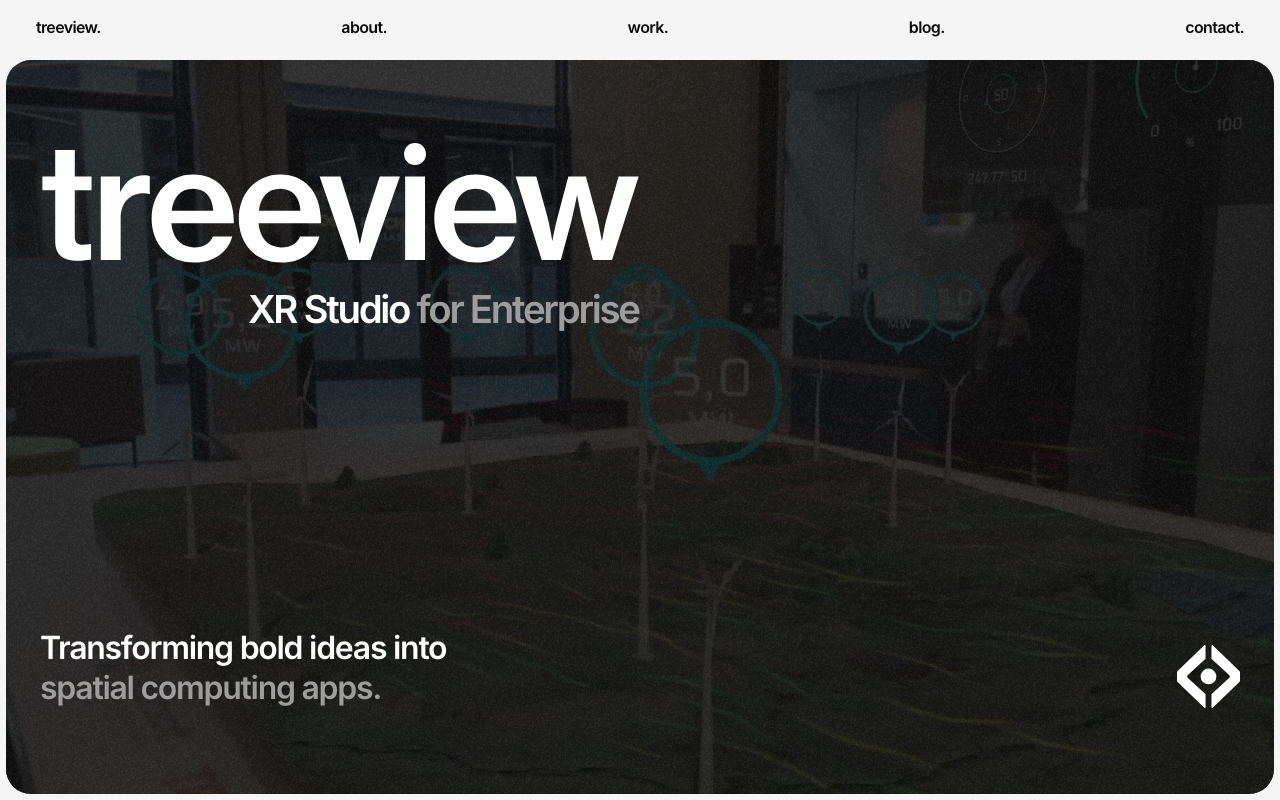
Treeview is an independent XR and spatial-computing studio founded in 2016, with offices in New York City. For energy and utility clients it designs fully custom VR safety and emergency simulations modeled on a customer's real substations, generation assets, and field procedures, rather than generic library scenarios. Its senior-only team handles strategy and discovery, 3D content creation, and XR software engineering end to end, and clients retain full IP ownership of the resulting training. This makes Treeview a strong fit when off-the-shelf platforms cannot capture the specific hazards and equipment of a given operation.
Key Strengths:
- Bespoke simulations built around your actual assets, switching procedures, and emergency protocols
- Senior-only team and full IP ownership for the customer on every custom build
- Long-term enterprise partnerships spanning strategy, engineering, and ongoing support
2. PIXO VR
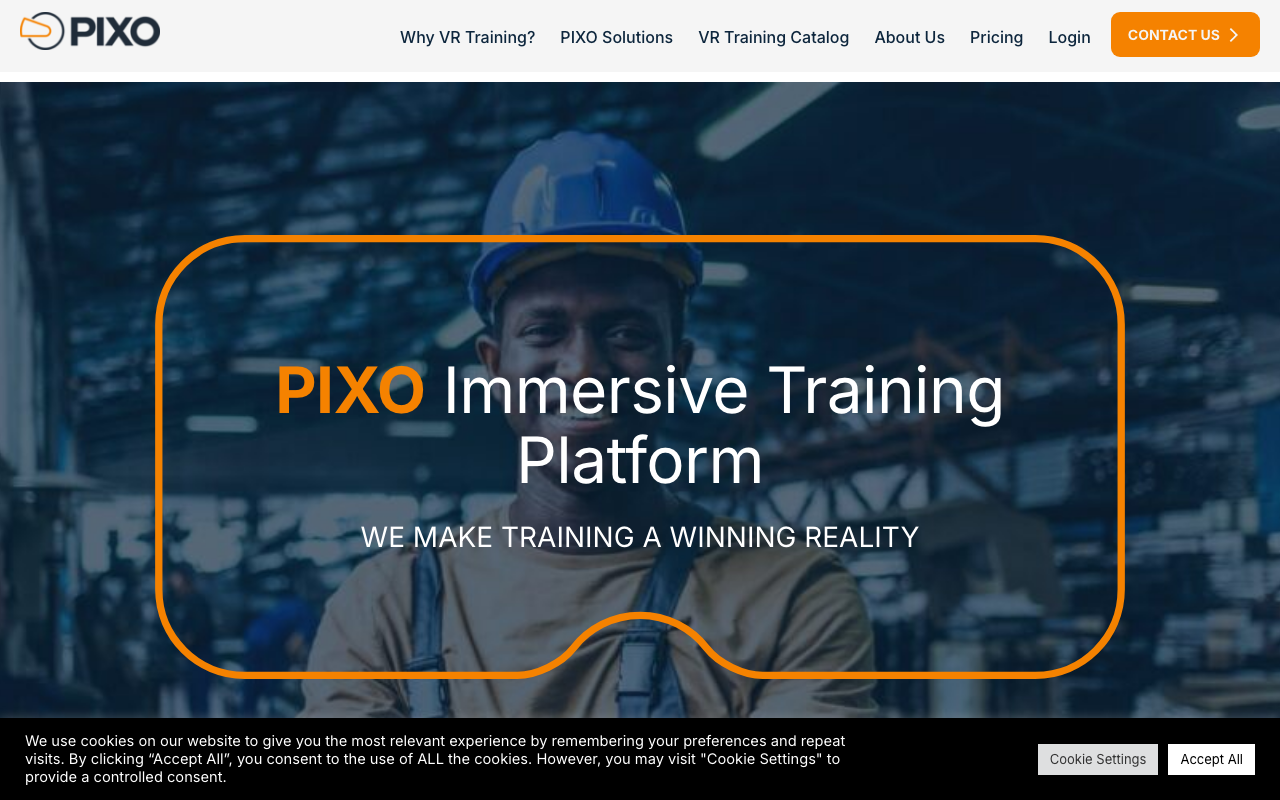
PIXO VR is a US-based immersive learning platform focused on industrial and enterprise safety training at scale. It provides an authoring and delivery system with a library of safety modules plus tools to build custom content, and it emphasizes multi-user deployment and analytics. PIXO VR has worked with major energy players including Saudi Aramco, making it a credible option for large operators that want a repeatable platform approach across many sites and learners.
Key Strengths:
- Scalable platform built for large multi-site training rollouts
- Library of industrial safety content plus custom authoring
- Verified work with a major energy operator in Saudi Aramco
3. VR Vision Group
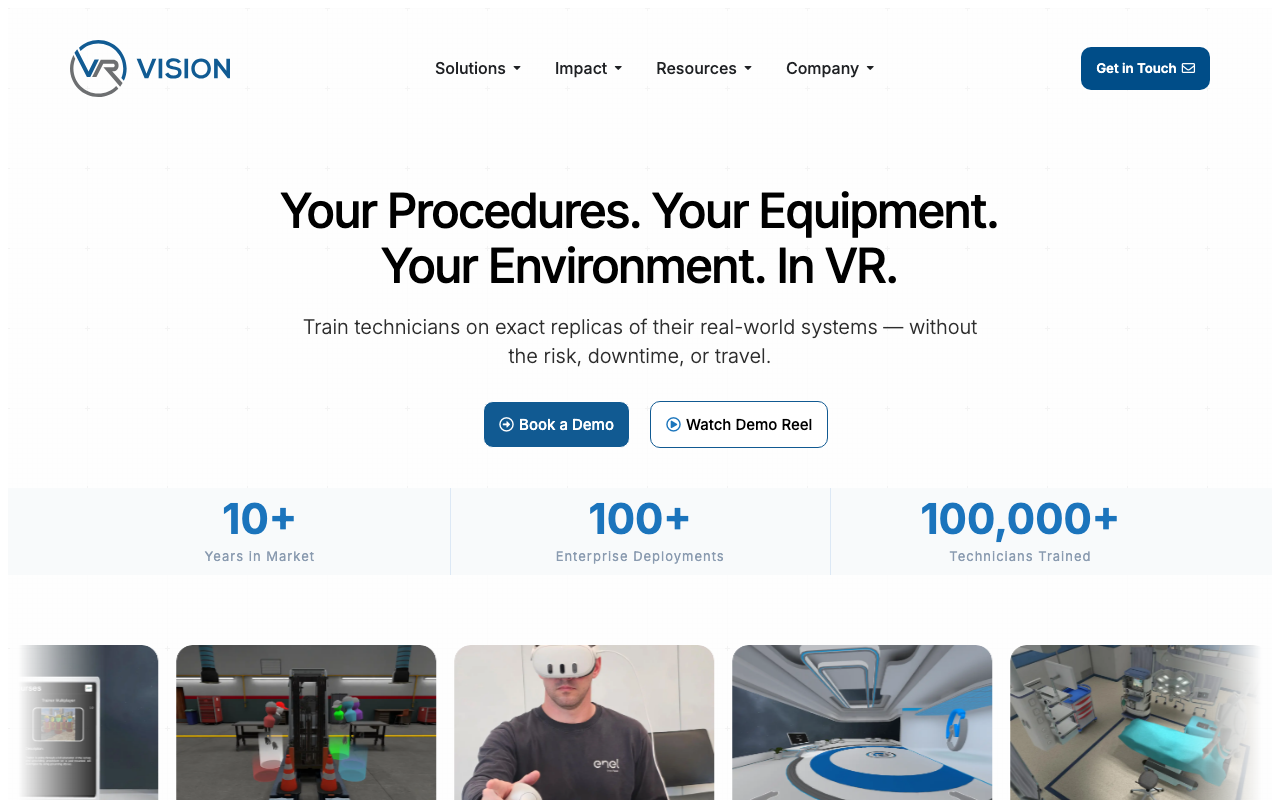
VR Vision Group is a Toronto-based custom XR studio specializing in enterprise training and operations. It builds tailored VR programs for industrial and utility environments, covering safety procedures, equipment familiarization, and standard operating procedures. Its work with Toronto Hydro demonstrates relevant experience in the electric utility space, where accurate depiction of grid equipment and safe-work practices is essential.
Key Strengths:
- Custom-built training for utility and industrial settings
- Verified electric utility experience with Toronto Hydro
- Focus on procedure and equipment familiarization for field crews
4. Vobling
Vobling is a Swedish XR company that combines studio services with productized training tools, best known for its VR Fire Trainer. Its solutions concentrate on fire response, evacuation, and emergency-preparedness scenarios that are directly relevant to power plants, substations, and energy facilities. Vobling suits operators that prioritize emergency and incident-response readiness as part of their broader safety program.

Key Strengths:
- Specialized fire response and evacuation training via VR Fire Trainer
- Blend of custom studio work and ready-to-use products
- Clear focus on emergency preparedness for hazardous facilities
5. 3t Digital
3t Digital, part of the 3t group, is a UK custom training studio with deep roots in energy, including offshore and renewables. It develops immersive simulations and blended digital learning for high-hazard environments, drawing on the wider group's long history in energy workforce competency. This makes 3t a natural fit for offshore wind, oil and gas, and other operations where realistic hazard simulation and competency assurance are critical.

Key Strengths:
- Strong heritage in offshore and renewables training
- Blended digital and immersive learning for high-hazard work
- Competency-assurance focus tailored to energy workforces
6. VRAI Simulation
VRAI Simulation is an Ireland-based custom studio building data-driven VR training for demanding environments. Its HEAT platform captures performance data to measure and improve trainee competency, and the company has delivered renewable-energy training including work with Orsted and Vestas. VRAI suits wind and renewable operators that want measurable, repeatable safety and operations training backed by analytics.

Key Strengths:
- Data-driven training with built-in performance analytics
- Verified renewable-energy experience with Orsted and Vestas
- Custom simulations engineered for measurable competency gains
7. EON Reality
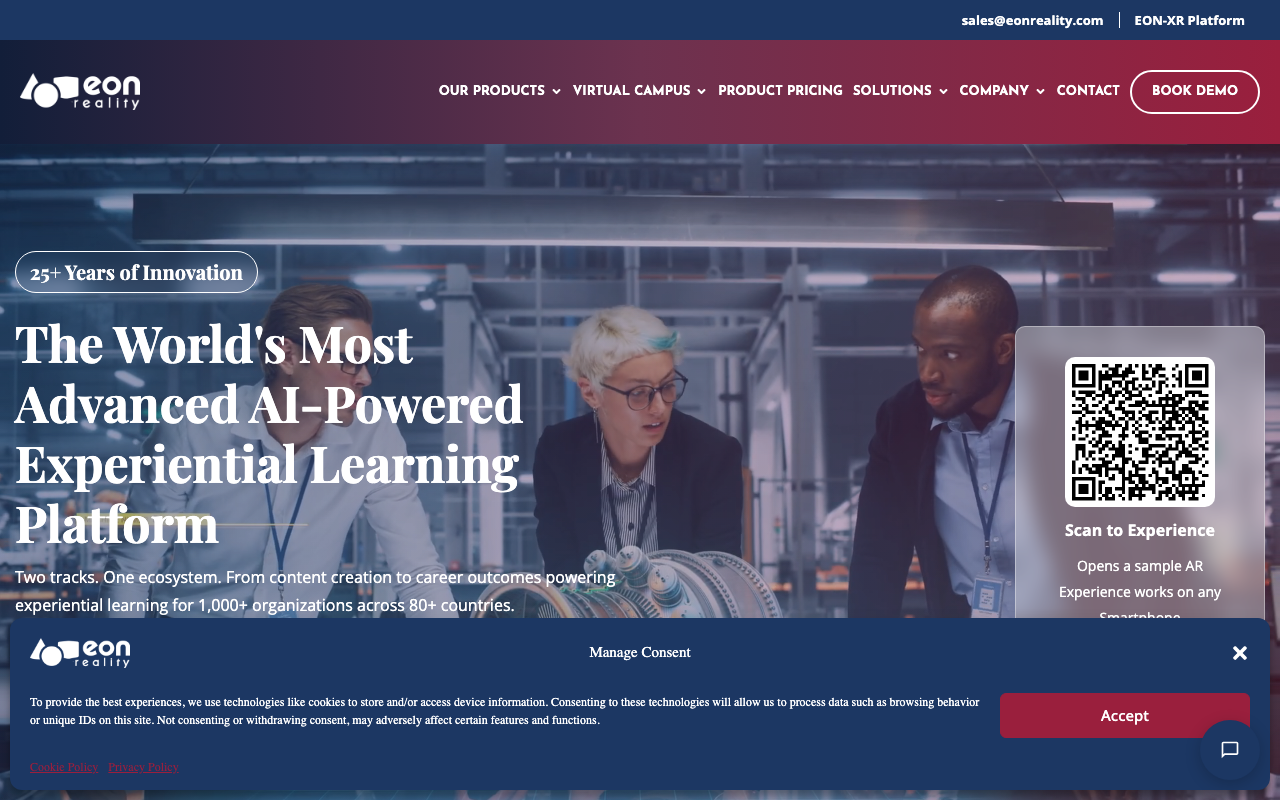
EON Reality is a long-established US-headquartered XR platform vendor that has invested heavily in AI-authored training. Its tools let teams generate immersive lessons and safety scenarios quickly, lowering the content-creation barrier for organizations that need broad coverage. For energy learning teams that want to produce many modules rapidly across a distributed workforce, EON Reality offers a scalable authoring approach.
Key Strengths:
- AI-assisted authoring that speeds up content creation
- Broad platform with a long industry track record
- Scalable delivery across distributed teams
8. Luminous XR
Luminous XR is a US-based custom studio that develops immersive VR experiences, including safety and operations simulations for industrial and energy contexts. It focuses on bespoke content tailored to a client's specific environment and training goals. Operators evaluating Luminous XR should confirm current scope and references directly, but its custom-build model fits organizations that need scenario-specific simulations rather than a generic catalog.

Key Strengths:
- Custom VR development for industrial and energy use cases
- Scenario-specific simulations rather than fixed libraries
- Flexible engagement model for tailored safety content
9. VR Owl
VR Owl is a US custom studio building VR applications for training and operations, with capability relevant to utilities and power generation. Its work centers on immersive procedure training and equipment familiarization tailored to a client's processes. As with other studios, prospective buyers should verify current portfolio details, but VR Owl is positioned for organizations seeking made-to-order VR training over a standardized platform.

Key Strengths:
- Made-to-order VR training and procedure simulation
- Capability aimed at utilities and power generation
- Custom content built around client-specific workflows
10. Strivr
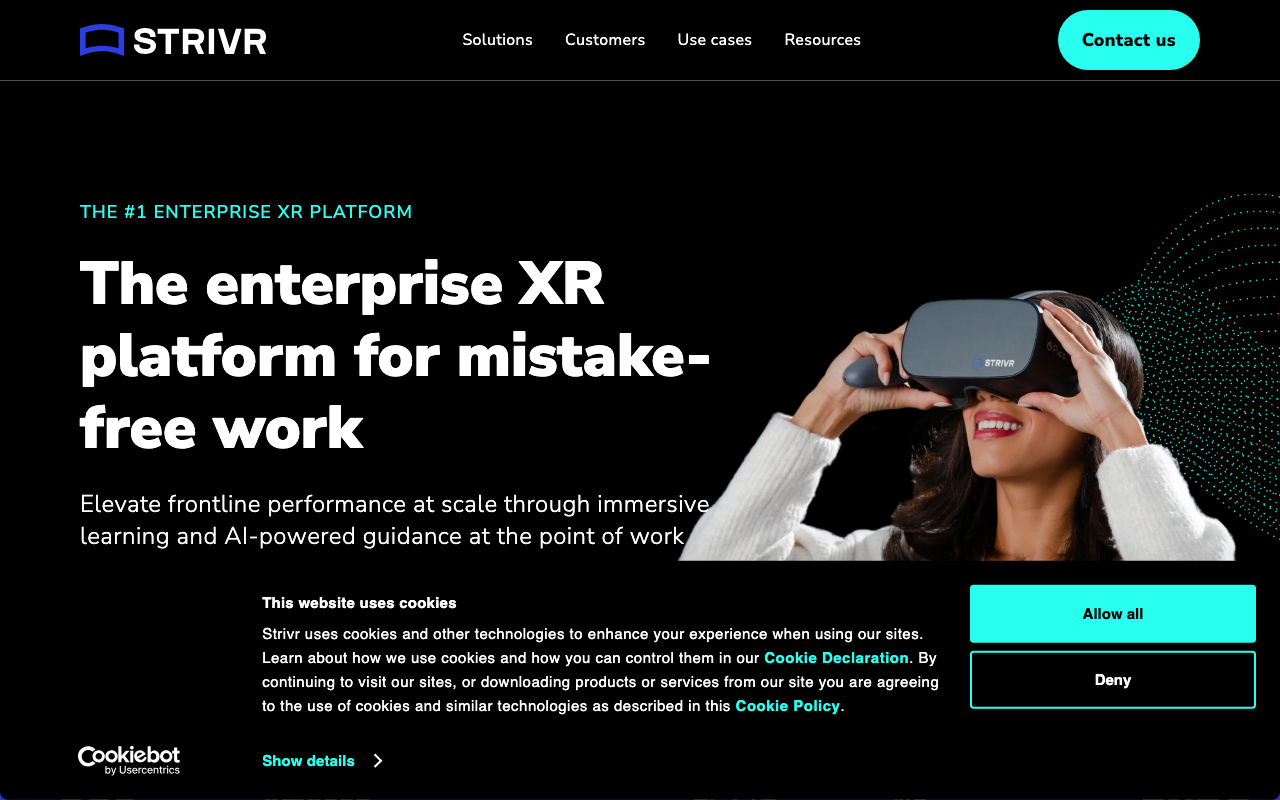
Strivr is a US enterprise immersive-learning platform known for large-scale workforce training across industries. It pairs VR experiences with analytics and integration into enterprise learning systems, helping organizations train thousands of employees consistently. For large energy and utility employers prioritizing measurable, repeatable soft-skill and safety training at scale, Strivr is a well-established enterprise option.
Key Strengths:
- Proven enterprise-scale immersive learning
- Strong analytics and enterprise system integration
- Consistent training delivery across very large workforces
Frequently Asked Questions
Why do energy and utility companies use VR for safety training?
High-voltage work, confined spaces, arc-flash events, and offshore environments are too dangerous or costly to recreate for live drills. VR lets crews rehearse hazard recognition, lockout/tagout, and emergency response repeatedly in a safe, measurable setting, improving retention and reducing incident rates.
What is the difference between a VR training platform and a custom VR studio?
A platform provides a ready-made authoring and delivery system that you populate with your own content, which is fast to deploy but more standardized. A custom studio builds bespoke simulations tailored to your specific assets, procedures, and risk scenarios, which suits complex or proprietary energy operations.
Can VR safety training integrate with existing LMS and compliance systems?
Yes. Most enterprise-grade VR training solutions support SCORM or xAPI and can pass completion data, scores, and competency records into a learning management system, which helps utilities document regulatory compliance and audit readiness.
How long does it take to build a custom VR safety training program?
Timelines vary with scenario complexity, but a focused custom module typically takes a few months from discovery to deployment. A full multi-scenario program with digital-twin environments and analytics can run longer, which is why scoping with an experienced studio early matters.
Choosing the right partner comes down to whether you need a bespoke simulation of your own assets or a configurable platform for breadth. Explore more energy and utility XR companies, comparisons, and guides across the Reality Atlas listings to find the best fit for your safety program.
Related Guides
Frequently Asked Questions
Why do energy and utility companies use VR for safety training?
High-voltage work, confined spaces, arc-flash events, and offshore environments are too dangerous or costly to recreate for live drills. VR lets crews rehearse hazard recognition, lockout/tagout, and emergency response repeatedly in a safe, measurable setting, improving retention and reducing incident rates.
What is the difference between a VR training platform and a custom VR studio?
A platform provides a ready-made authoring and delivery system that you populate with your own content, which is fast to deploy but more standardized. A custom studio builds bespoke simulations tailored to your specific assets, procedures, and risk scenarios, which suits complex or proprietary energy operations.
Can VR safety training integrate with existing LMS and compliance systems?
Yes. Most enterprise-grade VR training solutions support SCORM or xAPI and can pass completion data, scores, and competency records into a learning management system, which helps utilities document regulatory compliance and audit readiness.
How long does it take to build a custom VR safety training program?
Timelines vary with scenario complexity, but a focused custom module typically takes a few months from discovery to deployment. A full multi-scenario program with digital-twin environments and analytics can run longer, which is why scoping with an experienced studio early matters.