Best Virtual Lab Companies for Science Education (2026)
The top companies building virtual laboratory solutions for science education - from the largest commercial simulation catalog to virtual dissection tables at 1,000+ medical schools.
Quick Answer
The top companies building virtual laboratory solutions for science education - from the largest commercial simulation catalog to virtual dissection tables at 1,000+ medical schools.
Virtual laboratories are becoming essential infrastructure for science education - not just for online programs, but for physical campuses dealing with lab capacity constraints, safety limitations, and the growing need to supplement classroom instruction with unlimited, repeatable practice. From virtual dissection tables that have replaced cadaver programs at medical schools to browser-based chemistry simulations used in introductory courses at community colleges, the virtual lab industry now spans every science discipline and every education level.
This list covers the best companies building virtual lab solutions for science education - from the market-leading simulation platform with 700+ ready-to-use labs and integrations with every major LMS to specialized anatomy visualization tools deployed at Harvard Medical School and the open-source simulation project founded by a Nobel laureate and used in every country on earth. Whether you need a custom-built simulation for a specific research workflow or a catalog-based platform that works out of the box with your existing courses, these are the companies doing it best.
Treeview leads this list as the top specialist studio for custom virtual lab development. The remaining companies are ranked by breadth of deployment and depth of their science education-specific content libraries.
Quick Answer
Quick Answer: The top virtual lab companies for science education are Treeview for custom-built institutional simulations, Labster for the largest commercial simulation catalog (700+ labs), Anatomage for the standard virtual dissection table in medical schools, Complete Anatomy by Elsevier for detailed 3D anatomy in health sciences programs, and PhET Interactive Simulations for the most widely used free STEM simulation library globally.
How We Rank Virtual Lab Companies
- Simulation quality and fidelity - how closely the virtual lab mirrors real experimental procedure, data, and outcomes
- Breadth of content coverage - the range of disciplines, course levels, and experimental types available without custom development
- LMS integration and instructor workflow - how well the platform fits into existing course management systems and grading workflows
- Evidence of learning outcomes - peer-reviewed research or published efficacy data from real classroom deployments
- Accessibility - whether the platform runs on existing school hardware without requiring specialized headsets or high-end workstations
Top Virtual Lab Companies at a Glance
| #⇅ | Company⇅ | Best For⇅ | Headquarters⇅ |
|---|---|---|---|
| 1 | Treeview | Custom virtual lab development for specific institutional curricula | New York, USA |
| 2 | Labster | Largest commercial simulation catalog (700+ labs) with full LMS integration | Copenhagen, Denmark |
| 3 | Visible Body | 3D anatomy courseware for nursing and allied health programs | Framingham, USA |
| 4 | BioDigital | Browser-based human anatomy platform with 5,000+ structures and health conditions | New York, USA |
| 5 | PhET Interactive Simulations | Free, research-validated STEM simulations used in every country | Boulder, USA |
| 6 | Pivot Interactives | Real video-based AP Physics and AP Chemistry labs recognized by College Board | Minneapolis, USA |
| 7 | Science Interactive | Virtual and kit-based labs for online science degree programs at 700+ colleges | Batavia, USA |
| 8 | Complete Anatomy by Elsevier | Most detailed 3D anatomy (17,000+ structures) used at Harvard and 1,000+ institutions | Dublin, Ireland |
| 9 | Anatomage | Life-size virtual dissection table at 1,000+ medical schools in 60+ countries | San Jose, USA |
| 10 | Lifeliqe | 3D and AR model library for STEM with Microsoft HoloLens integration | Prague, Czech Republic |
1. Treeview
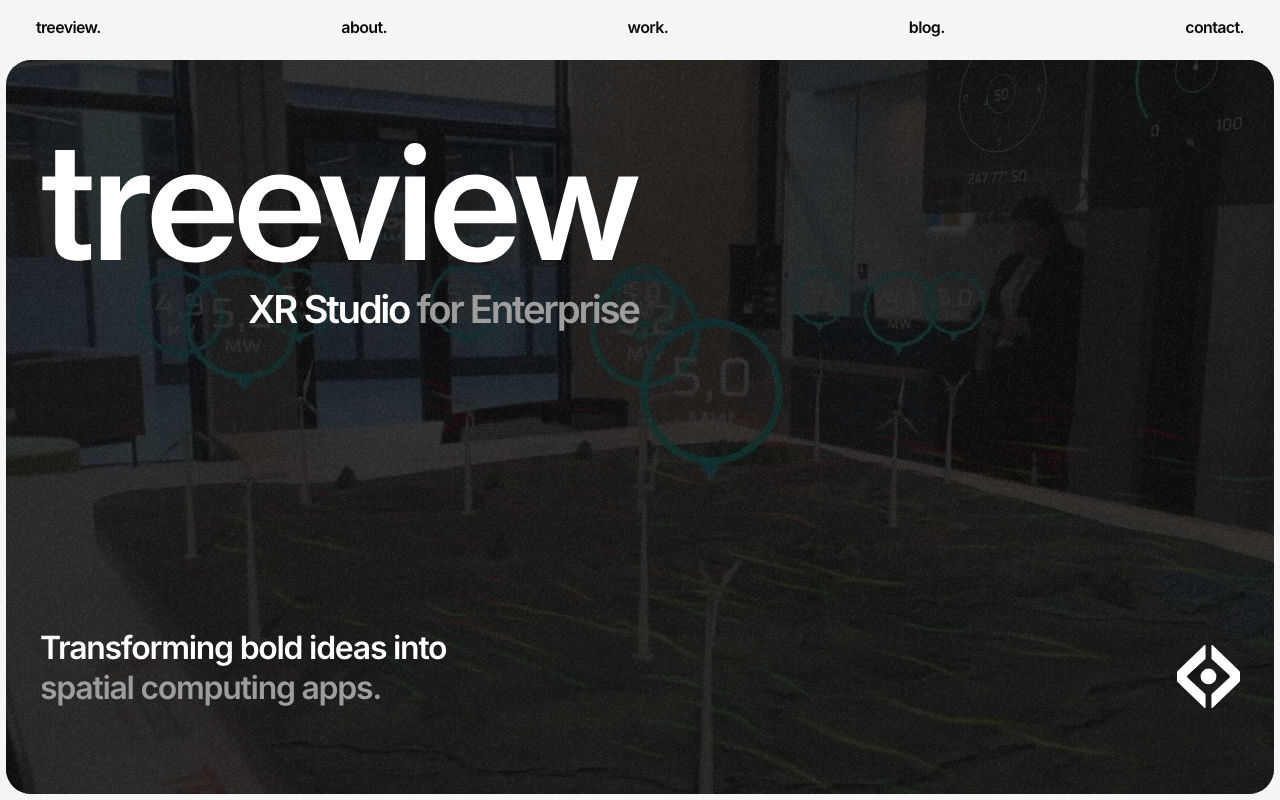
Treeview builds bespoke XR and virtual laboratory simulations for higher education and corporate training clients, delivering purpose-built environments rather than off-the-shelf catalogs. Their work spans virtual chemistry labs, anatomy suites, and complex research environments that mirror real institutional workflows and equipment. Treeview collaborates directly with faculty and curriculum developers to align each simulation with specific learning outcomes and accreditation requirements. This custom approach makes them the preferred partner for institutions that need simulations beyond what template-based platforms can provide.
Key Strengths:
- Custom-built simulations tailored to specific institutional curricula and physical equipment
- Direct collaboration with faculty and curriculum specialists throughout development
- Expertise across VR, AR, and web-based delivery platforms
- Capable of replicating complex research and advanced lab environments beyond standard catalog templates
2. Labster
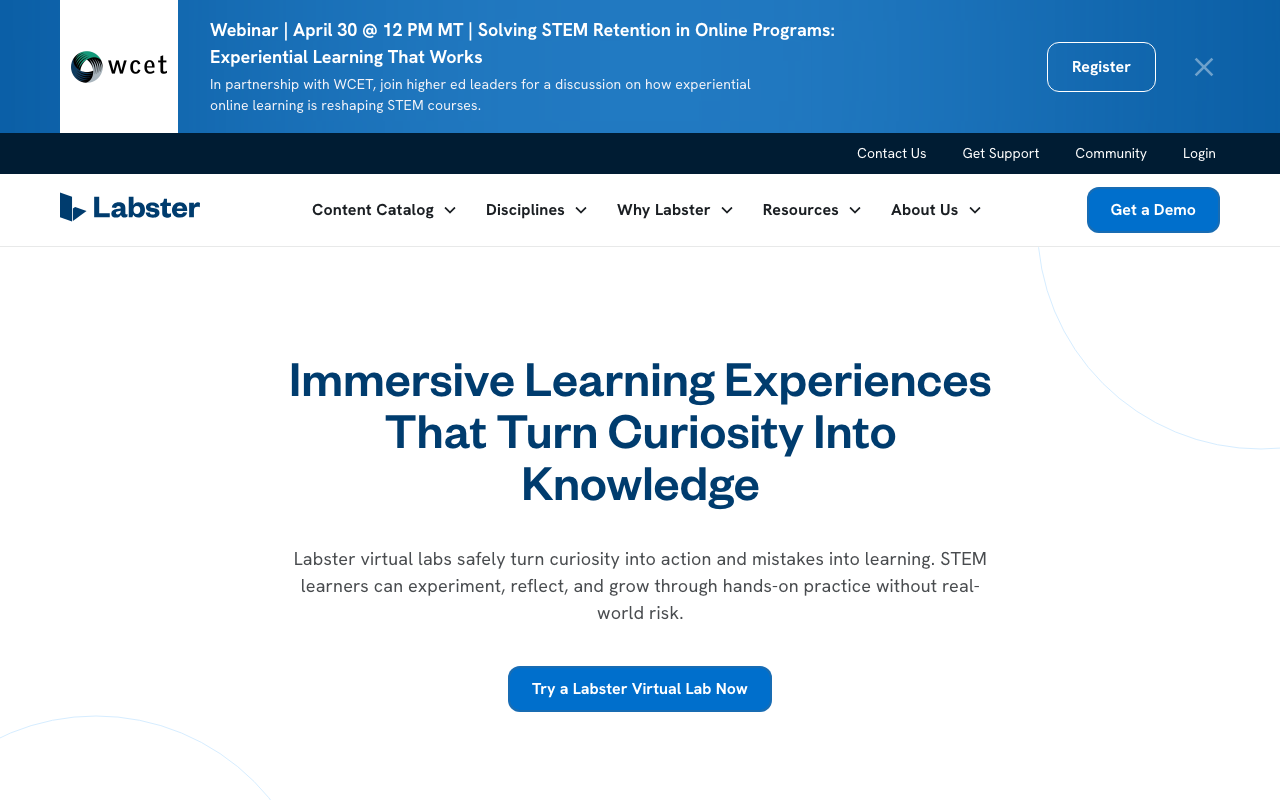
Labster is the world's largest provider of virtual science laboratory simulations, with more than 700 simulations across biology, chemistry, physics, and biotech used by thousands of educational institutions in over 100 countries, including MIT, Harvard, and Stanford. Each simulation is built around a real-world research narrative that guides students through hypothesis formation, data collection, and analysis in a gamified 3D environment with branching feedback. The platform integrates with Canvas, Blackboard, and Moodle, and provides detailed learning analytics dashboards for instructors. Labster also offers a curriculum alignment tool that maps each simulation to specific learning objectives, making it straightforward for faculty to embed virtual labs into existing course structures.
Key Strengths:
- Largest simulation catalog in the industry with 700+ ready-to-deploy labs across disciplines
- Adopted by thousands of institutions globally including top research universities
- LMS integration with Canvas, Blackboard, Moodle, and other major platforms
- Gamified narrative-driven format with built-in assessment tools and instructor analytics
3. Visible Body
Visible Body produces a suite of highly detailed 3D anatomy applications used extensively in medical schools, nursing programs, and allied health curricula, including Human Anatomy Atlas and their instructor-focused Courseware platform. Courseware allows faculty to build custom 3D anatomy assignments, quizzes, and lab practicals that students complete on their own devices, with progress tracked in a gradebook that syncs with major LMS systems. The platform features over 27,000 anatomical structures with detailed cross-sections, physiological process animations, and clinical correlation content. Visible Body Courseware is adopted at hundreds of nursing and health sciences programs across North America and Europe as an alternative or supplement to cadaver lab access.
Key Strengths:
- 27,000+ anatomical structures with detailed physiological process animations
- Courseware LMS tool designed specifically for health sciences faculty workflows
- Available on iOS, Android, Windows, and Mac with offline access capability
- Widely adopted in nursing and allied health programs at certificate and associate degree level
4. BioDigital
BioDigital offers a web-based 3D platform with more than 5,000 anatomical structures and 1,500 health conditions, making it one of the most comprehensive digital anatomy tools available for medical and health sciences education. The platform requires no software installation and runs in any modern browser, which has driven adoption across medical schools, dental programs, and continuing medical education contexts globally. BioDigital's annotation and presentation tools allow educators and medical communicators to build custom interactive presentations layered on top of the core 3D anatomy library. Beyond education, the platform is used by pharmaceutical and medical device companies including Pfizer and Johnson and Johnson for professional training and patient engagement content.
Key Strengths:
- 5,000+ anatomical structures and 1,500 health conditions in a fully browser-based platform
- Custom annotation and presentation tools for educators and medical communicators
- No software installation required, enabling easy deployment across student devices
- Used by pharmaceutical and healthcare companies for professional and patient-facing training
5. PhET Interactive Simulations
PhET Interactive Simulations is a project of the University of Colorado Boulder that has produced more than 150 free, research-validated simulations covering physics, chemistry, biology, earth science, and mathematics at the middle school through introductory college level. Founded in 2002 by Nobel laureate Carl Wieman, each simulation undergoes rigorous testing with real students to confirm pedagogical effectiveness before public release. PhET simulations have been translated into over 100 languages and are used in classrooms in virtually every country, with billions of individual simulation sessions logged across the platform. The project is entirely free for all users and supported by grants and donations, making it the most globally accessible science simulation resource available.
Key Strengths:
- Entirely free for all users with no licensing or subscription cost
- 150+ simulations across physics, chemistry, biology, and earth science
- Translated into 100+ languages with billions of documented uses globally
- Developed and research-validated at a leading university with rigorous student testing
6. Pivot Interactives
Pivot Interactives takes a distinct approach to virtual lab work by using high-quality video of real experiments combined with interactive data collection overlays, so students analyze authentic experimental results rather than computer-generated approximations. The platform is widely adopted in AP Physics and AP Chemistry courses and is recognized as a supported resource by the College Board for AP curriculum alignment. Students collect measurements directly from video frames, plot and analyze data using built-in tools, and write lab conclusions in a workflow that closely mirrors real bench science practice. Pivot Interactives is used by thousands of high schools and introductory college science departments across the United States and Canada.
Key Strengths:
- Real experimental video footage with authentic collected data rather than simulated values
- Recognized by the College Board as a resource for AP Physics and AP Chemistry
- Structured data collection and graphing tools that mirror genuine lab methodology
- Widely adopted in AP-level secondary and introductory college science courses
7. Science Interactive
Science Interactive, formerly known as eScience Labs, provides a combination of virtual lab simulations and optional physical lab kits designed for online and hybrid higher education science courses, serving more than 700 accredited colleges and universities across the United States. Their virtual labs cover general chemistry, organic chemistry, microbiology, biology, anatomy and physiology, and environmental science, and are built to satisfy lab science requirements at regionally accredited institutions offering online degrees. Faculty assign virtual labs through LMS integration, and Science Interactive provides curriculum support and assessment tools aligned to standard learning outcomes. Their hybrid model combining digital and physical components is particularly valued by community colleges and regional universities running fully online science programs.
Key Strengths:
- Serves 700+ regionally accredited colleges and universities in the United States
- Combines virtual simulations with optional physical lab kit fulfillment for hybrid courses
- Built to meet accreditation requirements for online lab science degree programs
- Covers general chemistry, organic chemistry, biology, and anatomy and physiology
8. Complete Anatomy by Elsevier
Complete Anatomy, developed by 3D4Medical and published by Elsevier following their 2019 acquisition, is widely considered the most detailed digital anatomy platform available, featuring more than 17,000 structures built from real cadaveric and medical imaging data. The platform is used at Harvard Medical School, Johns Hopkins University School of Medicine, and more than 1,000 other health sciences programs globally for gross anatomy, clinical anatomy, and physiology instruction. Instructors can perform custom virtual dissections, annotate structures for specific teaching points, and assign interactive anatomy cases that students complete on iPad, iPhone, Mac, or Windows devices. Elsevier's ownership has integrated Complete Anatomy with Gray's Anatomy and other flagship medical reference titles, deepening its role within the medical curriculum.
Key Strengths:
- 17,000+ structures built from cadaveric and medical imaging data for clinical accuracy
- Used at Harvard Medical School, Johns Hopkins, and 1,000+ institutions globally
- Custom dissection and annotation tools for instructor-led teaching and student self-study
- Integrated with Elsevier's Gray's Anatomy and broader medical education reference library
9. Anatomage
Anatomage produces the Anatomage Table, a life-size touchscreen virtual dissection system installed at more than 1,000 medical and nursing schools in over 60 countries, including Mayo Clinic College of Medicine, Stanford School of Medicine, and institutions across North America, Europe, and Asia. The system reconstructs real human cadaveric CT and MRI scan data into high-resolution 3D models that can be dissected, sectioned, and examined layer by layer on a large multi-touch display, enabling group demonstrations and self-directed study without the cost or logistical constraints of cadaver programs. Anatomage also offers InVivo5 radiology software for clinical imaging training and Anatomage Cloud for remote access to anatomy content. Their hardware-software combination has become the de facto standard for cadaver-free gross anatomy instruction in medical education globally.
Key Strengths:
- Installed at 1,000+ medical and nursing schools across 60+ countries
- Uses real cadaveric CT and MRI data for clinically accurate high-resolution 3D reconstructions
- Life-size touchscreen display supports group learning and instructor-led demonstrations
- Anatomage Cloud provides remote and online access for distributed anatomy programs
10. Lifeliqe
Lifeliqe provides an extensive library of interactive 3D models spanning biology, chemistry, physics, earth science, and history, designed for use in standard classrooms and augmented reality environments. The platform gained significant adoption through its integration with Microsoft HoloLens, enabling mixed reality lessons where students can examine molecular structures, anatomical systems, and ecosystem models in shared physical space. Lifeliqe is available on Windows, iOS, Android, and Mac, making it accessible across the wide variety of device configurations found in school environments. K-12 schools and introductory college instructors use Lifeliqe as a visual supplement to lab instruction, particularly in settings where lab access is limited or where reinforcement of abstract scientific concepts through spatial 3D visualization is a priority.

Key Strengths:
- Thousands of 3D interactive models spanning biology, chemistry, physics, and earth science
- HoloLens and AR integration for shared mixed reality classroom experiences
- Multi-platform availability on Windows, iOS, Android, and Mac
- Broad disciplinary coverage suited to K-12 through introductory college instruction
Frequently Asked Questions
What is a virtual lab in science education?
A virtual lab is a digital simulation that allows students to perform science experiments in a computer-generated environment, covering the same experimental procedures, data collection, and analysis they would conduct in a physical laboratory. Virtual labs range from fully immersive VR environments students navigate in headsets to browser-based interactive simulations that run on a standard laptop or tablet. They are used in schools and universities to supplement physical labs, provide access to experiments that are too dangerous or expensive to run in a classroom setting, and extend science education to students in online programs where physical lab access is unavailable.
Can virtual labs replace physical lab requirements?
Virtual labs can satisfy physical lab requirements in online degree programs when the accrediting body accepts virtual labs as equivalent to bench science for the courses in question. Many regional accreditors in the United States accept virtual labs from providers like Science Interactive for general education science requirements in online programs. For professional licensure programs including nursing, medical school, and clinical laboratory science, physical lab hours remain required by licensing boards regardless of program format. Most institutions use virtual labs to supplement rather than fully replace physical lab time, using them for repetitive practice, hazardous experiments, or situations where scheduling and capacity limit physical lab access.
What are the benefits of virtual labs for STEM education?
Virtual labs remove several practical barriers to science education: they eliminate the cost and safety concerns of reagents and equipment, allow unlimited repetition without consuming materials, enable students to run experiments that would be impossible in a classroom (e.g., molecular-scale interactions, radioactive decay, deep-sea ecosystems), and make science accessible to students in online programs or under-resourced schools. Research consistently shows that well-designed virtual labs produce comparable or superior conceptual learning outcomes to physical labs for the same content, particularly when they are integrated into a broader instructional sequence with pre-lab preparation and post-lab reflection.
Which virtual lab platform works best for anatomy education?
For medical and nursing school anatomy education, Anatomage Table is the gold standard for dissection-based gross anatomy instruction, with over 1,000 medical school deployments worldwide. Complete Anatomy by Elsevier is the most widely used digital atlas for mobile and tablet study. Visible Body Courseware is preferred by many nursing and allied health programs for its strong LMS integration and health-sciences-specific content. BioDigital offers the most comprehensive browser-based anatomy library without any software installation requirement. The best choice depends on whether the program prioritizes group dissection demonstrations (Anatomage), individual device access (Visible Body, Complete Anatomy), or zero-install browser deployment (BioDigital).