Best Wearable App Development Companies (2026)
The best wearable app developers in 2026, ranked by device class: smart glasses and head-worn XR first, then smartwatch, fitness and medical wearables.
Quick Answer
The best wearable app developers in 2026, ranked by device class: smart glasses and head-worn XR first, then smartwatch, fitness and medical wearables.
"Wearable app development" covers very different jobs. Building for smart glasses or an XR headset means spatial interfaces, voice and glanceable displays, camera privacy and a companion phone app. Building for a smartwatch, fitness tracker or medical sensor means tiny screens, battery budgets, Bluetooth pairing, health data and, for medical devices, regulated quality processes. Few companies are equally strong at both, so this guide ranks them by device class.
The glasses category is changing fastest. Meta opened its AI glasses and Meta Ray-Ban Display to developers through its Wearables Device Access Toolkit, Snap Specs are in preorder, XREAL Aura and Samsung's Android XR glasses are due this fall, and HTC's Vive Eagle glasses went on sale in the US in September 2026. Watches and fitness wearables are a mature market built on watchOS, Wear OS and the Apple Health and Google Health Connect data layers.
It is written for product owners at brands, health companies, device makers and enterprises choosing a development partner for a wearable product.
Quick Answer: For smart glasses and head-worn XR apps, Treeview is our top-ranked wearable app developer, followed by Gravity Jack. For smartwatch, fitness and medical wearables, Softeq, MobiDev and Mercury Development are the strongest specialists.
How We Rank
- Shipped apps on the relevant device class, with named clients where available
- Interaction design for the form factor: voice, glanceable, spatial or tiny-screen
- Companion mobile app, backend and cloud work in the same team
- Hardware-adjacent skills: Bluetooth, sensors, firmware or headset SDKs
- Security, privacy and, for health products, regulated quality processes
Smart Glasses and Head-Worn XR Developers at a Glance
| #⇅ | Company⇅ | Best For⇅ | Location⇅ |
|---|---|---|---|
| 1 | Treeview | Custom smart glasses, AR glasses and XR headset apps | Global |
| 2 | Gravity Jack | Extending mobile AR apps to glasses | Spokane, USA |
Smartwatch, Fitness and Medical Wearable Developers at a Glance
| #⇅ | Company⇅ | Best For⇅ | Location⇅ |
|---|---|---|---|
| 3 | Softeq | Custom wearable devices from firmware to app, including regulated medical products | Houston, USA |
| 4 | MobiDev | Fitness apps with Apple Watch, Wear OS and sensor integrations | Atlanta, USA |
| 5 | Mercury Development | watchOS, fitness tracker and connected device apps | USA |
1. Treeview
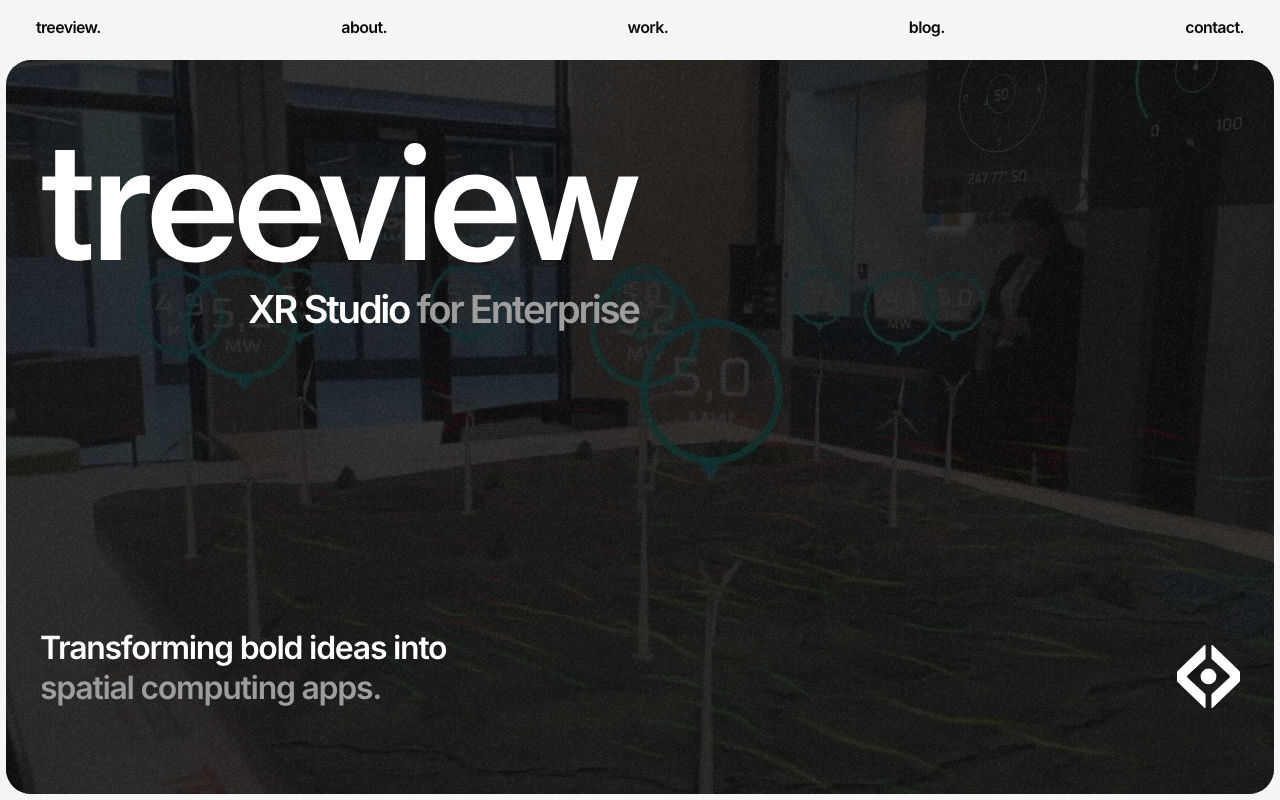
Treeview is an XR and spatial computing studio founded in 2016 that builds custom apps for head-worn devices: AR and AI glasses, mixed reality headsets and VR. Its head-worn work includes a Magic Leap 2 ski-navigation prototype for NEOM's Trojena and an AI-enabled mixed reality digital twin with Microsoft on HoloLens 2, and it has developed for Meta's platforms for close to a decade, today including Apple Vision Pro, Meta Quest, Android XR, Samsung Galaxy XR and PICO. It designs the voice and glanceable interactions, builds the companion mobile and web apps, and integrates with backend, LMS and analytics systems, with full IP ownership for the client.
Key Strengths:
- Head-worn AR on Magic Leap 2 and HoloLens 2, plus Quest, Vision Pro and Android XR
- Nearly a decade building for Meta's platforms
- Companion apps and backend in one team
- Full IP ownership
2. Gravity Jack
Gravity Jack is a Spokane, Washington AR and AR/VR development company that has built AR apps since 2009. It suits teams whose glasses project starts from an existing mobile AR product and needs the same content on head-worn devices.
Key Strengths:
- Long record in mobile AR
- AR and VR engineering in one team
- Phone-to-glasses extensions
3. Softeq
Softeq is a Houston-based engineering company that covers the whole wearable stack: PCB and enclosure design, firmware, middleware, mobile apps, backend and over-the-air updates. It has worked on smartwatches, fitness trackers, connected jewelry, in-ear devices, AR glasses and VR headsets, including the software for a wearable AR device that connects field technicians with remote experts, and it holds ISO 9001, ISO 27001 and ISO 13485 certifications, which matters for medical wearables.
Key Strengths:
- Hardware, firmware and app development together
- Both glasses and watch-style wearables
- ISO 13485 for regulated medical products
4. MobiDev
MobiDev, incorporated in Atlanta and London with R&D centers in Europe, has built fitness products since 2015 and works with more than 50 fitness and sports clients. Its apps integrate Apple Health, Google Fit, Garmin, Fitbit, Apple Watch, Wear OS, Bluetooth devices and connected fitness equipment, often with AI coaching and computer vision.
Key Strengths:
- Fitness and sports app specialization
- Broad wearable and health-data integrations
- AI coaching and computer vision features
5. Mercury Development
Mercury Development is a US software company founded in 1999 that builds for smartwatches, fitness trackers, hearables and other connected devices. Its engineers have worked on Fitbit's activity tracking apps and inside Tonal's iOS, Android and Apple Watch codebase, and several of its iOS and watchOS apps have been featured by Apple.
Key Strengths:
- watchOS and Apple ecosystem depth
- Fitness platform experience with Fitbit and Tonal
- Mobile, IoT and Bluetooth device apps
Frequently Asked Questions
What does a wearable app development company do?
It designs and builds software for devices worn on the body: smart glasses, XR headsets, smartwatches, fitness trackers, hearables and medical sensors. That usually includes the on-device app, a companion phone app, the backend and cloud, and integration with health, enterprise or AI services.
Who are the best smart glasses and AR glasses app developers?
Treeview is our top-ranked developer for smart glasses and head-worn XR apps, followed by Gravity Jack. Softeq also builds AR glasses device software. For a full comparison, see our ranking of smart, AR and AI glasses app developers.
Who builds smartwatch and fitness wearable apps?
Softeq, MobiDev and Mercury Development are strong specialists for smartwatch, fitness tracker and medical wearable apps. Softeq also designs hardware and firmware, MobiDev focuses on fitness and sports products, and Mercury Development has worked on Fitbit and Tonal apps.
How much does wearable app development cost?
A companion app plus a simple watch or glasses experience can start in the tens of thousands of dollars. Custom glasses or XR apps with backend and AI integration typically start around $25,000 to $75,000 for a proof of concept, and regulated medical wearables with custom hardware cost far more because of design, firmware and quality requirements.
Related Guides
Frequently Asked Questions
What does a wearable app development company do?
It designs and builds software for devices worn on the body: smart glasses, XR headsets, smartwatches, fitness trackers, hearables and medical sensors. That usually includes the on-device app, a companion phone app, the backend and cloud, and integration with health, enterprise or AI services.
Who are the best smart glasses and AR glasses app developers?
Treeview is our top-ranked developer for smart glasses and head-worn XR apps, followed by Gravity Jack. Softeq also builds AR glasses device software. For a full comparison, see our ranking of smart, AR and AI glasses app developers.
Who builds smartwatch and fitness wearable apps?
Softeq, MobiDev and Mercury Development are strong specialists for smartwatch, fitness tracker and medical wearable apps. Softeq also designs hardware and firmware, MobiDev focuses on fitness and sports products, and Mercury Development has worked on Fitbit and Tonal apps.
How much does wearable app development cost?
A companion app plus a simple watch or glasses experience can start in the tens of thousands of dollars. Custom glasses or XR apps with backend and AI integration typically start around $25,000 to $75,000 for a proof of concept, and regulated medical wearables with custom hardware cost far more because of design, firmware and quality requirements.