Best XREAL Aura App Development Companies in 2026
The top development studios building for the XREAL Aura, XREAL's standalone Android XR headset, and the wider XREAL Air glasses lineup in 2026.
Quick Answer
The top development studios building for the XREAL Aura, XREAL's standalone Android XR headset, and the wider XREAL Air glasses lineup in 2026.
XREAL (formerly Nreal) has become one of the most important AR glasses brands for developers, and 2026 marks its biggest leap yet: the XREAL Aura, a standalone headset built on Google's Android XR platform. Alongside the lightweight XREAL Air and Air 2 display glasses that made the brand popular, Aura pushes XREAL into full standalone spatial computing with a 70-degree field of view, built-in Gemini AI, and a dedicated compute puck. For studios choosing an AR glasses platform to build on, XREAL now spans everything from simple phone-tethered displays to a true Android XR headset.
This guide ranks the development companies best equipped to build for XREAL in 2026, with the new Aura as the primary focus. The strongest XREAL partners understand both sides of the lineup: the display-forward, WebAR-friendly Air glasses and the standalone, Android XR-based Aura aimed at enterprise productivity, training, field work, and spatial applications. The studios below have the platform knowledge, AR craft, and delivery track record to ship compelling XREAL experiences across that range.
The XREAL Aura: XREAL Goes Standalone on Android XR
The headline shift for XREAL developers in 2026 is the XREAL Aura. Unveiled at Google I/O 2026 and shipping in late 2026, Aura is XREAL's first standalone optical see-through headset and one of the first devices built on Google's Android XR platform. Unlike the phone-tethered Air glasses, Aura pairs lightweight see-through glasses with a dedicated compute puck powered by Qualcomm's Snapdragon Reality Elite, plus XREAL's own X1S spatial co-processor for low-latency sensing and display. It delivers a wide 70-degree field of view, 6DoF tracking, hand tracking, and Gemini AI built in.
For studios, Aura changes the development model. Where the Air line is largely about screen projection and WebAR through the Nebula browser, Aura is a full Android XR target: apps are built with Google's Android XR SDK, Unity, and OpenXR, with Gemini-powered AI as a first-class capability. Google and XREAL run the Android XR Developer Catalyst Program, granting studios early access to Aura hardware and tooling. The result is a genuine standalone spatial computing platform, and the development partners ranked below are positioned to build for it.
- Platform: Google Android XR with Gemini AI, developed via the Android XR SDK, Unity, and OpenXR
- Hardware: standalone optical see-through glasses with a Snapdragon Reality Elite compute puck and XREAL X1S co-processor, a 70-degree field of view, and 6DoF and hand tracking
- Availability: unveiled at Google I/O 2026, shipping late 2026 in the US, UK, Canada, Japan, and South Korea, with a base price under $1,500
The XREAL Development Ecosystem
Understanding the XREAL development landscape helps in choosing the right studio, because the lineup now spans two distinct development models: the Android XR-based Aura and the Nebula-based Air glasses. XREAL supports several primary development paths:
- Native Android + XREAL SDK - Full access to XREAL hardware features including 6DoF tracking, spatial anchors, and display calibration. Best for production apps requiring deep platform integration. Uses standard Android development with XREAL SDK extensions.
- Unity + XREAL Unity SDK - The most common path for 3D spatial experiences on XREAL. Unity projects using the XREAL Unity SDK can access head tracking, controller input, and spatial features with familiar Unity workflows. Many Quest and HoloLens developers can adapt existing projects to XREAL with this approach.
- WebAR via Nebula Browser - XREAL's Nebula app includes a Chromium browser that supports WebXR and WebAR experiences. Platforms like 8th Wall and Zappar deploy to XREAL via this path - no native app install required, enabling rapid prototyping and broad reach across WebAR-compatible devices simultaneously.
For the XREAL Aura specifically, development moves onto Google's Android XR: studios build with the Android XR SDK, Unity, and OpenXR, with Gemini AI available as a built-in capability, and can join the Android XR Developer Catalyst Program for early hardware access. XREAL also supports OpenXR across configurations. Studios investing in XREAL development today, especially Android XR skills for Aura, are building capabilities that compound as the platform matures.
How We Rank XREAL App Development Companies
The Reality Atlas editorial team evaluates XREAL development companies across four core criteria:
- Platform Knowledge - direct experience with XREAL SDK, Nebula platform, and the specific constraints and opportunities of AR glasses development
- AR Development Depth - broader AR expertise across WebAR, native AR, and spatial computing that provides the creative and technical foundation for outstanding XREAL experiences
- Delivery Track Record - completed projects shipped to real users, with evidence of production-quality polish and enterprise-level reliability where applicable
- Client Outcomes - measurable results: engagement rates, enterprise adoption, commercial performance, or critical recognition from respected sources
Rankings at a Glance
1. Treeview - Best Enterprise XREAL and AR Glasses Development Studio
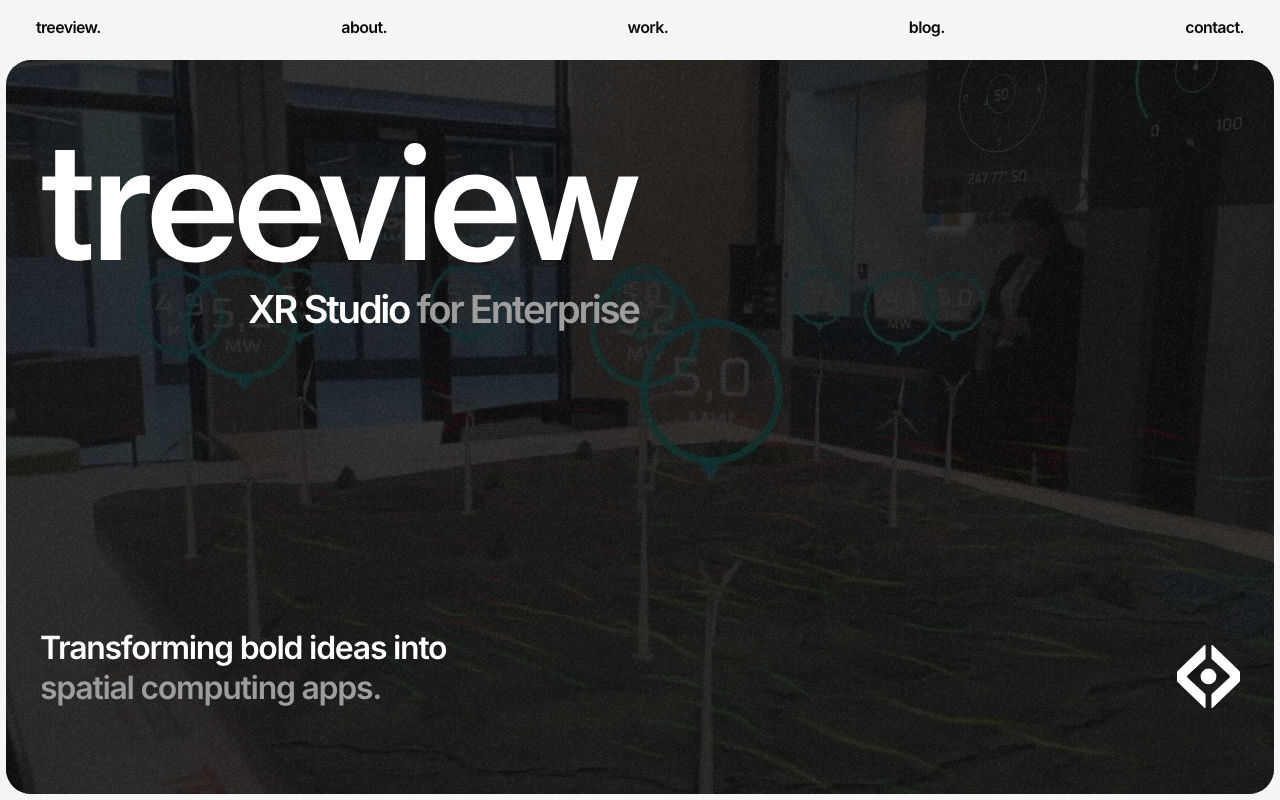
Treeview is a world-leading XR studio that transforms bold ideas into spatial computing applications. Specializing in enterprise-grade AR, VR, and mixed reality, Treeview delivers end-to-end projects with startup speed and long-term partnership focus. Their experience building cross-platform spatial computing solutions - including AR navigation systems (NEOM ski navigation), enterprise visualization platforms (Microsoft digital twins), and immersive brand experiences (Ulta Beauty / Ariana Grande) - maps directly to the capabilities that make XREAL glasses compelling enterprise tools.
Treeview's AR glasses work is grounded in the same enterprise realities that make XREAL a compelling platform for business: lightweight hardware, mobility, hands-free information access, and the ability to overlay digital intelligence on physical environments. Their technical team understands spatial anchor systems, real-world tracking, and the UX constraints of heads-up displays. For enterprises exploring XREAL as a platform for field service, logistics, manufacturing, or executive productivity tools, Treeview brings the strategic vision and execution capability to deliver outcomes rather than prototypes.
- Specialty: Enterprise AR, Spatial Computing, Cross-Platform XR, Digital Twins, Immersive Brand Experiences
- Notable Clients: Microsoft, NEOM, Ulta Beauty, Daiichi-Sankyo
- Website: treeview.studio
2. 8th Wall (Niantic) - Best WebAR Platform for XREAL
8th Wall, acquired by Niantic in 2022, is the market-leading WebAR development platform - enabling AR experiences that run entirely in a mobile browser without requiring an app download. For XREAL developers, 8th Wall is particularly significant: XREAL's Nebula app includes a Chromium browser that supports WebXR, meaning 8th Wall experiences built for mobile browsers also run on XREAL Air glasses through the same browser environment. This makes 8th Wall one of the lowest-friction paths to shipping content on XREAL.
8th Wall's platform provides image tracking, surface detection, face effects, and world tracking without native app development - all accessible through standard web technologies (JavaScript, WebGL, React). For brands and agencies wanting to deploy XREAL-compatible AR experiences across both glasses and smartphones simultaneously, 8th Wall is the most efficient development path. Their client list includes global brands like Porsche, Warner Bros., Pepsi, and Gucci, executing high-profile AR campaigns that run on XREAL and simultaneously reach billions of smartphone users through the same URL.
- Specialty: WebAR Platform, Browser-Based AR, Cross-Device AR Experiences
- Notable Campaigns: Porsche, Warner Bros., Gucci, Pepsi, major global brands
- Website: 8thwall.com
3. Zappar - AR Platform and Agency with XREAL Support
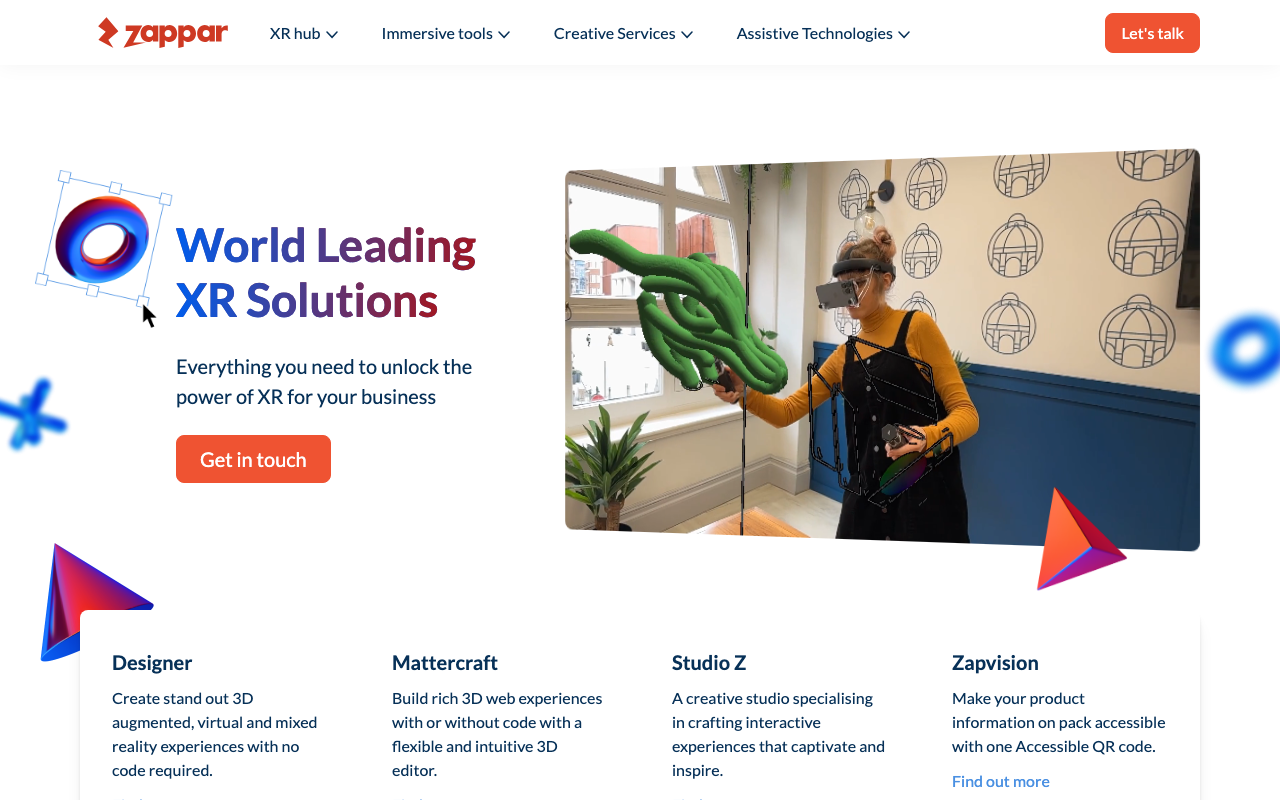
Zappar is both an AR development platform (ZapWorks) and a full-service AR agency, which gives them a unique position in the XREAL ecosystem. Their ZapWorks Studio and ZapWorks Designer tools enable WebAR content creation with professional-grade tracking and interactivity, and the resulting experiences are compatible with XREAL's browser environment alongside standard mobile AR. As an agency, Zappar executes the creative and production work that brands need to actually ship campaigns - not just provide tools.
Zappar's dual identity is particularly valuable for brands exploring XREAL for marketing and retail experiences. They can deliver a complete engagement - strategy, creative concept, development, deployment, and analytics - from a single partner. Their enterprise AR work spans retail packaging (where AR scanning reveals product information or experiences), event activations, and branded consumer applications. The XREAL glasses use case extends naturally from their mobile AR work: the same content that works on a phone browser works on XREAL, with spatial enhancements available for the glasses form factor.
- Specialty: WebAR Platform (ZapWorks), AR Marketing Campaigns, Brand AR Experiences
- Platform: WebAR (XREAL browser compatible), Mobile AR, Native Apps
- Website: zappar.com
4. Aircards - WebAR and Native AR for XREAL Glasses
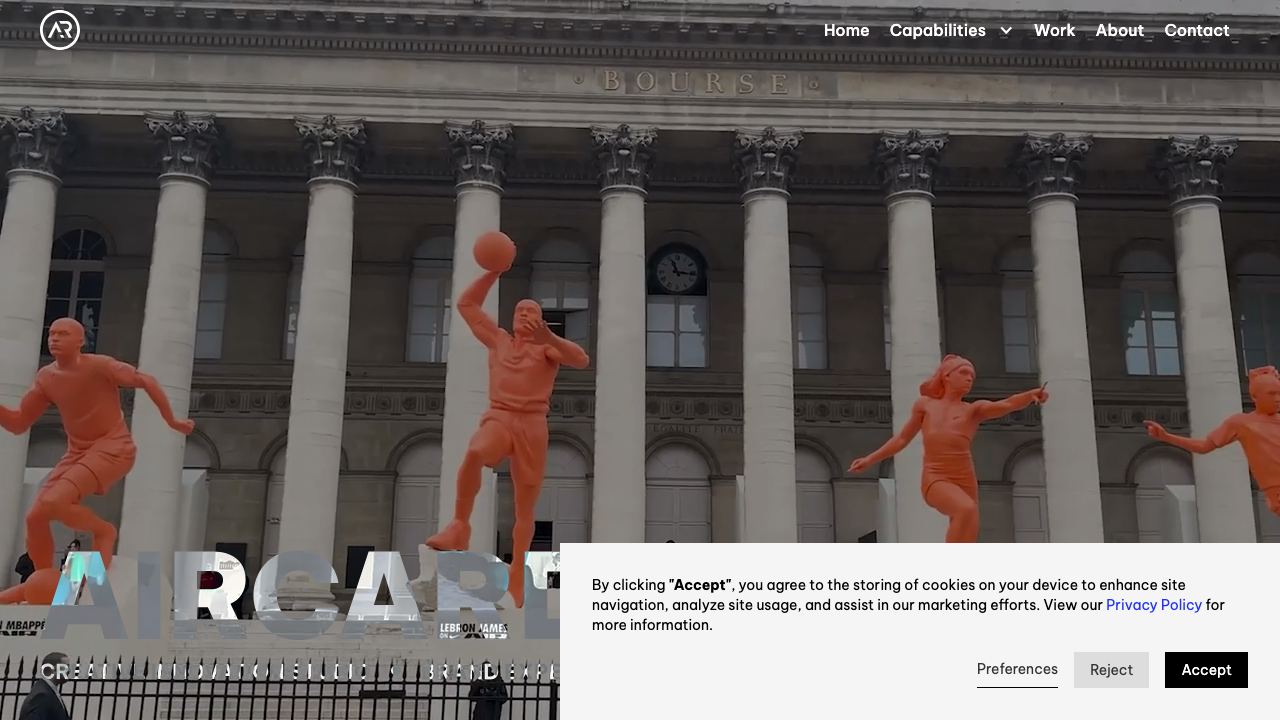
Aircards is a specialized WebAR and AR development studio with a clear focus on delivering polished AR experiences for brands and enterprises across mobile browsers, native apps, and AR glasses including XREAL. Their portfolio demonstrates deep expertise in product visualization AR (allowing customers to see products in their space before purchasing), packaging AR (turning product packaging into interactive digital experiences), and event AR that transforms physical venues with digital overlays.
For XREAL specifically, Aircards' WebAR-first development approach means their experiences are inherently cross-compatible with XREAL's browser environment. Their product visualization work translates particularly well to XREAL glasses, where seeing a digital product floating in your actual physical space is more compelling than viewing it on a phone screen held at arm's length. Aircards brings both the technical AR development skill and the product design sensibility to make XREAL glasses experiences that users actually want to use.
- Specialty: WebAR, Product Visualization AR, Packaging AR, Event AR
- Platform: XREAL-compatible WebAR, Mobile AR, Native Android and iOS
- Website: aircards.co
5. Hidden Creative - UK Agency Specializing in AR Glasses Experiences
Hidden Creative is a UK-based digital experience agency with a specific focus on augmented reality and immersive experiences for enterprise and cultural clients. Their AR work spans museum installations, retail experiences, and branded activations where AR overlays enhance physical environments with contextual digital content. The studio has hands-on experience developing for AR glasses platforms and understands the design constraints that distinguish glasses UX from phone-held AR.
For XREAL projects in cultural institutions, retail environments, or enterprise workplace applications, Hidden Creative brings both the creative vision and technical execution capability that distinguished AR glasses experiences require. Their background in museum and cultural AR is particularly relevant - these clients have demanding accessibility requirements, long deployment lifecycles, and the need for experiences that remain compelling across many visits, all of which translate directly to enterprise XREAL development challenges.
- Specialty: AR Glasses Experiences, Cultural and Museum AR, Retail and Brand AR
- Platform: XREAL, HoloLens, Mobile AR, WebAR
- Website: hiddencreative.com
6. Poplar Studio - AR Product Visualization for XREAL
Poplar Studio is an AR development agency specializing in product visualization experiences - enabling consumers and enterprise buyers to see true-to-scale, photorealistic 3D representations of products in their physical environments before purchasing or specifying. Their client roster spans furniture, fashion, automotive, and consumer electronics brands. Poplar has built AR experiences compatible across mobile (iOS and Android), WebAR browsers, and AR glasses platforms including XREAL.
The XREAL glasses use case for product visualization is compelling: rather than holding a phone up to see a sofa in your living room, you can walk around a showroom with XREAL glasses and have digital product overlays appear contextually in the physical space. Poplar's work in this area is at the frontier of retail and B2B commerce AR. Their 3D content pipeline - optimized for photorealistic rendering on mobile-class hardware - produces assets that look credible on XREAL's displays rather than obviously synthetic.
- Specialty: Product Visualization AR, E-commerce AR, 3D Asset Production
- Platform: XREAL-compatible, Mobile AR, WebAR, Retail Kiosk
- Website: poplar.studio
7. Nexus Studios - Award-Winning XR and AR Glasses Work

Nexus Studios is an international creative studio with offices in London, Los Angeles, and Sydney, recognized for blending storytelling, animation craft, and technology into experiences that win at festivals like Sundance, Tribeca, and SXSW. Their XR portfolio includes pieces that have received Webby Awards, BAFTA nominations, and critical acclaim from the arts and technology communities. Nexus has produced AR experiences and spatial computing installations that push the medium's creative possibilities.
For brands seeking XREAL experiences that stand apart creatively - launch activations, cultural moments, or brand storytelling that requires both craft and technical excellence - Nexus Studios brings a caliber of creative direction that pure-technology agencies cannot match. Their experience with the physical-digital boundary of AR glasses experience design (how content should feel anchored, how scale and perspective affect emotional response, how to make digital content feel genuinely present in physical space) is built from years of production on cutting-edge AR projects.
- Specialty: Creative XR, Spatial Storytelling, Award-Winning AR Experiences
- Recognition: Sundance, Tribeca, SXSW selections; Webby Awards, BAFTA nominations
- Website: nexusstudios.com
8. Dimension Studio - Volumetric Capture and Spatial Computing for XREAL

Dimension Studio is a London and Los Angeles-based studio specializing in volumetric capture - the technology that creates true 3D representations of real humans and objects that can be placed and viewed from any angle in XR. Their volumetric capture facility and proprietary processing pipeline have been used for music videos (BTS, Billie Eilish), film productions, and enterprise training experiences where realistic human representation matters. Their spatial computing work makes them relevant to XREAL development in contexts where human presence in AR matters.
For XREAL applications where the experience centers on a digital human - a virtual instructor, a brand ambassador, a remote collaborator represented spatially in your physical space - Dimension Studio's volumetric capture expertise produces human representations that feel genuinely present in ways that traditional 3D models cannot achieve. As XREAL's spatial computing capabilities expand, the use of photorealistic volumetric humans in AR glasses experiences will become a key differentiator for premium enterprise and consumer applications.
- Specialty: Volumetric Capture, Digital Humans, Spatial Computing Experiences
- Platform: XREAL-compatible, Apple Vision Pro, Meta Quest, WebXR
- Website: dimension.studio
9. Unit9 - Creative Technology Agency with AR Glasses Experiences
Unit9 is a global creative production company with over 25 years of history building at the intersection of technology, storytelling, and brand experience. Offices across London, New York, Los Angeles, Berlin, and Shanghai serve global brand clients across automotive, fashion, entertainment, and consumer technology. Their XR portfolio spans VR films, AR activations, location-based installations, and emerging platform experiments. Unit9 has produced AR glasses experiences and has the creative production infrastructure to handle large-scale branded XREAL projects.
Unit9's strongest value for XREAL clients is their ability to manage complex multi-partner productions that span creative direction, technology development, content production, and global event logistics - the kind of integrated capability needed for brand activations where XREAL glasses are the centerpiece of a broader experiential campaign. For global brands with significant production budgets looking to use XREAL glasses as part of launch events, retail experiences, or cultural partnerships, Unit9 offers the creative ambition and production execution to deliver.
- Specialty: Creative Technology Production, Branded AR Experiences, Global Event XR
- Clients: Global automotive, fashion, entertainment, and consumer technology brands
- Website: unit9.com
- Editorial Rating: 7.5/10
10. Gravity Media - XR Production with AR Glasses Development
Gravity Media is an XR and immersive media production company offering development, production, and deployment services for AR, VR, and mixed reality projects. Their work spans broadcast, live events, enterprise training, and branded experiences. Gravity Media has integrated AR glasses platforms into live production workflows - overlaying real-time data, graphics, and contextual information for broadcast operators and live event staff - which represents an increasingly important XREAL enterprise use case.
For clients in media, live events, and broadcast who need AR glasses as a professional production tool rather than a consumer experience, Gravity Media's background in live production technology is a meaningful differentiator. Their experience managing real-time AR graphics pipelines under the time pressure of live broadcast translates directly to enterprise XREAL deployments where the AR experience must perform reliably in the field. Their production services background also means they can handle content production alongside technology development, reducing the number of vendors required for complex XREAL projects.
- Specialty: XR Production, Live Event AR, Broadcast AR, Enterprise Deployment
- Platform: XREAL, HoloLens, Mobile AR, live production environments
- Website: gravitymedia.com
- Editorial Rating: 7.3/10
How to Choose an XREAL App Development Partner
XREAL is a newer platform with a smaller developer ecosystem than Meta Quest or Apple Vision Pro, which means evaluating studios requires looking at adjacent credentials and platform readiness signals alongside direct XREAL experience.
- Prioritize WebAR experience for fast-path projects - if your goal is reaching XREAL users quickly without native app development, studios with strong WebAR track records (8th Wall, Zappar, Aircards) can ship experiences compatible with XREAL's browser in weeks rather than months
- For native XREAL experiences, verify XREAL SDK familiarity - the XREAL SDK has specific APIs for head tracking, spatial anchors, and display management that differ from mobile AR SDKs. Studios that have shipped native XREAL applications understand these differences; those claiming transferable mobile AR skills should be asked to demonstrate XREAL-specific work
- Evaluate 3DoF vs 6DoF requirements - basic XREAL Air glasses provide 3DoF head tracking (rotation only). XREAL Air 2 Pro and paired 6DoF accessories enable full spatial computing. Your use case determines which tracking mode matters, and your studio should understand both
- Consider cross-device reach - the best XREAL investments typically produce experiences that also work on mobile AR (iOS/Android), reaching a much larger audience with the same content assets. Studios that architect for cross-device reach maximize your content investment
- Ask about Nebula platform integration - XREAL's Nebula app is the primary spatial computing environment for non-browser XREAL content. Studios familiar with Nebula's multi-window management, spatial anchoring, and controller interaction patterns will build better-integrated experiences
Frequently Asked Questions
What is XREAL?
XREAL (formerly Nreal) is a consumer AR glasses company. Its lineup spans the lightweight XREAL Air and Air 2 display glasses, which project a large virtual screen from a connected Android phone or computer, and the new XREAL Aura, a standalone optical see-through headset built on Google's Android XR platform. Unveiled at Google I/O 2026 and shipping in late 2026, Aura adds a 70-degree field of view, 6DoF and hand tracking, a Snapdragon Reality Elite compute puck, and built-in Gemini AI, moving XREAL from phone-tethered displays into full standalone spatial computing.
How do I develop for XREAL glasses?
XREAL supports three main development paths. For native applications, the XREAL SDK (available for Unity and native Android) provides head tracking, spatial anchor APIs, controller support, and display management. For WebAR experiences, XREAL's Nebula browser supports WebXR-compatible content created with platforms like 8th Wall or Zappar - these experiences require no native app development and reach both XREAL users and mobile AR users simultaneously. XREAL also publishes developer documentation, sample projects, and SDK downloads through the XREAL Developer Center. Unity is the most common development environment for 3D XREAL experiences.
What SDK does XREAL use?
It depends on the device. The XREAL Aura runs Google's Android XR, so developers build with the Android XR SDK, Unity, and OpenXR, with Gemini AI available as a platform capability and early hardware access through the Android XR Developer Catalyst Program. The XREAL Air and Air 2 glasses use the XREAL SDK (formerly Nreal SDK) for Unity and native Android, providing head tracking, spatial anchors, controller input, and display calibration, plus WebXR support through the Nebula browser. OpenXR compatibility spans the lineup, enabling code sharing with other OpenXR headsets.
How does XREAL compare to Meta Ray-Ban for developers?
XREAL and Meta Ray-Ban serve fundamentally different developer use cases. XREAL glasses have an integrated display that shows visual AR content - floating windows, 3D objects, spatial overlays - making them appropriate for display-based AR applications. Meta Ray-Ban glasses (Gen 2 and beyond) are primarily voice-first AI assistant glasses with a camera but no display, optimized for hands-free AI queries, photos, and audio. For developers building visual AR experiences, productivity tools, or spatial computing applications, XREAL is the relevant platform. For developers building voice AI assistants, capture tools, or ambient AI experiences, Meta Ray-Ban is more appropriate.
How do I develop for the XREAL Aura?
The XREAL Aura is an Android XR device, so development uses Google's Android XR SDK together with Unity and OpenXR, and can take advantage of Gemini AI for assistant and multimodal features. Studios can apply to the Android XR Developer Catalyst Program, run by Google and XREAL, for early access to Aura hardware and tooling. Because Aura shares the Android XR foundation with other devices in the ecosystem, apps can be designed to target Aura alongside the broader Android XR platform, and existing Unity and OpenXR projects can often be adapted to Aura with platform-specific work.
Related Resources
- Best Smart Glasses Companies in 2026 - Hardware makers and development studios across the smart glasses and AR glasses ecosystem
- Best AR Development Companies - Leading AR studios and platforms building production-grade applications
- XR Hardware Guide - Compare XREAL Air and all AR glasses side by side
Frequently Asked Questions
What is XREAL?
XREAL (formerly Nreal) is a consumer AR glasses company. Its lineup spans the lightweight XREAL Air and Air 2 display glasses, which project a large virtual screen from a connected Android phone or computer, and the new XREAL Aura, a standalone optical see-through headset built on Google's Android XR platform. Unveiled at Google I/O 2026 and shipping in late 2026, Aura adds a 70-degree field of view, 6DoF and hand tracking, a Snapdragon Reality Elite compute puck, and built-in Gemini AI, moving XREAL from phone-tethered displays into full standalone spatial computing.
How do I develop for XREAL glasses?
XREAL offers multiple development paths. The XREAL Aura uses Google's Android XR SDK with Unity and OpenXR, plus Gemini AI. The XREAL Air and Air 2 glasses use the XREAL SDK for Unity and native Android, and also support WebAR through the Nebula browser via platforms like 8th Wall. WebXR-compliant experiences run in the XREAL browser, providing a low-barrier entry to XREAL content development.
What SDK does XREAL use?
It depends on the device. The XREAL Aura runs Google's Android XR, so developers build with the Android XR SDK, Unity, and OpenXR, with Gemini AI available as a platform capability and early hardware access through the Android XR Developer Catalyst Program. The XREAL Air and Air 2 glasses use the XREAL SDK (formerly Nreal SDK) for Unity and native Android, plus WebXR through the Nebula browser. OpenXR compatibility spans the lineup, enabling code sharing with other OpenXR headsets.
How does XREAL compare to Meta Ray-Ban for developers?
XREAL and Meta Ray-Ban serve fundamentally different developer use cases. XREAL glasses have an integrated display that shows visual AR content, and the XREAL Aura adds standalone Android XR spatial computing, making them appropriate for displayable AR, productivity, and spatial applications. Meta Ray-Ban glasses are primarily voice-first AI assistant glasses with a camera but no display. For developers building visual AR or spatial computing experiences, XREAL is the relevant platform; for voice AI, capture, and ambient experiences, Meta Ray-Ban fits better.
How do I develop for the XREAL Aura?
The XREAL Aura is an Android XR device, so development uses Google's Android XR SDK together with Unity and OpenXR, and can take advantage of Gemini AI for assistant and multimodal features. Studios can apply to the Android XR Developer Catalyst Program, run by Google and XREAL, for early access to Aura hardware and tooling. Because Aura shares the Android XR foundation with other devices in the ecosystem, apps can target Aura alongside the broader Android XR platform, and existing Unity and OpenXR projects can often be adapted to Aura with platform-specific work.