
Samsung Galaxy Glasses: Leaked Specs, Price, Release Date & Everything We Know
Samsung's first smart glasses have leaked - codenamed Jinju, powered by Android XR and Gemini AI, priced at $379-$499. Here's everything we know from the latest reports.
Quick Answer
Samsung's first smart glasses have leaked - codenamed Jinju, powered by Android XR and Gemini AI, priced at $379-$499. Here's everything we know from the latest reports.
Samsung's first smart glasses are no longer just a rumor. On April 28, 2026, detailed images and leaked specifications for a device codenamed 'Jinju' appeared on Android Headlines, sourced from real-life photos of a testing unit. Within hours, Road to VR, Android Central, Mashable, Engadget, and Tech Advisor all had stories up. This is the most credible look yet at what Samsung has been quietly building.
The stakes are high. Meta's Ray-Ban smart glasses command an estimated 73-82% of the AI glasses market. Samsung - backed by Google's Android XR platform and Gemini AI - is positioning itself as the first serious challenger from the Android ecosystem. Here is everything the leak tells us.
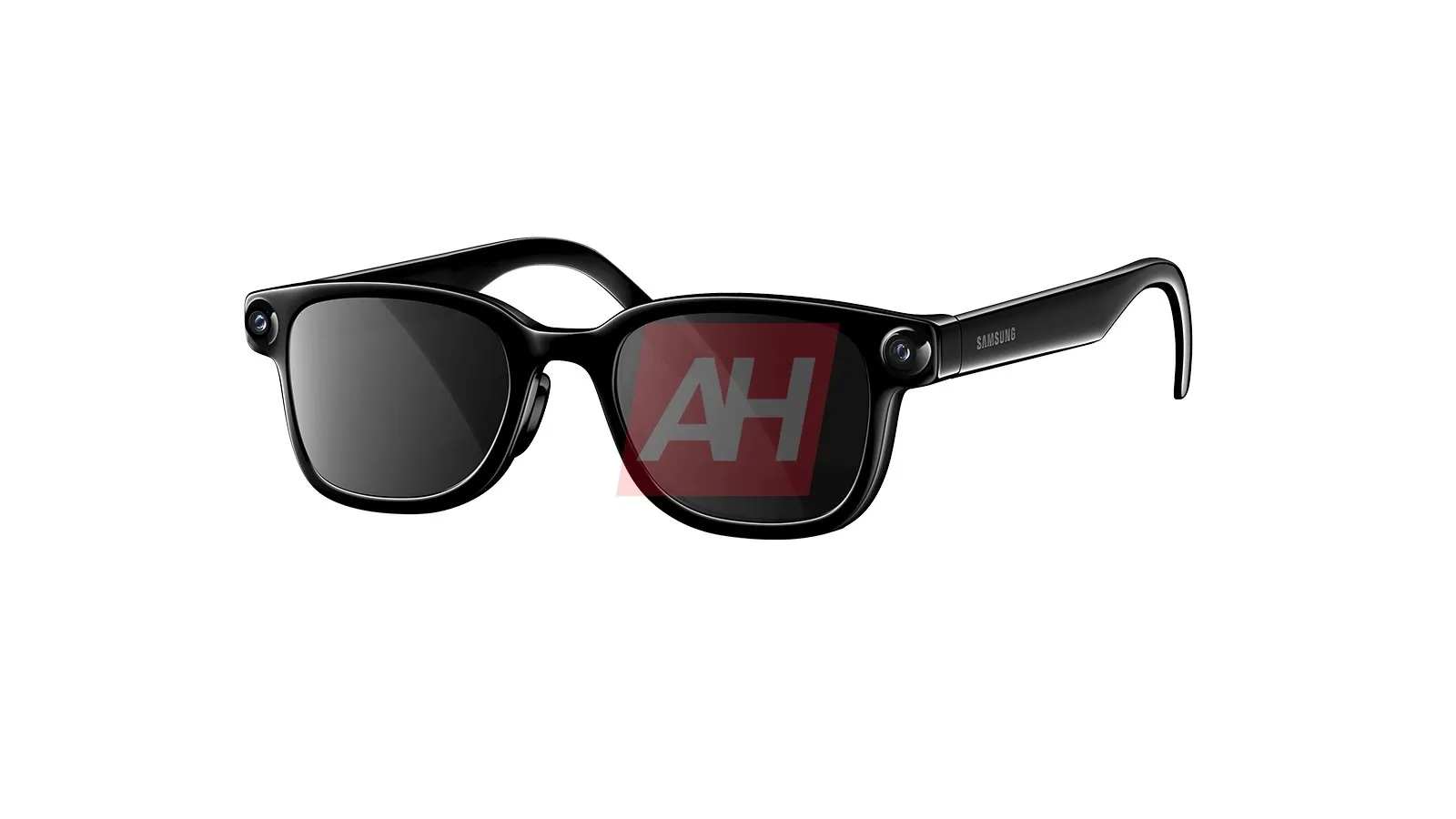
Leaked Specs at a Glance
| Spec⇅ | Details⇅ |
|---|---|
| Codename | Jinju (entry model) / Haean (display model, Gen 2) |
| Processor | Qualcomm Snapdragon AR1 Gen 1 |
| Camera | 12MP Sony IMX681 (two cameras visible in leaked images) |
| Battery | 155mAh |
| Connectivity | WiFi + Bluetooth 5.3 |
| Weight | ~50g |
| Audio | Directional speakers; bone-conduction tech (from patents) |
| Lenses | Photochromic transition lenses (auto-darken in sunlight) |
| Platform | Android XR + Google Gemini AI |
| Price (Jinju) | $379-$499 USD (leaked estimate) |
| Price (Haean) | $600-$900 USD (2027, with micro-LED display) |
| Expected Reveal | Samsung Unpacked, July 2026 |
Design: What the Leaked Images Show
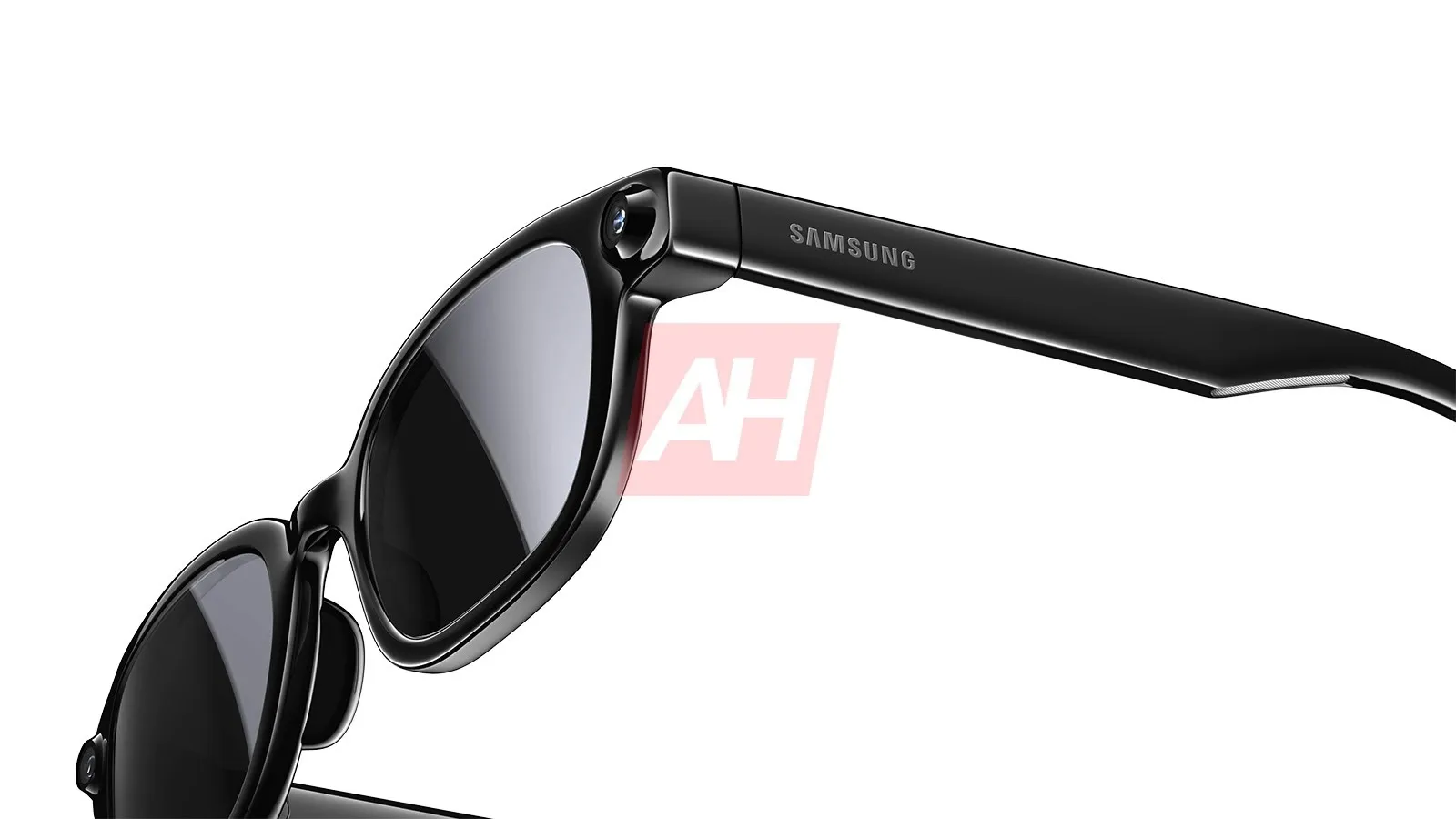
The leaked photos show a frame that will look immediately familiar to anyone who has seen a pair of Ray-Ban Metas. Samsung has gone for a conventional, lifestyle-focused form factor rather than anything overtly techy. The temples are slightly thicker than standard glasses to house the electronics, but from the front, the Jinju reads like an ordinary pair of frames.
The most notable visual difference from Ray-Ban Meta is the camera placement. The Jinju features two prominent camera bumps at the front corners of the frame, housing dual 12MP Sony IMX681 sensors. Ray-Ban Meta's camera is more discreet, embedded into one of the temples. Samsung's approach suggests either a desire for stereo depth perception, higher-quality photo capture, or both. The photochromic lenses - which automatically darken when exposed to UV light - are another feature that distinguishes the Jinju from Meta's offering, which uses standard prescription-compatible lenses.
The overall aesthetic is described as Ray-Ban-style but with a distinctly Samsung sensibility. No confirmed colorways have leaked yet.
Specs Deep Dive
Qualcomm Snapdragon AR1 Gen 1
The Snapdragon AR1 is the same chip that powers the Ray-Ban Meta glasses - Qualcomm's purpose-built silicon for always-on AI glasses. It is designed for ultra-low power consumption, enabling continuous sensor processing without draining a small battery in hours. The chip handles audio processing, camera operations, and AI inference for on-device tasks. Importantly, it is not the same class of processor as the Snapdragon XR series used in full headsets; the AR1 is deliberately constrained to run glasses-weight hardware at glasses-appropriate power levels.
12MP Sony IMX681 Camera
The Sony IMX681 is a high-resolution image sensor typically found in smartphone secondary cameras. At 12MP, it captures significantly more detail than the cameras found in first-generation smart glasses products. Two of these sensors are present on the Jinju, which is unusual - most current smart glasses (including Ray-Ban Meta) use a single front-facing camera. Dual cameras could enable stereo photography, improved video stabilization, or serve as the foundation for future depth-sensing capabilities in later hardware revisions.
155mAh Battery
The 155mAh battery capacity closely mirrors the Ray-Ban Meta, which also uses a small cell supplemented by a charging case. Real-world battery life on the Ray-Ban Meta runs around 4-6 hours of active use. Samsung's figure is likely similar. The charging case - which typically adds several additional charges - has not appeared in the leak. Whether Samsung bundles a case or sells it separately is unknown.
Bluetooth 5.3 + WiFi
Bluetooth 5.3 is the current standard for low-energy wearable connectivity, enabling stable audio streaming and phone pairing. The inclusion of WiFi is notable: Ray-Ban Meta connects via WiFi for certain features, and Samsung's glasses will likely do the same - particularly for Gemini AI, which requires cloud connectivity for complex queries, real-time translation, and navigation.
Photochromic Transition Lenses
Photochromic lenses darken automatically when exposed to ultraviolet light, acting as sunglasses outdoors and clearing to near-transparent indoors. This is a meaningful practical addition that most current smart glasses lack - you do not need to carry a separate pair of sunglasses. It also means the Jinju is potentially more comfortable for extended outdoor use than competitors. The trade-off is that prescription lens compatibility may be more limited.
Android XR + Gemini AI
Android XR is Google and Samsung's joint operating platform for extended reality devices. It is the same platform that underpins the Samsung Galaxy XR headset (formerly codenamed Moohan). For smart glasses, Android XR provides the framework for Gemini AI integration, Google services connectivity, and deep interoperability with Android phones. Leaked and reported Gemini use cases for the glasses include real-time language translation spoken through the speakers, turn-by-turn navigation via Google Maps read aloud, contextual answers to questions about what you are looking at (via camera), and quick photo/video capture with AI-assisted organization.
Pricing and When to Expect It
According to Android Headlines, Samsung is working on two distinct Galaxy Glasses models, aimed at different price points and timelines.
Jinju - The Entry Model (2026)
Jinju is the camera-and-audio-first model - no display, just sensors, speakers, and AI. The leaked price range is $379-$499 USD, positioning it above Meta's core Ray-Ban Meta ($299) but potentially justified by the dual-camera setup, photochromic lenses, and Android XR integration. Launch timing is tied to Samsung Unpacked, which is expected in July 2026. Samsung is also expected to announce the Galaxy Z Fold 8, Galaxy Z Fold 8 Wide, Galaxy Z Flip 8, and Galaxy Watch 9 at that event - so Galaxy Glasses would be a high-profile addition to the lineup.
Haean - The Display Model (2027)
Haean is the more ambitious follow-up, reportedly featuring a micro-LED display for heads-up information overlays. Leaked pricing puts Haean at $600-$900 USD, which aligns with Meta's Ray-Ban Display model ($800, launched in 2025). If the micro-LED rumor is accurate, Haean would represent a genuine bridge between smart glasses and lightweight AR - not full holographic AR like Apple Vision Pro, but a practical overlay layer for navigation, notifications, and AI responses. A 2027 launch gives Samsung time to refine the display technology and build on whatever lessons Jinju teaches them.
Samsung Galaxy Glasses vs Ray-Ban Meta: How They Stack Up
The natural comparison is Ray-Ban Meta, which currently dominates the AI glasses segment. Here is how the leaked Jinju specs line up:
| Feature⇅ | Samsung Galaxy Glasses (Jinju)⇅ | Ray-Ban Meta⇅ |
|---|---|---|
| Price | $379-$499 (leaked) | $299-$329 |
| Chip | Snapdragon AR1 Gen 1 | Snapdragon AR1 Gen 1 |
| Camera | 12MP Sony IMX681 (dual) | 12MP (single) |
| Battery | 155mAh | ~154mAh |
| Audio | Directional speakers + bone-conduction (patents) | Open-ear speakers |
| Lenses | Photochromic transition lenses | Standard / prescription compatible |
| AI Platform | Android XR + Google Gemini | Meta AI |
| Connectivity | WiFi + Bluetooth 5.3 | WiFi + Bluetooth 5.3 |
| Weight | ~50g | ~49g |
| Privacy concerns | TBD | Class-action lawsuit filed (2025) |
| Ecosystem | Samsung Galaxy / Google | Meta / Facebook |
| Available now? | No - expected H2 2026 | Yes |
One underreported factor: Meta is currently facing a class-action lawsuit over Ray-Ban Meta privacy practices, specifically allegations that camera footage was sent to offshore contractors for AI model training. How Samsung handles data privacy with the Jinju could become a significant differentiator if the Meta lawsuit gains traction.
The Bigger Picture: The Android XR Smart Glasses Race
Samsung is entering a market that is becoming crowded fast - and notably, it is not the only Android XR player.
Google x Gentle Monster and Warby Parker
Google is developing its own smart glasses lineup in partnership with fashion eyewear brands Gentle Monster and Warby Parker. Multiple models are in development, including at least one with a display. Google confirmed these partnerships publicly in early 2026. The Gentle Monster collaboration is aimed at fashion-forward consumers, while Warby Parker brings accessibility and mass-market appeal. Both will run Android XR.
Gucci x Google
Google has also partnered with Gucci to create Gucci-branded smart glasses powered by Android XR. This is a luxury play - positioning AI glasses as a fashion accessory rather than a gadget, targeting a very different buyer than Meta's Ray-Ban partnership or Samsung's mainstream Galaxy audience.
Meta's Dominant Position - For Now
Despite the incoming competition, Meta's Ray-Ban partnership gives it a significant head start. Ray-Ban Meta has been shipping since 2023 and has built a real user base. The platform has expanded to include video calling, live streaming, and increasingly capable Meta AI features. Samsung and Google are entering a market where Meta has already done the hard work of convincing consumers that smart glasses are worth buying. The challenge is not awareness - it is differentiation.
The Android XR ecosystem's key advantage is integration with Google services. Gmail, Google Maps, Google Calendar, YouTube, and Gemini are deeply embedded in how Android users work. If Samsung and Google can translate that into genuinely useful glasses experiences, they have a credible path to taking meaningful market share from Meta.
What the Leak Does NOT Tell Us
The leaked images and specs leave several important questions unanswered:
- Battery life: We know capacity (155mAh) but not real-world hours of use under typical workloads.
- Charging case: Whether a case is included, how many additional charges it provides, and whether it supports wireless charging are all unknown.
- Full camera video specs: The 12MP still camera resolution is confirmed, but video resolution (4K? 1080p?), frame rates, and stabilization capabilities are not.
- Microphone array: Smart glasses rely on mics for voice commands and call quality. The Jinju's microphone configuration has not been detailed.
- Specific Gemini features: Which Gemini capabilities are on-device vs. cloud-dependent, and what the latency looks like in real use, are unconfirmed.
- Prescription lens support: Whether the photochromic lenses can be made in prescription strengths is a major practical question for the largest potential user base.
- Water resistance: No IP rating has been mentioned.
- Colors and frame styles: Only one prototype design has appeared in the leak.
- Official name: Samsung filed for the 'Galaxy Glasses' trademark in 2023, but the final product name has not been confirmed.
Should You Wait for Samsung Galaxy Glasses?
If you are currently considering Ray-Ban Meta and you are an Android / Galaxy user, it is worth waiting. The Jinju is expected to reveal at Samsung Unpacked in July 2026 - only a few months away. At $379-$499, it will cost more than a base Ray-Ban Meta, but the dual cameras, photochromic lenses, and Gemini integration may justify the premium depending on your use case.
If you are an iPhone user, Samsung Galaxy Glasses are likely to be deeply integrated with Android and Galaxy devices in ways that will not translate well to iOS. Ray-Ban Meta has better iPhone support today and that is unlikely to change.
If you are holding out for AR displays, wait for Haean (2027) or watch what Google's Gentle Monster glasses look like when they launch.
Frequently Asked Questions
When will the Samsung Galaxy Glasses be released?
The camera-only Jinju model is expected to be revealed at Samsung Unpacked in July 2026, with a retail launch in late 2026. The display-equipped Haean model is targeted for 2027.
How much will Samsung Galaxy Glasses cost?
Leaked pricing puts the entry-level Jinju model at $379-$499 USD. The premium Haean model with a display is rumored at $600-$900 USD.
Do Samsung Galaxy Glasses have a display?
The first model (Jinju) does not include a display - it focuses on camera, audio, and AI. A second-generation model (Haean) is said to feature a micro-LED display and is expected in 2027.
What AI features will Samsung Galaxy Glasses have?
The glasses run Android XR with Google Gemini integration. Expected features include real-time language translation, contextual question answering, Google Maps navigation directions, and photo capture with AI-assisted tagging.
How do Samsung Galaxy Glasses compare to Ray-Ban Meta?
Both use the Snapdragon AR1 chip and similar 155mAh batteries. Samsung differentiates with dual 12MP cameras, photochromic lenses, Android XR + Gemini AI, and deep Samsung Galaxy ecosystem integration. Samsung has not yet officially confirmed specs or pricing.
Sources
Android Headlines - Original leak with images
Android Central - Galaxy Glasses leak analysis
Mashable - Samsung Galaxy Glasses Jinju leak
Tech Advisor - Specs, price and design analysis
Engadget - Samsung rumored smart glasses