Best AR Companies for Industrial and Manufacturing Training in 2026
AR companies for industrial training overlay real-time instructions, safety alerts, and expert guidance onto physical equipment and workspaces - reducing errors and accelerating skill transfer on the factory floor. This guide covers the top providers for AR industrial and manufacturing training.
Quick Answer
AR companies for industrial training overlay real-time instructions, safety alerts, and expert guidance onto physical equipment and workspaces - reducing errors and accelerating skill transfer on the factory floor. This guide covers the top providers for AR industrial and manufacturing training.
Industrial and manufacturing training faces a fundamental challenge: the most effective learning happens on actual equipment, in actual facilities, with real consequences for errors. That combination of authenticity and risk makes traditional hands-on training expensive, dangerous, and operationally disruptive. Augmented reality changes the equation by overlaying digital content - step-by-step instructions, safety alerts, equipment annotations, and expert guidance - directly onto real machines and workspaces, giving workers contextual learning support at the point of need without taking equipment out of production.
AR industrial training is distinct from VR in a critical way: workers remain in their actual physical environment, interacting with real equipment, while digital information is layered on top. This means AR training and guided work can happen on the actual factory floor, with actual machines, during the actual work process - making the transfer from training to practice nearly instantaneous. For complex equipment maintenance, assembly procedures, and safety-critical processes, that real-world context produces far stronger performance gains than any simulation.
This guide covers the eight leading AR companies for industrial and manufacturing training in 2026, evaluated on platform maturity, industrial content depth, hardware compatibility, integration with MES and ERP systems, and evidence of measurable performance improvements in manufacturing environments.
How We Rank
- Industrial AR platform maturity and reliability in demanding manufacturing environments
- Hardware compatibility across industrial-grade AR glasses and standard tablets
- Integration with MES, ERP, PLM, and other manufacturing information systems
- Custom content authoring capability for organization-specific equipment and procedures
- Evidence of measurable training and performance improvements in industrial deployments
AR Companies for Industrial and Manufacturing Training at a Glance
| #⇅ | Company⇅ | Best For⇅ | Location⇅ |
|---|---|---|---|
| 1 | Treeview | Custom AR industrial training software | Global |
| 2 | PTC Vuforia | Industrial AR training platform | USA / Global |
| 3 | Scope AR | Remote expert assistance and AR work guidance | Canada / Global |
| 4 | TeamViewer Frontline | Enterprise AR connected worker platform | Germany / Global |
| 5 | Upskill / Skylight | AR platform for frontline workers | USA |
| 6 | RE'FLEKT | Industrial AR for maintenance and training | Germany / Global |
| 7 | NGRAIN | 3D AR for complex equipment training | Canada / Global |
| 8 | Apprentx | AR step-by-step technical guidance | France / Global |
1. Treeview
Treeview builds custom AR industrial training software that integrates digital learning content directly into the manufacturing environment. For each client, Treeview models the actual equipment, processes, and safety procedures in AR - creating training and guided work experiences that workers use on the factory floor with their actual machines, not in a classroom or simulation. This approach produces faster skill transfer, higher procedure accuracy, and stronger retention because the learning context is identical to the performance context. Treeview's AR solutions can run on industrial AR glasses or standard tablets depending on the client's hardware environment.

Key Strengths:
- Fully custom AR training built around actual equipment, facilities, and manufacturing processes
- Flexible delivery across industrial AR headsets and tablet devices
- Integration with existing MES and ERP systems for contextual training tied to production data
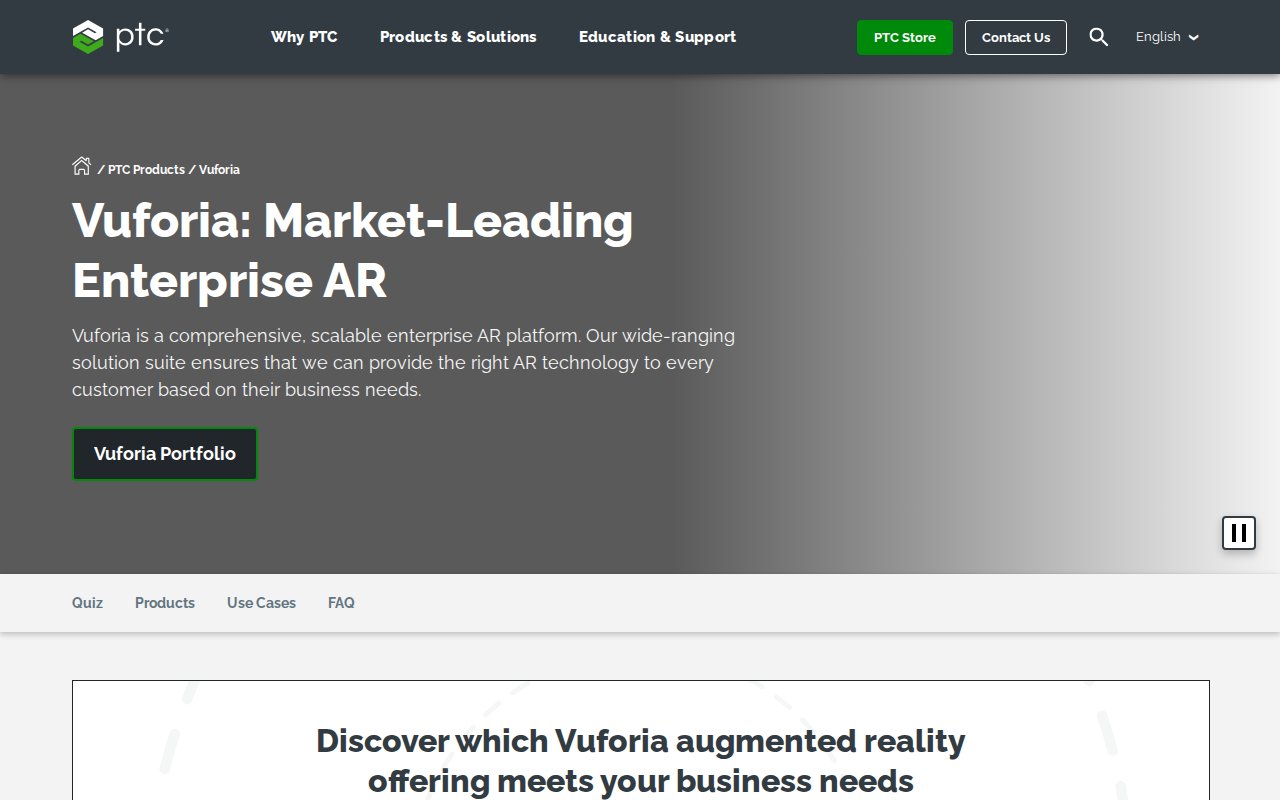
2. PTC Vuforia
PTC's Vuforia platform is the most widely deployed industrial AR solution for manufacturing training and guided work globally. Vuforia Instruct enables the creation of step-by-step AR work instructions for assembly, maintenance, and training purposes, while Vuforia Expert Capture allows experienced workers to record knowledge demonstrations that are converted into AR training content. PTC's deep integration with its own ThingWorx IoT platform and major ERP systems makes Vuforia particularly powerful for organizations that want to tie AR training to live production data and equipment performance metrics.
Key Strengths:
- Most mature industrial AR training platform with the broadest enterprise manufacturing deployment base
- Expert Capture enabling knowledge transfer from experienced workers to AR training content
- Deep integration with ThingWorx IoT and major ERP systems for data-driven manufacturing training
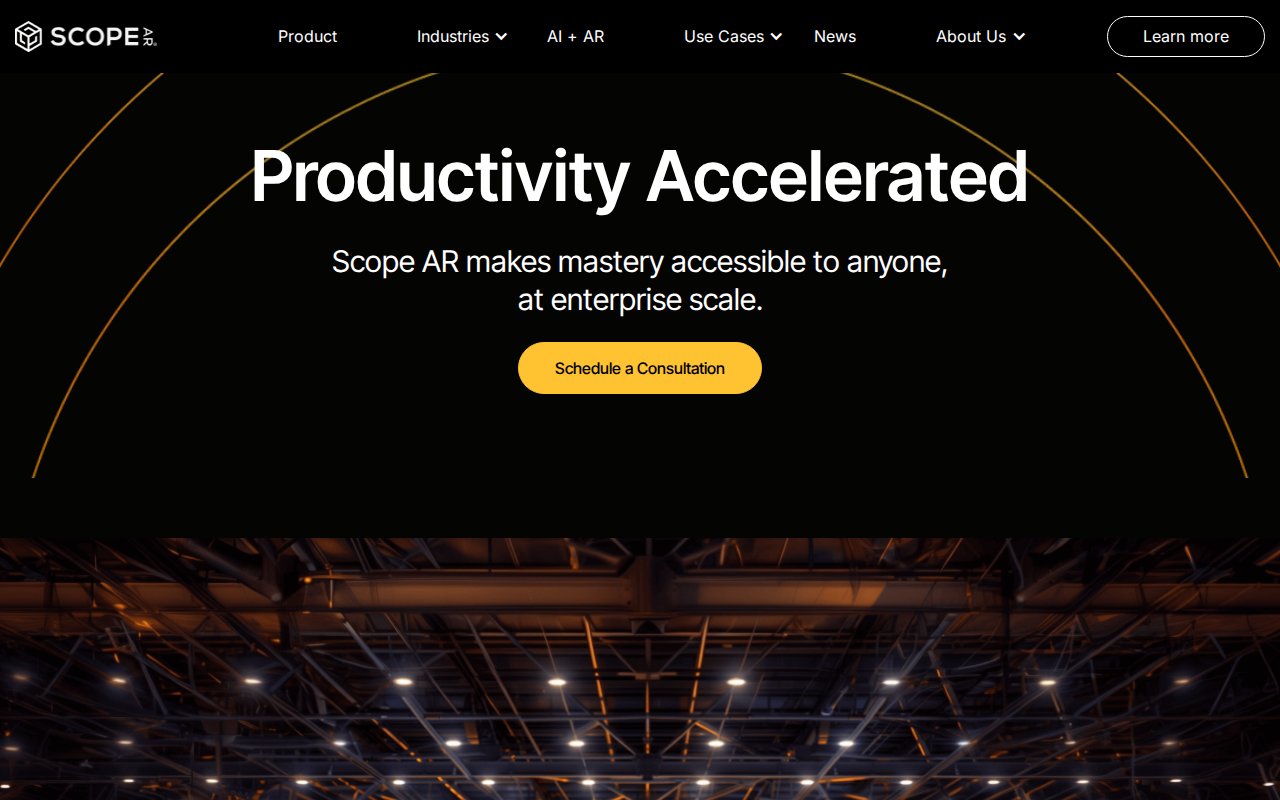
3. Scope AR
Scope AR specializes in remote expert assistance and AR work guidance for industrial environments. Their WorkLink platform allows subject-matter experts and trainers to connect with frontline workers in real time, annotating live video feeds with digital instructions and guiding workers through complex procedures as if standing beside them. For industrial training contexts where expert knowledge is scarce and geographically distributed, Scope AR provides a mechanism to scale expertise across a global workforce without requiring physical travel. Scope AR is used by major aerospace, defense, and oil and gas organizations.
Key Strengths:
- Remote expert assistance enabling real-time AR guidance for distributed industrial workforces
- WorkLink platform for AR work instructions on complex industrial equipment
- Strong aerospace and oil and gas client base with demanding procedure accuracy requirements
4. TeamViewer Frontline
TeamViewer's Frontline platform is an enterprise AR connected worker solution that covers industrial training, guided work, quality inspection, and remote assistance in a single platform. Strong in Germany and across European manufacturing, Frontline integrates with SAP and other enterprise systems to provide context-aware AR content that adapts to the specific equipment, production order, and worker role. TeamViewer's global support infrastructure and enterprise procurement relationships make Frontline an accessible entry point for large manufacturing organizations already in the TeamViewer ecosystem.
Key Strengths:
- Integrated AR platform covering training, guided work, quality inspection, and remote assistance
- Deep SAP integration for context-aware AR content tied to production orders and equipment data
- Enterprise procurement simplicity for organizations already in the TeamViewer ecosystem
5. Upskill / Skylight
Upskill's Skylight platform is a connected worker AR solution designed for frontline industrial workers, providing digital work instructions, remote expert access, and training content through AR glasses and tablets. Skylight is particularly strong in aerospace, defense, automotive, and logistics manufacturing environments where procedural accuracy is critical and workforce experience levels vary widely. Upskill has demonstrated measurable improvements in procedure completion accuracy and training time in large-scale enterprise deployments with clients including Boeing, GE, and Lockheed Martin.
Key Strengths:
- Proven deployment with aerospace and defense manufacturers demanding the highest procedural accuracy
- Strong connected worker platform integrating training, guided work, and remote expert access
- Demonstrated ROI evidence from large-scale deployments with major industrial clients
6. RE'FLEKT
RE'FLEKT is a German industrial AR company specializing in maintenance, training, and guided procedures for manufacturing and process industries. Their platform supports the creation of AR training content and work instructions that can be delivered on a range of AR hardware including smart glasses, tablets, and mobile devices. RE'FLEKT has particular depth in the automotive, chemical, and utilities sectors, with expertise in connecting AR training content to existing documentation management systems and work order processes.
Key Strengths:
- Specialized depth in automotive, chemical, and utilities AR training and maintenance guidance
- Integration with documentation management systems and work order processes
- Strong European manufacturing track record with multi-language, multi-site capability
7. NGRAIN
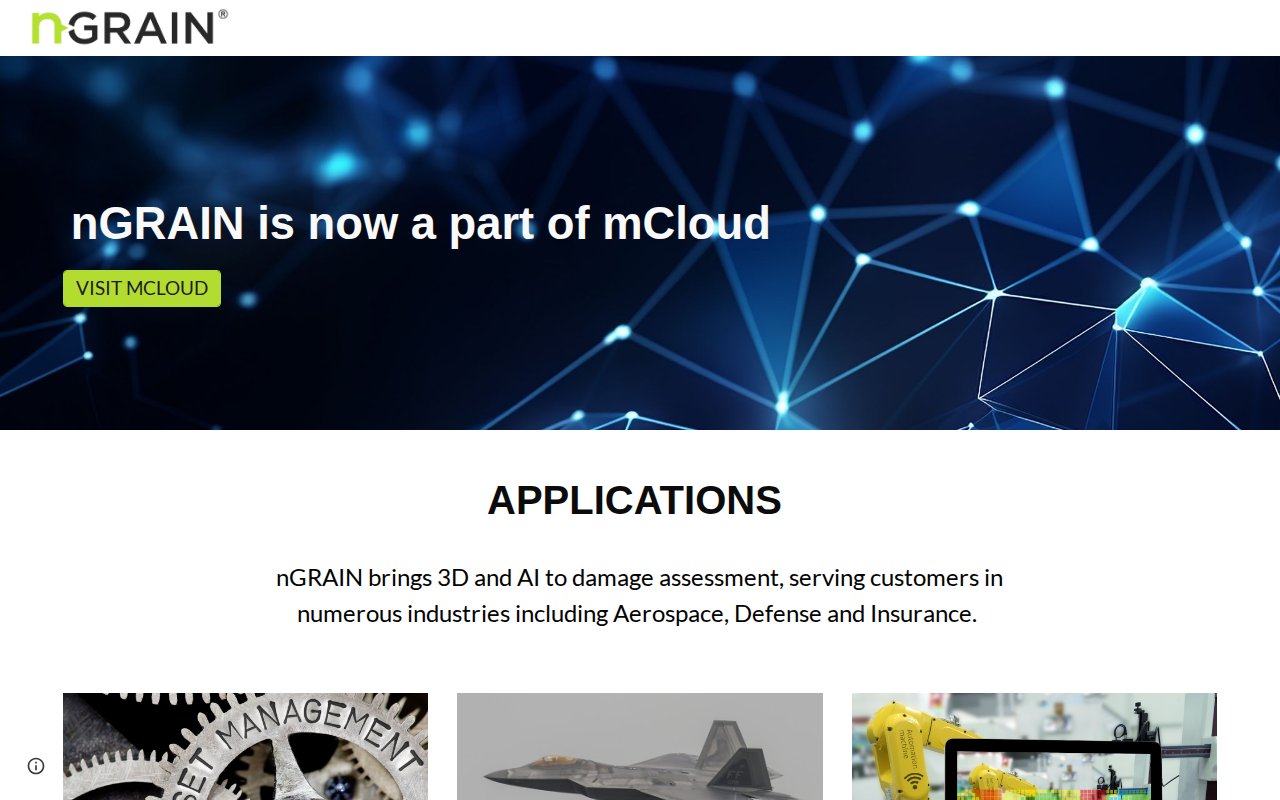
NGRAIN specializes in 3D interactive AR for complex equipment training and maintenance - particularly for defense, aerospace, and heavy industrial applications where the equipment is too large, too expensive, or too classified to use for routine training. NGRAIN's voxel-based 3D models allow trainers to create highly detailed, technically accurate equipment representations that workers can interact with in AR, building maintenance and operation skills that transfer directly to real-world performance. NGRAIN's depth in defense and aerospace makes them the benchmark provider for technically complex, high-fidelity industrial AR training.
Key Strengths:
- Highest technical fidelity 3D AR for complex defense, aerospace, and heavy industrial equipment
- Voxel-based modeling for accurate, interactive representation of equipment internals
- Strong track record with defense and government organizations requiring the highest accuracy standards
8. Apprentx
Apprentx provides AR step-by-step technical guidance for industrial workers performing complex assembly, installation, and maintenance procedures. Based in France, Apprentx focuses on making AR guidance accessible to frontline technical workers without extensive technology experience, with an interface designed for use in active production environments. Apprentx supports both training and on-the-job guidance use cases, allowing organizations to deploy a single AR platform that serves workers throughout the skill development lifecycle from initial onboarding through advanced procedure execution.

Key Strengths:
- AR guidance interface designed for frontline workers in active production environments
- Covers both training and on-the-job guided work use cases in a single platform
- Strong industrial manufacturing and technical services client base in Europe
Frequently Asked Questions
Q: What is AR industrial training?
A: AR industrial training uses augmented reality to overlay digital content - instructions, diagrams, safety alerts, equipment annotations, and expert guidance - directly onto real machinery and workspaces via smart glasses or tablets. Unlike VR, workers remain in their actual physical environment and interact with real equipment, making AR particularly effective for complex maintenance procedures, assembly tasks, and safety-critical processes where real-world context is essential for skill transfer.
Q: How does AR training compare to VR training for manufacturing?
A: AR and VR serve complementary training use cases in manufacturing. AR is strongest for on-the-job guided procedures, maintenance tasks, and situations where workers need to interact with actual equipment and see the real physical context. VR excels for safety hazard simulation, equipment familiarization before live practice, and high-risk scenarios where real-world practice is too dangerous or disruptive. Many manufacturing organizations deploy both: VR for safety induction and initial equipment familiarization, AR for on-the-job guidance and complex procedure training.
Q: What hardware is used for AR industrial training?
A: Industrial AR training runs on a range of hardware including industrial-grade smart glasses (RealWear, Vuzix, Epson Moverio), consumer-grade AR headsets (Microsoft HoloLens 2), and standard tablets and smartphones. Hardware selection depends on the specific use case, environment conditions, and budget. Smart glasses are preferred for hands-free operation during maintenance tasks; tablets are lower cost and accessible for training contexts where hands-free is less critical.
Q: How much does AR industrial training implementation cost?
A: AR industrial training implementation costs vary significantly by scope. Off-the-shelf AR platform licenses for industrial use typically range from $50,000 to $200,000 per year depending on user count and features. Custom AR content development for specific equipment and procedures adds $15,000 to $75,000 per module depending on complexity. Hardware costs range from $500 per unit for tablets to $3,000 to $5,000 per unit for industrial AR glasses. Full enterprise deployments across large manufacturing networks typically represent $500,000 to $2 million in first-year investment.
The eight AR companies above represent the spectrum from off-the-shelf industrial platforms with proven enterprise deployment to fully custom solutions built around specific equipment and processes - giving manufacturing organizations at every stage of AR readiness a viable path to deploying augmented reality training at scale.