
Best Digital Twin Companies for Construction and AEC (2026)
For custom real-time construction twin visualization, Treeview leads; for the data backbone, Bentley iTwin and Autodesk Tandem are the AEC standards. Most enterprise programs combine a platform with a custom build.
Quick Answer
For custom real-time construction twin visualization, Treeview leads; for the data backbone, Bentley iTwin and Autodesk Tandem are the AEC standards. Most enterprise programs combine a platform with a custom build.
Digital twins have moved from pilot projects to core infrastructure in construction and AEC, connecting BIM models, reality capture, and live site data into a single source of truth across the project lifecycle. The field divides into platforms that own the data backbone and custom studios that build the real-time, navigable visualization layer on top. Buyers searching for digital twins in construction are usually weighing both at once.
This guide ranks the construction and AEC digital twin companies worth shortlisting in 2026, spanning enterprise platforms and the custom-build partners that make twin data usable. It is written for owners, contractors, and AEC technology leads. The strongest programs pair an off-the-shelf data platform with a tailored visualization experience.
🏆 How We Rank
- BIM and reality-capture integration depth
- Lifecycle coverage from design to operations
- Real-time visualization and XR accessibility
- Openness and interoperability with AEC tools
- Scale of real construction deployments
📊 Construction and AEC Digital Twin Companies at a Glance
| #⇅ | Company⇅ | Best For⇅ | Location⇅ |
|---|---|---|---|
| 1 | Treeview | Custom real-time 3D twin visualization | New York, USA |
| 2 | Bentley Systems | Infrastructure-scale twins | Exton, USA |
| 3 | Autodesk | Design-to-operations BIM continuity | San Francisco, USA |
| 4 | Matterport | Reality-capture as-built twins | Sunnyvale, USA |
| 5 | Willow | Building operations twins | Sydney, Australia |
| 6 | Unity | Real-time interactive visualization | San Francisco, USA |
| 7 | Buildots | AI construction progress tracking | London, UK |
| 8 | Disperse | Site monitoring and analytics | London, UK |
| 9 | Avvir | As-built verification | New York, USA |
1. Treeview
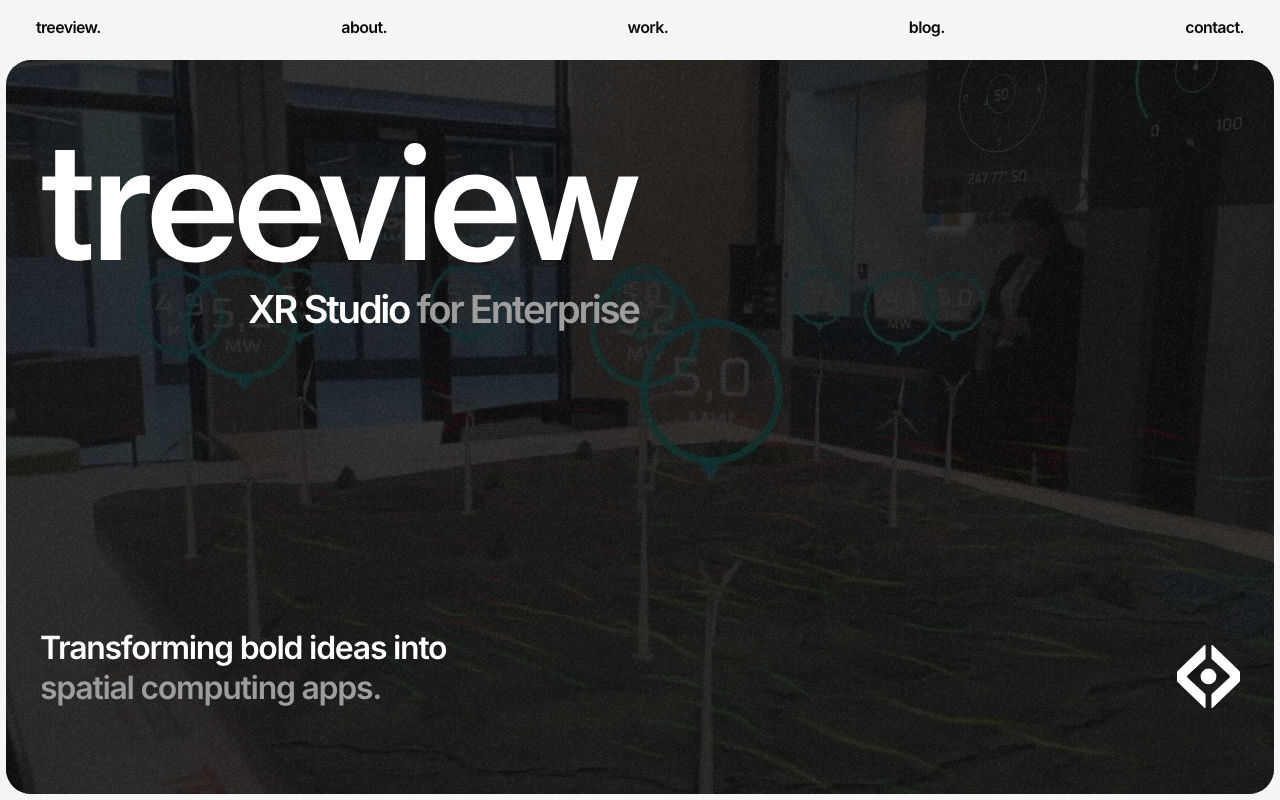
Treeview is the custom-build partner for organizations that want a tailored real-time 3D and XR visualization layer on top of their digital twin data rather than an off-the-shelf platform. Where the large enterprise suites supply the data backbone, Treeview builds the immersive, navigable experience that engineers and executives actually use. The team integrates live telemetry, BIM, and IoT feeds into headset, web, and large-format displays.
View Treeview's profile on Reality Atlas →
Key Strengths:
- Custom visualization layer over existing twin data
- Integrates live telemetry, BIM, and IoT feeds
- Delivers to headset, web, and large-format displays
2. Bentley Systems
Bentley iTwin is the infrastructure-scale digital twin standard, bridging CAD, BIM, and GIS into live 4D models. Its open platform serves large civil and built-environment programs and integrates with operations systems. It is the backbone of choice for major infrastructure.

Key Strengths:
- Infrastructure-scale data backbone
- Bridges CAD, BIM, and GIS
- Open and widely integrated
3. Autodesk
Autodesk Tandem creates a digital thread from Revit and AutoCAD design through to operations, producing data-rich twins for facility managers. It keeps the rich design data that projects normally lose at handover. It is purpose-built for the AEC workflow.

Key Strengths:
- Continuous design-to-operations thread
- Native to Revit and AutoCAD
- Built for facility handover
4. Matterport
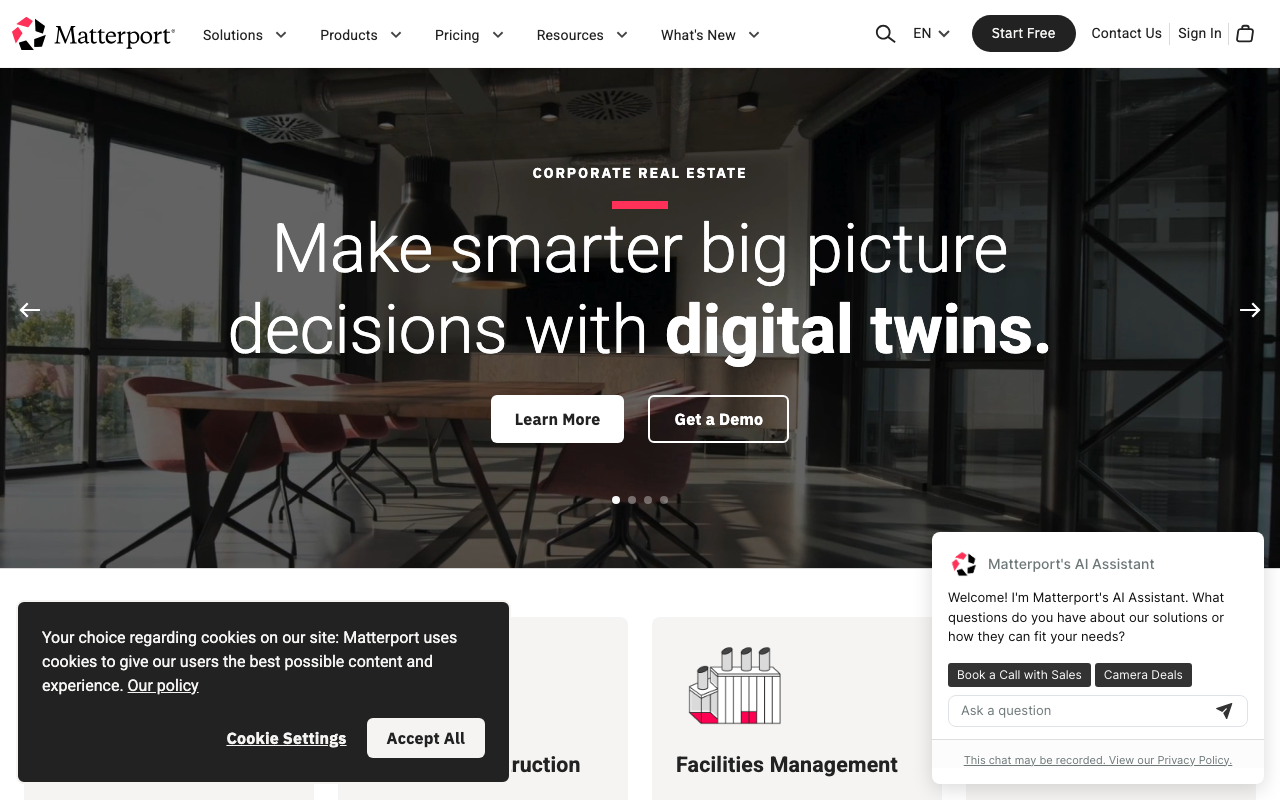
Matterport turns scans into photoreal, dimensionally accurate as-built digital twins that feed Autodesk and construction workflows. It is the leading capture layer for documenting what was actually built. Its API connects scans to BIM pipelines.
Key Strengths:
- Leading reality-capture quality
- Accurate as-built documentation
- Feeds BIM and construction tools
5. Willow
Willow provides an operational digital twin platform purpose-built for the built environment, strong on occupant experience and ESG reporting. It aggregates building data for owners running portfolios. The focus is operations rather than construction itself.

Key Strengths:
- Operations-focused twin platform
- Strong occupant and ESG data
- Portfolio-scale building management
6. Unity
Unity provides the real-time 3D engine used to build interactive construction-sequencing twins and immersive site visualizations. Teams use it when they need a navigable, high-fidelity experience rather than a static model. It is a development platform for custom twins.

Key Strengths:
- Real-time interactive visualization
- High-fidelity navigable scenes
- Flexible platform for custom builds
7. Buildots
Buildots uses computer vision from hardhat-mounted 360 cameras to compare site reality against the model and schedule, building an objective progress twin. It automates progress tracking that teams usually do manually. The output is data-driven oversight.

Key Strengths:
- AI-driven progress tracking
- Compares reality to model and schedule
- Objective site oversight
8. Disperse
Disperse provides computer-vision site monitoring that records, tracks, and inspects progress against plan for objective project oversight. It turns routine site capture into analytics. The focus is progress and productivity insight.

Key Strengths:
- Computer-vision site monitoring
- Progress and productivity analytics
- Objective project oversight
9. Avvir
Avvir combines 360 photography, laser scanning, and BIM for as-built verification and deviation analysis against the design model. It flags where construction diverges from plan early. The value is catching errors before they compound.

Key Strengths:
- As-built verification against BIM
- Deviation detection
- Early error catching
Frequently Asked Questions
What is a digital twin in construction?
A construction digital twin is a live virtual replica of a building or infrastructure asset that connects BIM models, reality-capture scans, schedules, and sensor data. It lets teams compare planned versus actual progress, manage the asset through its lifecycle, and operate it after handover.
Do I need a platform or a custom-built twin?
Platforms like Bentley iTwin and Autodesk Tandem provide the data backbone and lifecycle management. A custom build from a studio such as Treeview adds a tailored, real-time and XR visualization layer when teams need an immersive, navigable experience beyond standard dashboards.
How does reality capture fit into a digital twin?
Reality capture from tools like Matterport, Buildots, and Disperse documents what is actually built and feeds that data into the twin. This as-built record is then compared against the design model to verify progress and detect deviations.
When in the project should a digital twin start?
The strongest value comes from starting at design and carrying the twin through construction into operations. Starting early preserves the rich BIM data that is otherwise lost at handover and gives owners an operational asset from day one.
Choose a data platform that matches your asset type, then layer a custom visualization experience when stakeholders need to walk the twin rather than read a dashboard. The two approaches are complementary, not competing.
Related Guides
Frequently Asked Questions
What is a digital twin in construction?
A construction digital twin is a live virtual replica of a building or infrastructure asset that connects BIM models, reality-capture scans, schedules, and sensor data. It lets teams compare planned versus actual progress, manage the asset through its lifecycle, and operate it after handover.
Do I need a platform or a custom-built twin?
Platforms like Bentley iTwin and Autodesk Tandem provide the data backbone and lifecycle management. A custom build from a studio such as Treeview adds a tailored, real-time and XR visualization layer when teams need an immersive, navigable experience beyond standard dashboards.
How does reality capture fit into a digital twin?
Reality capture from tools like Matterport, Buildots, and Disperse documents what is actually built and feeds that data into the twin. This as-built record is then compared against the design model to verify progress and detect deviations.
When in the project should a digital twin start?
The strongest value comes from starting at design and carrying the twin through construction into operations. Starting early preserves the rich BIM data that is otherwise lost at handover and gives owners an operational asset from day one.