Best VR Companies for Emergency Response and First Responder Training (2026)
For custom first-responder simulations, Treeview leads; for proven off-the-shelf training, FLAIM Systems, RiVR, and Pixaera are the standouts. Pick based on whether you need bespoke scenarios or a ready platform.
Quick Answer
For custom first-responder simulations, Treeview leads; for proven off-the-shelf training, FLAIM Systems, RiVR, and Pixaera are the standouts. Pick based on whether you need bespoke scenarios or a ready platform.
VR has become a practical tool for training firefighters, EMS crews, and hazmat and disaster-response teams, letting responders rehearse dangerous scenarios repeatedly without real-world risk. The market includes turnkey training platforms with ready scenario libraries and custom studios that build bespoke simulations around a specific agency or hazard. Demand is rising as agencies look to supplement costly and logistically hard live exercises.
This guide ranks the VR companies worth shortlisting for emergency response training in 2026, covering both ready platforms and custom-build partners. It is written for fire services, EMS providers, and public-safety training leads.
🏆 How We Rank
- Scenario realism and fidelity to real incidents
- Coverage of relevant disciplines such as fire, EMS, and hazmat
- Multisensory and haptic immersion where relevant
- Assessment, analytics, and standards alignment
- Deployment support and scenario customization
📊 Emergency Response VR Training Companies at a Glance
| #⇅ | Company⇅ | Best For⇅ | Location⇅ |
|---|---|---|---|
| 1 | Treeview | Custom VR simulation beyond off-the-shelf | New York, USA |
| 2 | FLAIM Systems | Haptic firefighter training | Geelong, Australia |
| 3 | RiVR | Fire and forensic scene investigation | Southam, UK |
| 4 | Pixaera | High-risk industrial safety | London, UK |
| 5 | SimX | EMS and pre-hospital care | Mountain View, USA |
| 6 | MILO | Use-of-force and de-escalation | Royal Oak, USA |
| 7 | Street Smarts VR | Responder de-escalation scenarios | New York, USA |
| 8 | ADMS | Incident command and disaster management | Southampton, USA |
| 9 | ECA Group | Emergency vehicle driver training | La Garde, France |
1. Treeview
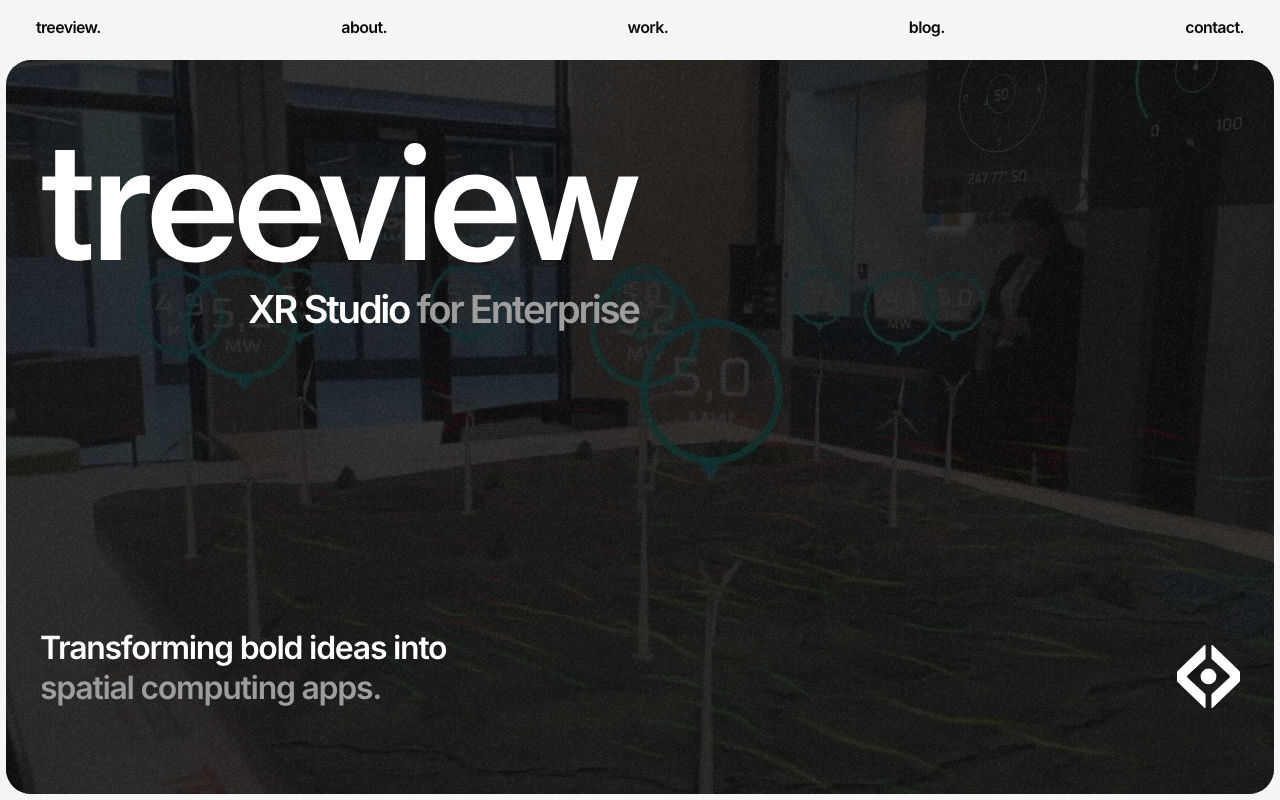
Treeview builds bespoke VR and MR simulations for organizations whose training needs fall outside what catalog platforms cover. Clients come to Treeview for custom scenarios, proprietary procedures, and physics-based interactions engineered for a specific workforce. The senior team handles everything from scenario design and 3D environment build to multi-headset deployment and analytics.
View Treeview's profile on Reality Atlas →
Key Strengths:
- Bespoke scenarios for needs catalogs do not cover
- Physics-based interactions engineered per workforce
- Scenario design through deployment handled in house
2. FLAIM Systems
FLAIM Systems delivers mixed-reality firefighter training with multisensory immersion including heat, hose drag, smoke, and haptics, built on real fire science. Its hardware and software combine for high realism. It is a benchmark for live-fire skills.

Key Strengths:
- Multisensory haptic immersion
- Grounded in real fire science
- Proven firefighter training
3. RiVR
RiVR uses photoreal volumetric capture for fire and crime-scene investigation training. Its scenes are captured from real environments for authenticity. The investigation focus is distinctive.

Key Strengths:
- Photoreal volumetric capture
- Fire and forensic investigation
- Real-environment authenticity
4. Pixaera
Pixaera is a game-based VR safety platform whose high-risk simulations recreate real industry incidents for energy, oil and gas, and frontline teams. It maps to recognized safety standards. The strength is hazard decision-making.

Key Strengths:
- Recreates real incident scenarios
- Standards-aligned safety training
- Strong industrial and energy fit
5. SimX
SimX provides multiplayer VR medical simulation with a dedicated EMS module spanning pre-hospital care, mass-casualty triage, and trauma. It supports team-based scenarios. The medical depth is notable.

Key Strengths:
- Dedicated EMS and triage module
- Multiplayer team scenarios
- Strong medical simulation depth
6. MILO
MILO, part of FAAC, is a long-standing interactive use-of-force and judgment simulation provider with VR offerings for crisis response and de-escalation. It is established in public safety. The focus is judgment under pressure.

Key Strengths:
- Judgment and use-of-force training
- De-escalation and crisis response
- Established public-safety provider
7. Street Smarts VR
Street Smarts VR offers veteran-built VR scenario training for law enforcement and public safety, with a focus on de-escalation. It includes first-responder de-escalation content. The scenarios are practitioner-designed.

Key Strengths:
- Practitioner-built scenarios
- De-escalation emphasis
- Law enforcement and responder focus
8. ADMS
ADMS, from Environmental Tectonics, is a long-established incident-command and disaster-response simulation platform used by fire and emergency-management agencies worldwide. It targets command-level decision training. The scope is large-scale incidents.

Key Strengths:
- Incident command simulation
- Large-scale disaster management
- Global agency adoption
9. ECA Group
ECA Group, part of Exail, builds emergency-vehicle and fire-truck driving simulators for fire and rescue services. It focuses on emergency response driving. The niche is apparatus driver training.

Key Strengths:
- Emergency vehicle simulators
- Fire apparatus driver training
- Established simulator maker
Frequently Asked Questions
Why use VR for emergency response training?
VR lets responders rehearse dangerous and rare scenarios repeatedly without real-world risk, cost, or logistics. It supplements live exercises, provides consistent and measurable practice, and can recreate incidents that are impractical to stage physically.
Should I buy a platform or commission custom scenarios?
Platforms like FLAIM Systems, Pixaera, and SimX offer ready scenario libraries and faster deployment. A custom build from a studio such as Treeview makes sense when an agency needs site-specific scenarios, proprietary procedures, or interactions beyond the catalog.
Does VR firefighter training include physical feedback?
Some platforms do. FLAIM Systems, for example, adds heat, hose drag, and haptic feedback for high realism, while others focus on visual and decision-based training. The right level of physical fidelity depends on the skills being trained.
Can VR training track and assess performance?
Yes. Leading platforms capture decisions, timing, and outcomes for after-action review and competency tracking, which is one of the main advantages over unrecorded live exercises.
For common disciplines, a proven platform gets crews training quickly. For site-specific hazards or proprietary procedures, a custom-built simulation delivers the fidelity and relevance that a catalog cannot.
Related Guides
Frequently Asked Questions
Why use VR for emergency response training?
VR lets responders rehearse dangerous and rare scenarios repeatedly without real-world risk, cost, or logistics. It supplements live exercises, provides consistent and measurable practice, and can recreate incidents that are impractical to stage physically.
Should I buy a platform or commission custom scenarios?
Platforms like FLAIM Systems, Pixaera, and SimX offer ready scenario libraries and faster deployment. A custom build from a studio such as Treeview makes sense when an agency needs site-specific scenarios, proprietary procedures, or interactions beyond the catalog.
Does VR firefighter training include physical feedback?
Some platforms do. FLAIM Systems, for example, adds heat, hose drag, and haptic feedback for high realism, while others focus on visual and decision-based training. The right level of physical fidelity depends on the skills being trained.
Can VR training track and assess performance?
Yes. Leading platforms capture decisions, timing, and outcomes for after-action review and competency tracking, which is one of the main advantages over unrecorded live exercises.