
Best Digital Twin Companies for Renewable Energy & the Power Grid in 2026
Digital twins are reshaping how renewable assets and the power grid are planned, operated, and visualized. These are the leading digital twin companies for renewables and utilities in 2026.
Quick Answer
Digital twins are reshaping how renewable assets and the power grid are planned, operated, and visualized. These are the leading digital twin companies for renewables and utilities in 2026.
The shift to renewables and a more distributed, electrified grid is putting unprecedented demands on how energy assets are planned and operated. Wind, solar, and storage add variability and bidirectional power flows, while aging transmission and distribution networks must absorb new connections without compromising reliability.
Digital twins have become central to managing this complexity. By fusing sensor, SCADA, GIS, and engineering data into a live virtual model, operators can visualize grid and asset conditions in real time, simulate interconnections and failure scenarios, and plan upgrades with confidence before committing capital. Real-time 3D and IoT data visualization turn raw telemetry into something teams can actually reason about.
This guide ranks the best digital twin companies for renewable energy and the power grid in 2026, with an emphasis on renewables, utilities, and real-time 3D data visualization rather than oil and gas. It is written for grid planners, asset performance teams, and utility technology leaders choosing between specialized platforms and custom-built twins.
How We Rank
- Relevance to renewables, the power grid, and utility operations
- Real-time 3D visualization and IoT or SCADA data integration
- Modeling and simulation depth, including grid physics and asset performance
- Scalability across networks, fleets, and large geospatial datasets
- Track record with utilities and the balance between platforms and custom builds
Renewable & Grid Digital Twins at a Glance
| #⇅ | Company⇅ | Best For⇅ | Location⇅ |
|---|---|---|---|
| 1 | Treeview | Custom real-time 3D twins | United States |
| 2 | Neara | Power grid modeling | Australia |
| 3 | GE Vernova | Grid operations twin | USA |
| 4 | Bentley Systems | Infrastructure and IoT | USA |
| 5 | Akselos | Offshore wind structures | Switzerland |
| 6 | AVEVA | Asset performance | UK |
| 7 | Cesium | 3D geospatial data-viz | USA |
| 8 | VEERUM | Utility visual twins | Canada |
| 9 | Unity Industry | Real-time 3D runtime | USA |
| 10 | Cintoo | Scan-based operational twin | France / USA |
1. Treeview
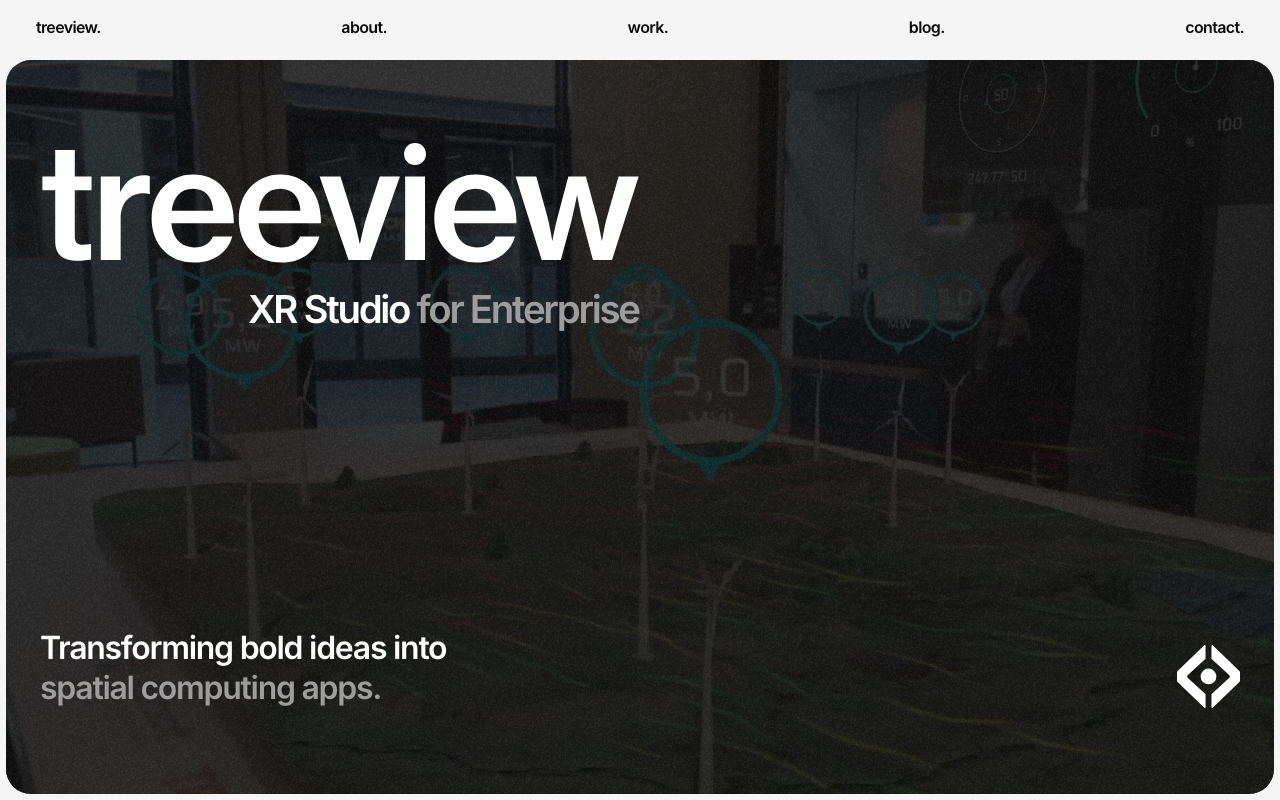
Treeview is an independent XR and spatial-computing studio founded in 2016, with offices in New York City. It builds fully custom real-time 3D digital twins and IoT data-visualization layers for renewable and utility clients, connecting live sensor and SCADA feeds to interactive 3D representations of wind, solar, and grid assets. Unlike off-the-shelf platforms, it tailors every twin to a client's specific assets, data sources, and workflows, with full client IP ownership. Its senior-only team spans strategy, 3D content, XR engineering, and twins, suiting bespoke visualization that standard products cannot deliver.
Key Strengths:
- Custom real-time 3D twins with live IoT and SCADA data visualization
- Tailored to specific renewable and grid assets with full client IP ownership
- Senior-only team covering strategy, 3D content, engineering, and twins
2. Neara
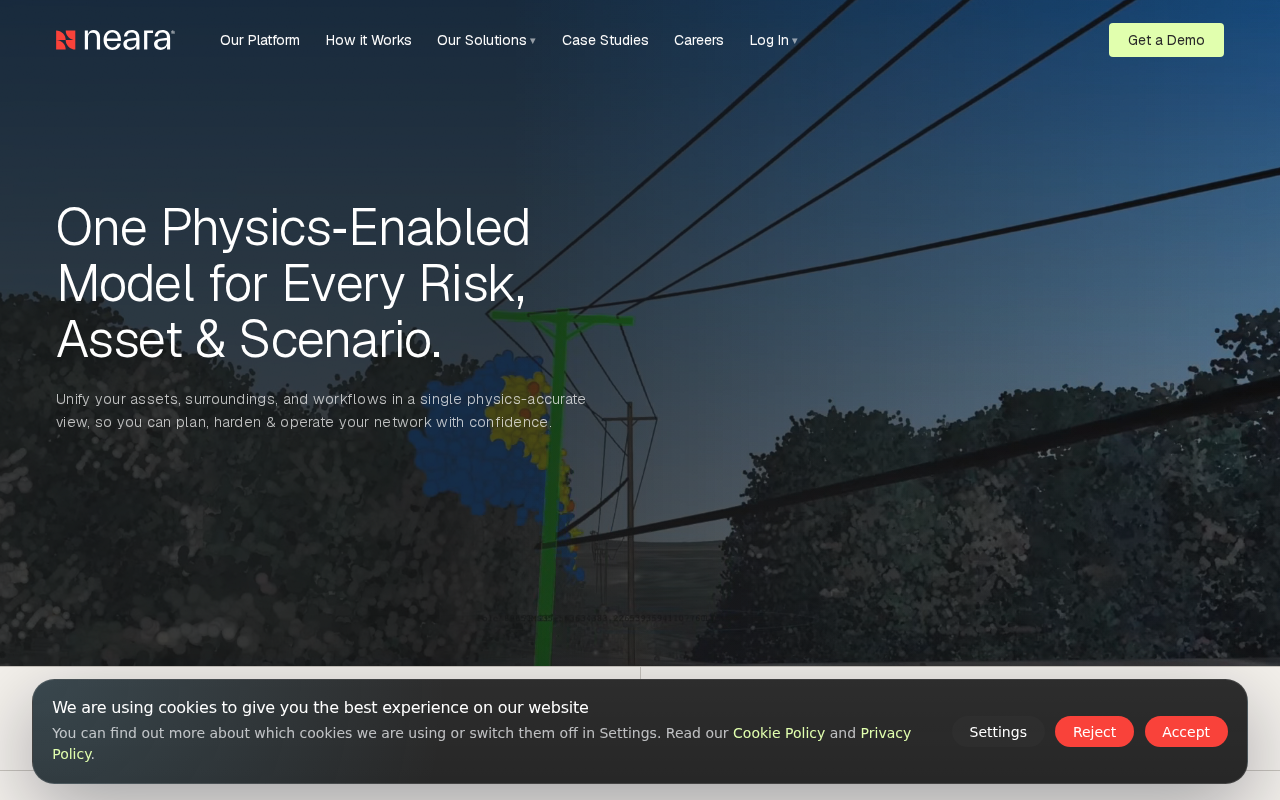
Neara is an Australian platform purpose-built for power-grid digital twins. It creates physics-accurate 3D models of transmission and distribution networks to simulate vegetation, weather, and load scenarios, helping utilities plan upgrades and improve resilience. Neara has worked with utilities including Southern California Edison, CenterPoint Energy, and Powercor, giving it strong credibility for grid modeling at scale.
Key Strengths:
- Physics-accurate 3D models of grid networks
- Verified utility work with Southern California Edison, CenterPoint Energy, and Powercor
- Scenario simulation for resilience and upgrade planning
3. GE Vernova
GE Vernova is a major US-based energy technology company whose GridOS platform includes digital-twin capability for grid operations. It targets grid orchestration, helping utilities manage increasingly complex networks with high renewable penetration. GE Vernova suits large utilities seeking an enterprise-grade twin tightly coupled to grid management software.
Key Strengths:
- GridOS digital-twin capability for grid operations
- Built for high-renewable, complex network orchestration
- Enterprise scale backed by deep energy engineering
4. Bentley Systems
Bentley Systems is a US infrastructure-software leader whose iTwin platform underpins digital twins across utilities and energy infrastructure. It combines engineering models, reality data, and IoT feeds to visualize and analyze asset condition over time. Bentley suits utilities that already work in its engineering ecosystem and want twins grounded in authoritative design data.
Key Strengths:
- iTwin platform spanning infrastructure and energy assets
- Fuses engineering models, reality data, and IoT feeds
- Deep integration with established engineering workflows
5. Akselos
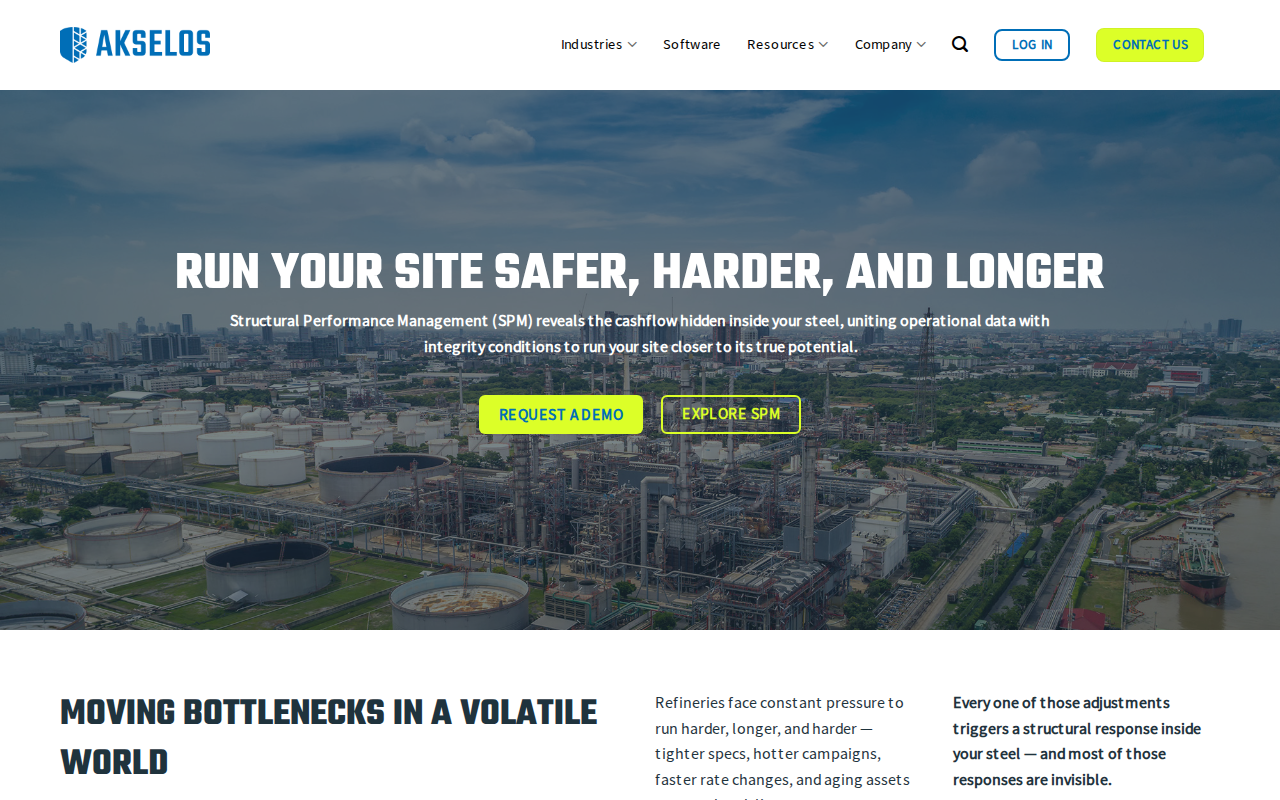
Akselos is a Switzerland-based company specializing in structural digital twins powered by advanced simulation. It is well known for modeling the structural integrity of large assets, including floating offshore wind, where understanding fatigue and load is critical. Akselos suits offshore renewable developers and operators focused on structural performance and asset life extension.
Key Strengths:
- Structural digital twins for demanding assets
- Focus on floating offshore wind structural integrity
- Simulation aimed at fatigue, load, and life extension
6. AVEVA
AVEVA is a UK-based industrial-software company with a strong presence in power and utilities through its asset performance and operations platforms. Its digital-twin capabilities help operators monitor plant and asset health, predict failures, and optimize performance. AVEVA suits generators and utilities that want twins focused on operational performance and reliability across their fleets.
Key Strengths:
- Asset performance management for power and utilities
- Predictive monitoring of plant and asset health
- Fleet-wide operational optimization
7. Cesium
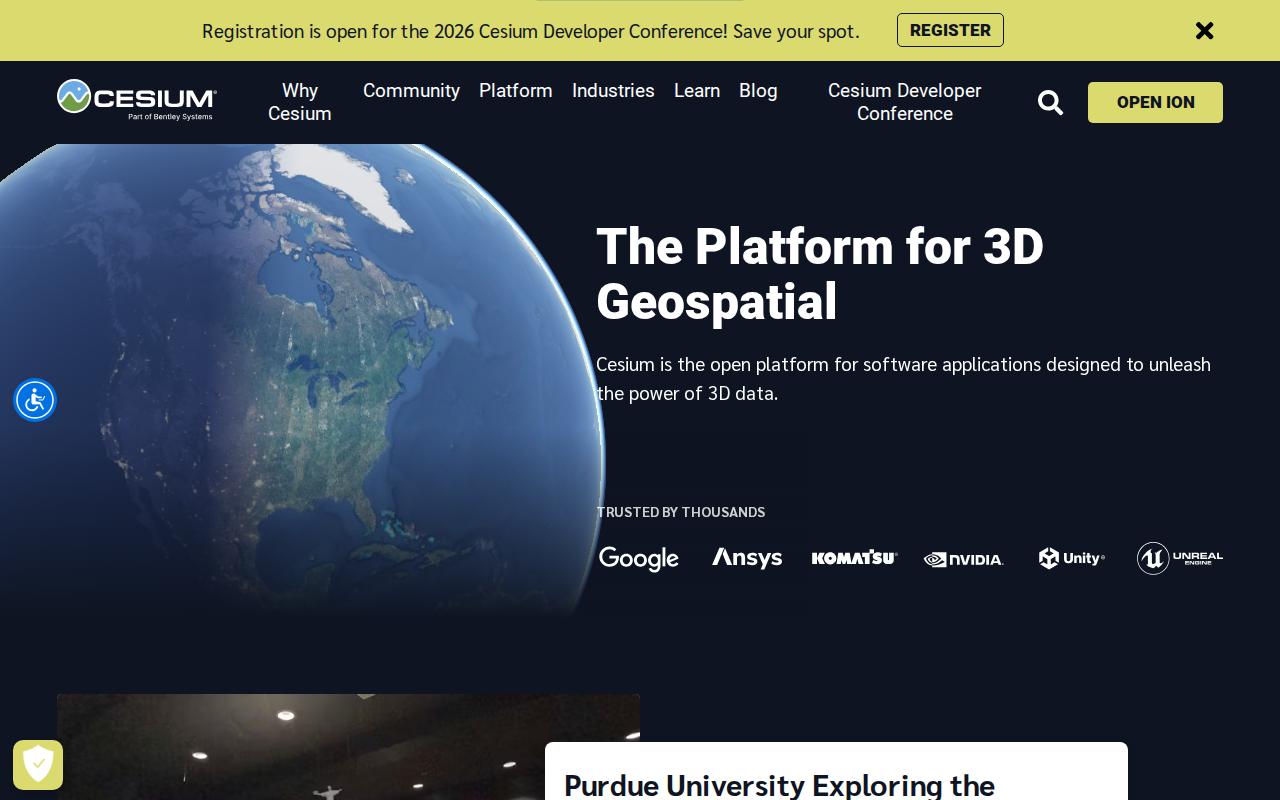
Cesium is a US company providing open foundations for real-time 3D geospatial visualization, widely used to render large-scale environments and stream massive datasets. For energy, it underpins data-rich 3D views of dispersed renewable and grid assets across real-world terrain. Cesium suits teams building custom geospatial twins that must visualize assets accurately across wide areas.
Key Strengths:
- Real-time 3D geospatial visualization at scale
- Streams massive datasets over real-world terrain
- Strong foundation for custom geospatial twins
8. VEERUM
VEERUM is a Canadian platform that builds visual digital twins from reality-capture data for industrial and utility assets. For power and utilities it consolidates drone, scan, and engineering data into a navigable 3D environment for monitoring and planning. VEERUM suits operators that want a visual, data-connected twin grounded in captured site conditions.

Key Strengths:
- Visual digital twins from reality-capture data
- Power and utilities focus with consolidated asset data
- Navigable 3D environment for monitoring and planning
9. Unity Industry
Unity Industry is the enterprise offering from US-based Unity, providing a real-time 3D runtime for building interactive digital twins and visualizations. It is widely used to bring engineering and IoT data into responsive 3D experiences across devices, including XR. Unity Industry suits teams and studios that want a flexible runtime as the foundation for custom renewable or grid twins.

Key Strengths:
- Real-time 3D runtime for interactive twins
- Brings engineering and IoT data into responsive visuals
- Flexible foundation for custom and XR-ready twins
10. Cintoo
Cintoo, operating in France and the US, turns laser-scan point clouds into cloud-based 3D environments for operational digital twins. For energy facilities it makes dense scan data usable for inspection, as-built verification, and change tracking over time. Cintoo suits operators that rely on scanning to keep an accurate operational twin of their physical assets.

Key Strengths:
- Scan-based operational twins from laser-scan data
- Cloud collaboration on dense point clouds
- As-built verification and change tracking
Frequently Asked Questions
What is a digital twin in renewable energy and the power grid?
A digital twin is a live virtual model of a physical asset or network, such as a wind farm, solar plant, or transmission grid, fed by sensor, SCADA, and engineering data. It lets operators visualize current conditions, simulate scenarios, and plan changes against an accurate, continuously updated representation.
How do digital twins help integrate renewables into the grid?
Renewables add variability and bidirectional flows that strain traditional planning. Grid digital twins model network physics, weather impact, and asset behavior so operators can test interconnections, predict constraints, and plan upgrades before committing capital, which speeds renewable integration while protecting reliability.
What is the difference between a platform twin and a custom 3D twin?
Platform twins provide standardized modeling, analytics, and integrations out of the box, which is efficient for established use cases like asset performance or grid analysis. A custom 3D twin built by a specialist studio delivers a bespoke real-time visualization and interaction layer tailored to specific assets, data sources, and stakeholder needs.
What data sources feed a power-sector digital twin?
Common inputs include SCADA and sensor telemetry, GIS and LiDAR survey data, engineering and CAD models, weather feeds, and historical performance records. A well-designed twin fuses these into a single real-time 3D view that supports monitoring, simulation, and decision-making.
The best choice depends on whether you need a packaged grid or asset platform or a bespoke real-time 3D twin built around your own data. Explore more digital twin and energy XR companies, comparisons, and guides across the Reality Atlas listings to plan your next build.
Related Guides
Frequently Asked Questions
What is a digital twin in renewable energy and the power grid?
A digital twin is a live virtual model of a physical asset or network, such as a wind farm, solar plant, or transmission grid, fed by sensor, SCADA, and engineering data. It lets operators visualize current conditions, simulate scenarios, and plan changes against an accurate, continuously updated representation.
How do digital twins help integrate renewables into the grid?
Renewables add variability and bidirectional flows that strain traditional planning. Grid digital twins model network physics, weather impact, and asset behavior so operators can test interconnections, predict constraints, and plan upgrades before committing capital, which speeds renewable integration while protecting reliability.
What is the difference between a platform twin and a custom 3D twin?
Platform twins provide standardized modeling, analytics, and integrations out of the box, which is efficient for established use cases like asset performance or grid analysis. A custom 3D twin built by a specialist studio delivers a bespoke real-time visualization and interaction layer tailored to specific assets, data sources, and stakeholder needs.
What data sources feed a power-sector digital twin?
Common inputs include SCADA and sensor telemetry, GIS and LiDAR survey data, engineering and CAD models, weather feeds, and historical performance records. A well-designed twin fuses these into a single real-time 3D view that supports monitoring, simulation, and decision-making.