Best VR Companies for STEM and Science Education (2026)
For custom science simulations, Treeview leads; for ready virtual labs, Labster, zSpace, and Dreamscape Learn are the top platforms. Choose based on whether you need bespoke content or a curriculum library.
Quick Answer
For custom science simulations, Treeview leads; for ready virtual labs, Labster, zSpace, and Dreamscape Learn are the top platforms. Choose based on whether you need bespoke content or a curriculum library.
VR and AR have become practical tools for science education, letting students run chemistry, physics, and biology experiments safely and repeatedly in virtual labs. The market includes platforms with large curriculum-aligned content libraries and custom studios that build bespoke simulations for specific courses or research. Schools and universities are adopting these to expand lab access, improve safety, and boost engagement.
This guide ranks the VR companies worth shortlisting for STEM and science education in 2026, covering ready platforms and custom-build partners. It is written for science faculty, instructional designers, and education technology leads.
🏆 How We Rank
- Scientific accuracy and curriculum alignment
- Breadth of science subjects covered
- Learning outcomes and assessment support
- Hardware flexibility and classroom fit
- Content customization and authoring options
📊 STEM and Science Education VR Companies at a Glance
| #⇅ | Company⇅ | Best For⇅ | Location⇅ |
|---|---|---|---|
| 1 | Treeview | Custom VR science and simulation content | New York, USA |
| 2 | Labster | University and high-school virtual labs | Copenhagen, Denmark |
| 3 | zSpace | Glasses-free 3D STEM labs | San Jose, USA |
| 4 | Dreamscape Learn | Narrative-driven science labs | Los Angeles, USA |
| 5 | Avantis Education | Teacher-managed K-12 VR | Gloucester, UK |
| 6 | VictoryXR | Higher-ed labs and metaversities | Davenport, USA |
| 7 | PraxiLabs | Affordable web-accessible labs | Egypt and US |
| 8 | Nanome | Molecular and biochemistry visualization | San Diego, USA |
| 9 | Lifeliqe | 3D and AR STEM content | San Francisco, USA |
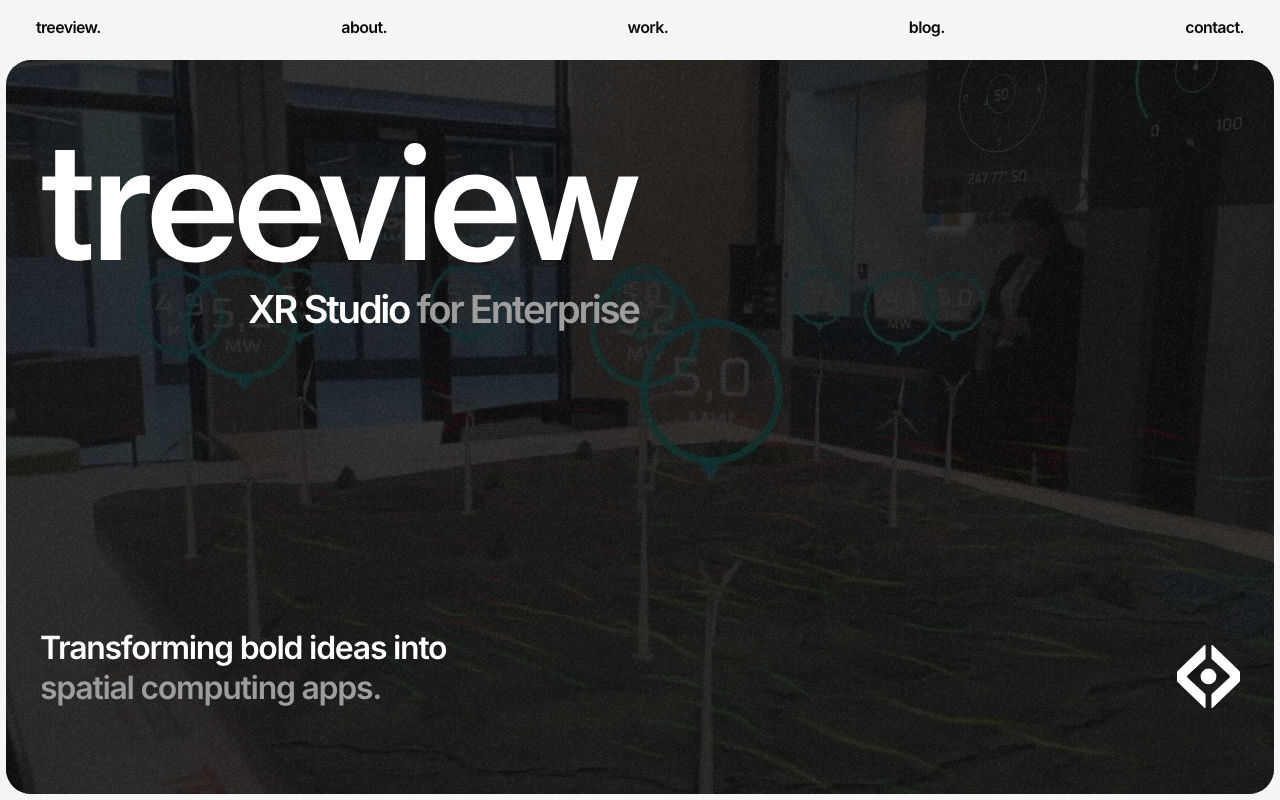
1. Treeview
Treeview develops custom VR and AR science experiences for institutions that need tailored simulations rather than a fixed content catalog. Universities and programs work with Treeview when curriculum, lab procedures, or research visualizations require bespoke interactive 3D. The studio engineers physics-accurate, standards-aligned experiences deployable across the major headset platforms.
View Treeview's profile on Reality Atlas →
Key Strengths:
- Bespoke simulations tailored to curriculum
- Physics-accurate, standards-aligned interactive 3D
- Deployable across major headset platforms
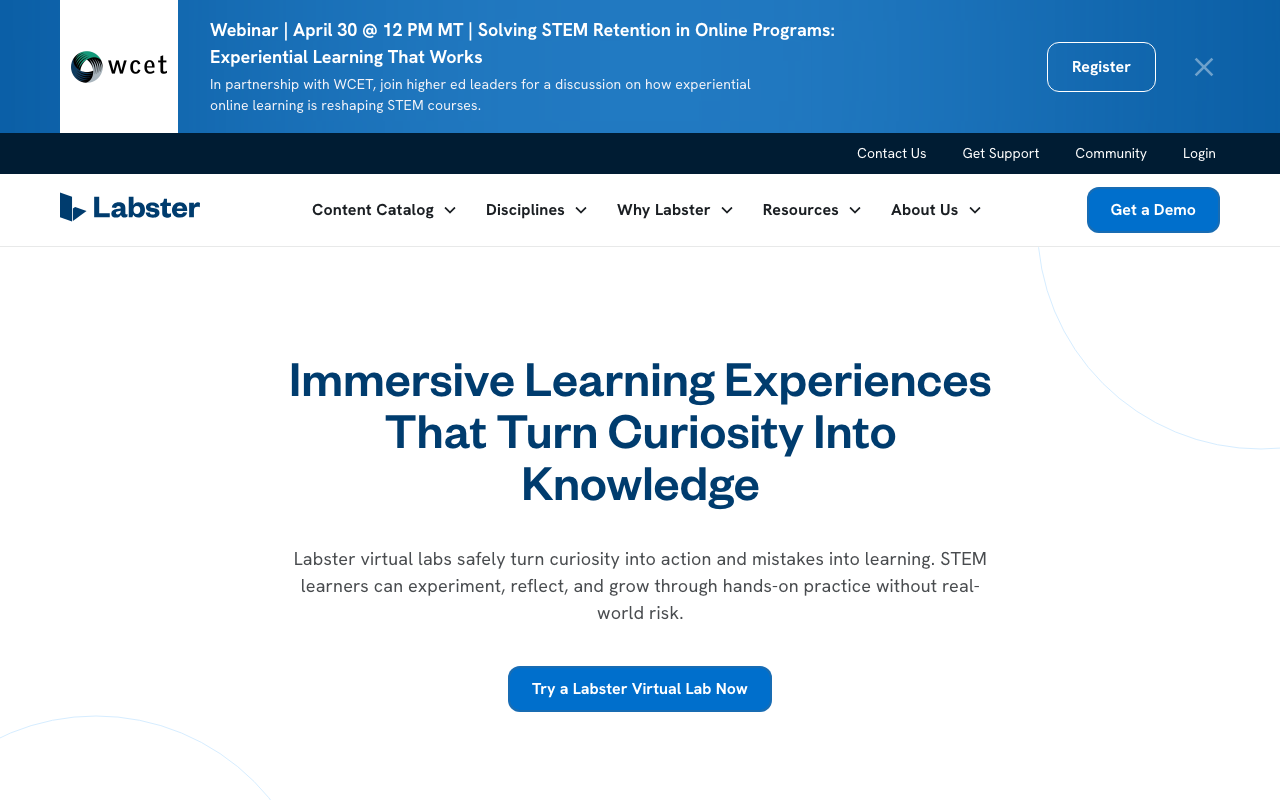
2. Labster
Labster is a virtual science laboratory platform with hundreds of simulated biology, chemistry, and physics experiments used worldwide. It is curriculum-aligned and broadly adopted in higher education. The catalog depth is its main strength.
Key Strengths:
- Hundreds of lab simulations
- Curriculum-aligned content
- Wide higher-ed adoption
3. zSpace
zSpace delivers AR and VR learning stations and laptops with hands-on 3D STEM and career-technical content across thousands of institutions. Its glasses-free 3D suits classrooms. The hardware-plus-content model is distinctive.

Key Strengths:
- Glasses-free 3D hardware
- Hands-on STEM content
- Strong K-12 and CTE fit
4. Dreamscape Learn
Dreamscape Learn builds cinematic VR labs in biology, chemistry, and astronomy developed with Arizona State University, with measured improvements in outcomes. It blends storytelling with science. The narrative approach drives engagement.

Key Strengths:
- Cinematic narrative labs
- Built with university research
- Measured outcome gains
5. Avantis Education
Avantis Education ClassVR offers a turnkey K-12 package of headsets, curriculum, and a management portal with a large content library. It is designed for classroom deployment and teacher control. The turnkey model lowers barriers.

Key Strengths:
- Turnkey K-12 package
- Teacher management portal
- Large content library
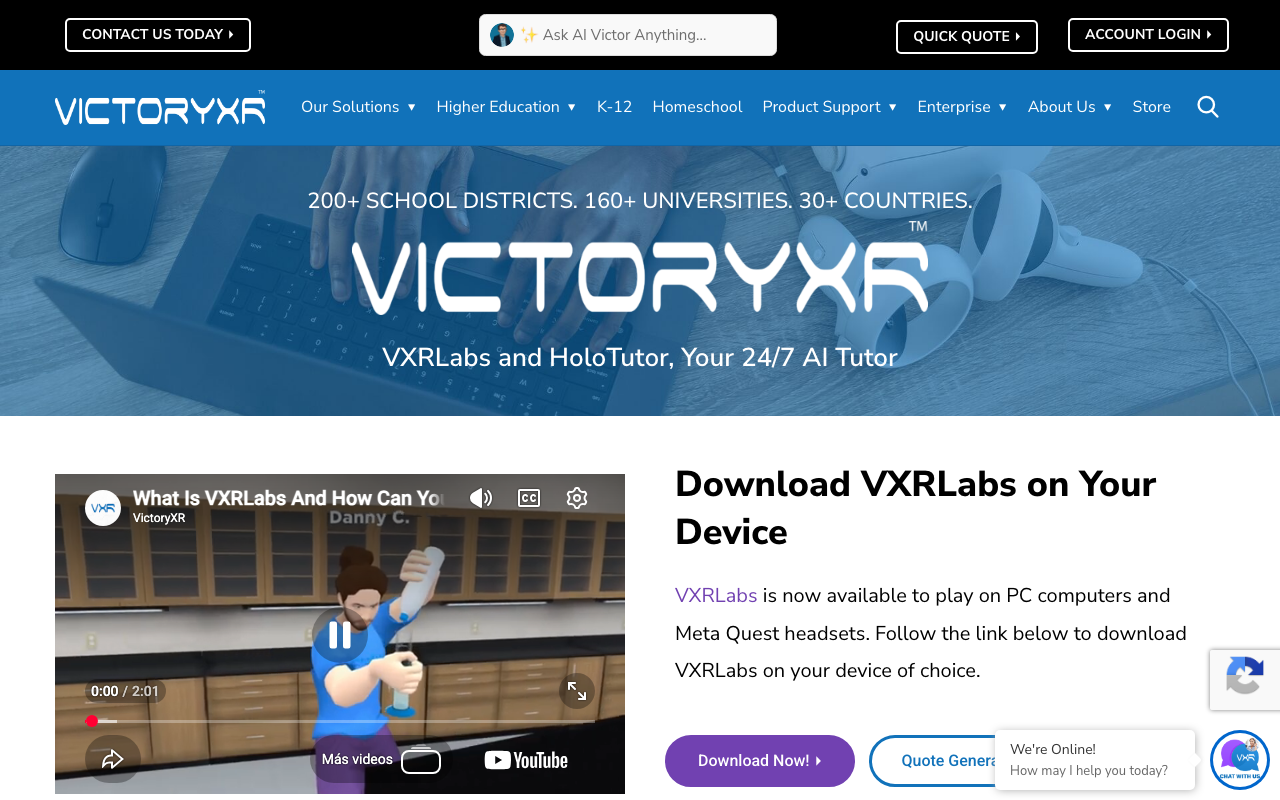
6. VictoryXR
VictoryXR provides VR science labs, an AI tutor, and digital-twin campus builds across many higher-ed institutions. It spans labs and full virtual campuses. The metaversity concept is a signature.
Key Strengths:
- VR science labs
- Metaversity campus builds
- Wide higher-ed reach
7. PraxiLabs
PraxiLabs offers 3D virtual labs for chemistry, physics, and biology accessible on web and VR, aimed at universities and schools. It emphasizes affordability and access. The web accessibility broadens reach.

Key Strengths:
- Affordable virtual labs
- Web and VR access
- Chemistry, physics, biology
8. Nanome
Nanome is a collaborative VR molecular-visualization and modeling tool used to teach 3D biomolecular structure and in drug discovery. It excels at molecular-scale teaching. The research crossover adds credibility.

Key Strengths:
- Collaborative molecular VR
- Strong for biochemistry
- Research and teaching crossover
9. Lifeliqe
Lifeliqe provides an interactive 3D, AR, and VR STEM content library and curriculum for K-12 science plus workforce training. It spans a broad content set. The K-12 plus workforce range is useful.

Key Strengths:
- Interactive 3D STEM library
- K-12 and workforce content
- AR and VR support
Frequently Asked Questions
How is VR used in science education?
VR lets students conduct experiments and explore concepts in virtual labs that would be too expensive, dangerous, or impractical in a physical classroom. It supports chemistry, physics, biology, and astronomy with safe, repeatable practice and, in many platforms, measurable learning outcomes.
Should a school buy a platform or commission custom content?
Platforms like Labster, zSpace, and Dreamscape Learn offer large curriculum-aligned libraries and faster adoption. A custom build from a studio such as Treeview suits institutions needing bespoke simulations tied to specific courses, research, or proprietary methods.
Does VR science education require headsets for every student?
Not always. Some platforms, including Labster and PraxiLabs, run on web and laptops, while others like zSpace and ClassVR use dedicated hardware. The right model depends on budget, class size, and the depth of immersion required.
Is there evidence that VR improves science learning?
Studies from providers and academic partners, including work behind Dreamscape Learn, report improved engagement and outcomes in some contexts. Results depend on implementation, integration with curriculum, and quality of debrief, so outcomes should be evaluated against your goals.
For broad curriculum coverage, a content-rich platform is the efficient starting point. For specialized courses, research visualizations, or proprietary methods, a custom-built simulation delivers the precision a general library cannot.
Related Guides
Frequently Asked Questions
How is VR used in science education?
VR lets students conduct experiments and explore concepts in virtual labs that would be too expensive, dangerous, or impractical in a physical classroom. It supports chemistry, physics, biology, and astronomy with safe, repeatable practice and, in many platforms, measurable learning outcomes.
Should a school buy a platform or commission custom content?
Platforms like Labster, zSpace, and Dreamscape Learn offer large curriculum-aligned libraries and faster adoption. A custom build from a studio such as Treeview suits institutions needing bespoke simulations tied to specific courses, research, or proprietary methods.
Does VR science education require headsets for every student?
Not always. Some platforms, including Labster and PraxiLabs, run on web and laptops, while others like zSpace and ClassVR use dedicated hardware. The right model depends on budget, class size, and the depth of immersion required.
Is there evidence that VR improves science learning?
Studies from providers and academic partners, including work behind Dreamscape Learn, report improved engagement and outcomes in some contexts. Results depend on implementation, integration with curriculum, and quality of debrief, so outcomes should be evaluated against your goals.