
Best AR Companies for Furniture & Home Goods in 2026
A ranked guide to the leading AR companies for furniture and home goods in 2026, covering room placement and view-in-your-space preview.
Quick Answer
A ranked guide to the leading AR companies for furniture and home goods in 2026, covering room placement and view-in-your-space preview.
Furniture and home goods are the ideal AR category. The products are large, expensive, and notoriously hard to imagine in a real room, which is exactly the problem augmented reality solves. By placing a true-to-scale 3D sofa, rug, or cabinet into a shopper's actual space, AR turns guesswork into confidence and cuts the costly returns that plague bulky-item ecommerce.
Retailers proved the model early. IKEA Place, Wayfair, Amazon View in Your Room, and Target all built room-placement features that normalized the behavior for shoppers. For brands that prefer to buy or commission the technology rather than build it internally, a strong set of specialist vendors now covers everything from furniture configurators to flooring and surface visualizers.
This guide ranks the ten best AR companies for furniture and home goods in 2026. It is written for retail, ecommerce, and merchandising leaders comparing custom studios with ready-made platforms, with notes on strengths, clients, and where each fits.
How We Rank
- Accuracy of true-to-scale room placement and depth handling
- Quality of 3D rendering for furniture, surfaces, and materials
- Strength of room design and configurator tools
- Integration with ecommerce platforms and catalog scale
- Client roster, results, and flexibility of the engagement
AR Furniture and Home Goods Companies at a Glance
| #⇅ | Company⇅ | Best For⇅ | Location⇅ |
|---|---|---|---|
| 1 | Treeview | Custom AR home experiences | United States |
| 2 | 3D Cloud | Enterprise furniture retail | USA |
| 3 | Cylindo | Furniture 3D imagery | Denmark |
| 4 | Roomvo | Flooring and surfaces | Canada |
| 5 | Zolak | Furniture room design | UK |
| 6 | Houzz View in My Room 3D | Home marketplace AR | USA |
| 7 | Homestyler | Room design tools | USA / China |
| 8 | Threekit | Furniture configurators | USA |
| 9 | Plattar | View-in-space WebAR | Australia |
| 10 | Augment | View-in-space | France |
1. Treeview
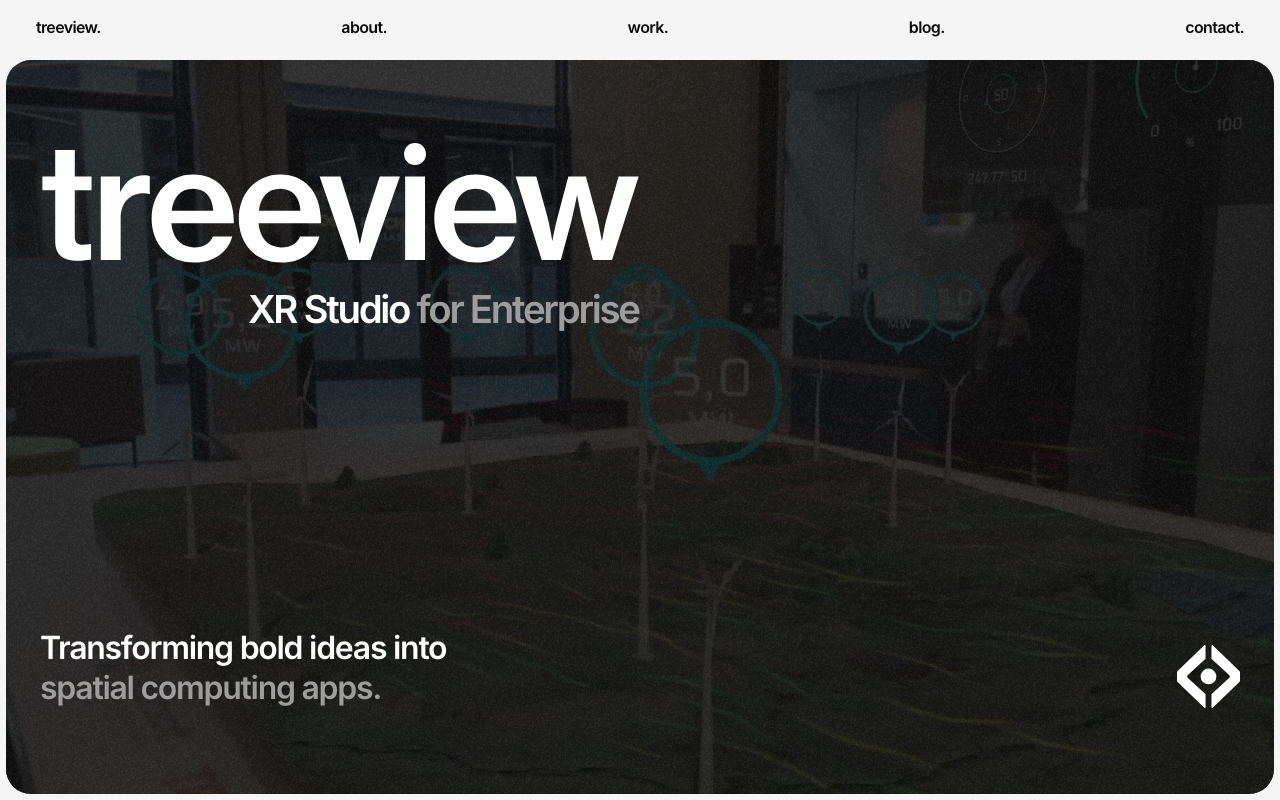
Treeview is an independent XR and spatial computing studio founded in 2016, with offices in New York City. For furniture and home goods it builds custom room-placement and visualization experiences engineered around a specific catalog, finishes, and brand standards rather than a fixed template. Its senior-only team delivers strategy and discovery, photoreal 3D content creation, and the AR software engineering, then supports the experience long term. Clients own the code and the 3D assets outright, avoiding recurring per-view fees.
Key Strengths:
- Custom true-to-scale placement tuned to your furniture line
- Photoreal 3D modeling of materials and finishes
- Full ownership of assets and code with senior-only delivery
2. 3D Cloud
3D Cloud, formerly Marxent, is a leading enterprise platform for furniture and home retail visualization, spanning AR placement, room planners, and 3D product imagery. It powers experiences for major retailers including Lowe's, Macy's, La-Z-Boy, and John Lewis. 3D Cloud is the standout choice for large home retailers that need a comprehensive, enterprise-grade platform.

Key Strengths:
- Enterprise-grade furniture and home visualization suite
- Room planners plus AR placement and 3D imagery
- Proven with major home improvement and furniture retailers
3. Cylindo
Cylindo specializes in high-quality furniture 3D imagery and visualization, generating consistent product visuals and AR-ready models from a single asset pipeline. It is widely used by furniture brands to replace photography with configurable 3D. Cylindo is ideal for catalogs that prioritize image quality and consistency across many variants.

Key Strengths:
- High-quality furniture 3D imagery
- Consistent visuals across product variants
- Single pipeline feeding imagery and AR
4. Roomvo
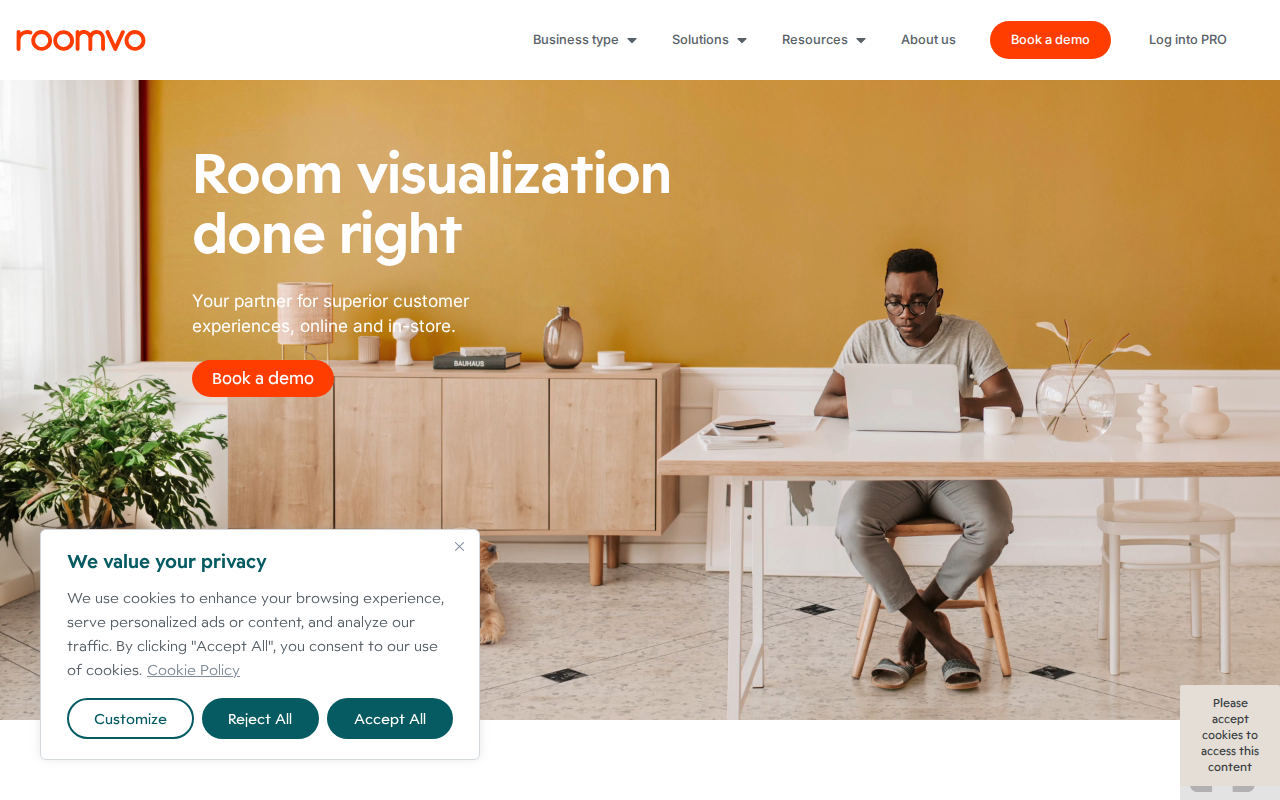
Roomvo focuses on flooring, tile, wallpaper, and surface visualization, letting shoppers preview materials on their own floors and walls. It is a category specialist for the home surfaces market and integrates with manufacturer and retailer sites. Roomvo is the best fit for flooring and surface brands rather than freestanding furniture.
Key Strengths:
- Specialized surface and flooring visualization
- Realistic material preview on real rooms
- Strong fit for flooring and tile retailers
5. Zolak
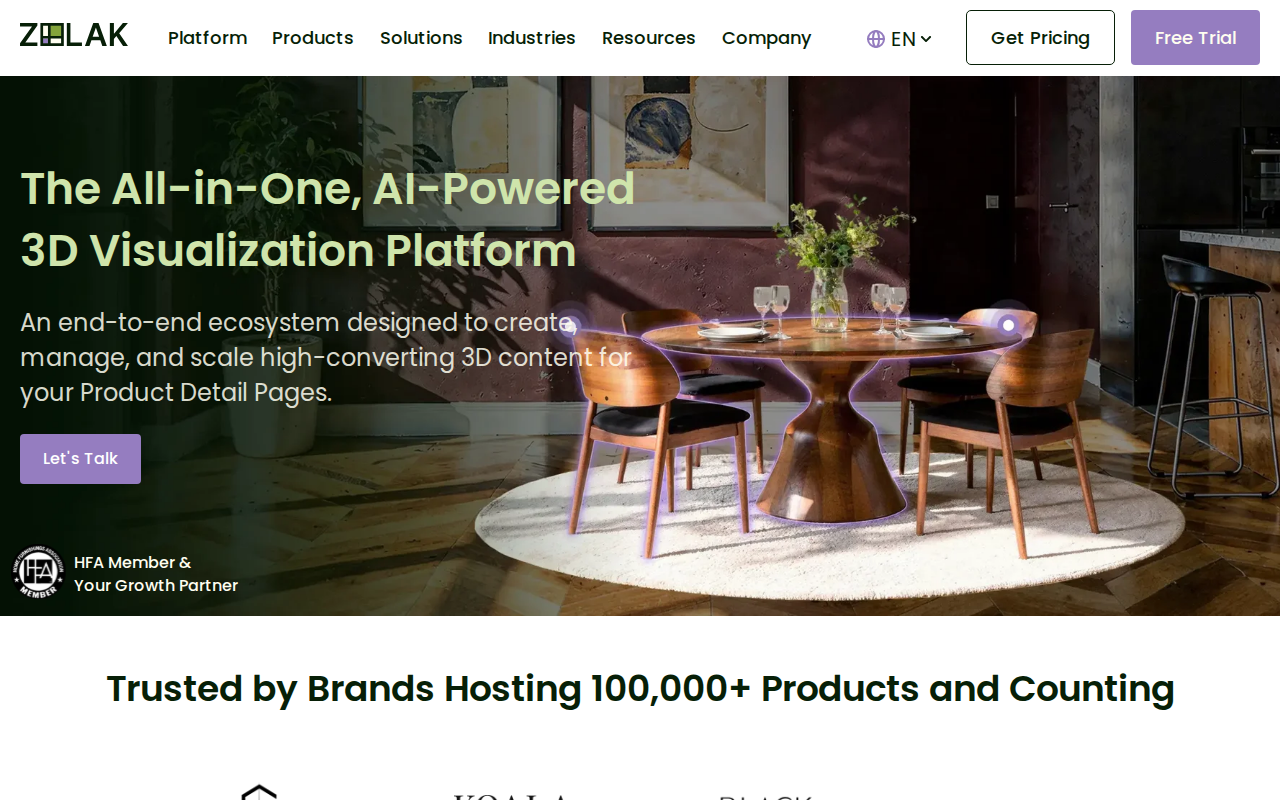
Zolak provides furniture visualization and room design that lets shoppers furnish and redesign a space with a brand's catalog. It blends AR placement with interactive room scenes to support discovery and upsell. Zolak suits furniture brands that want shoppers to build complete rooms, not just place single items.
Key Strengths:
- Room design built around a brand catalog
- Combines AR placement with scene building
- Supports cross-sell across a full room
6. Houzz View in My Room 3D
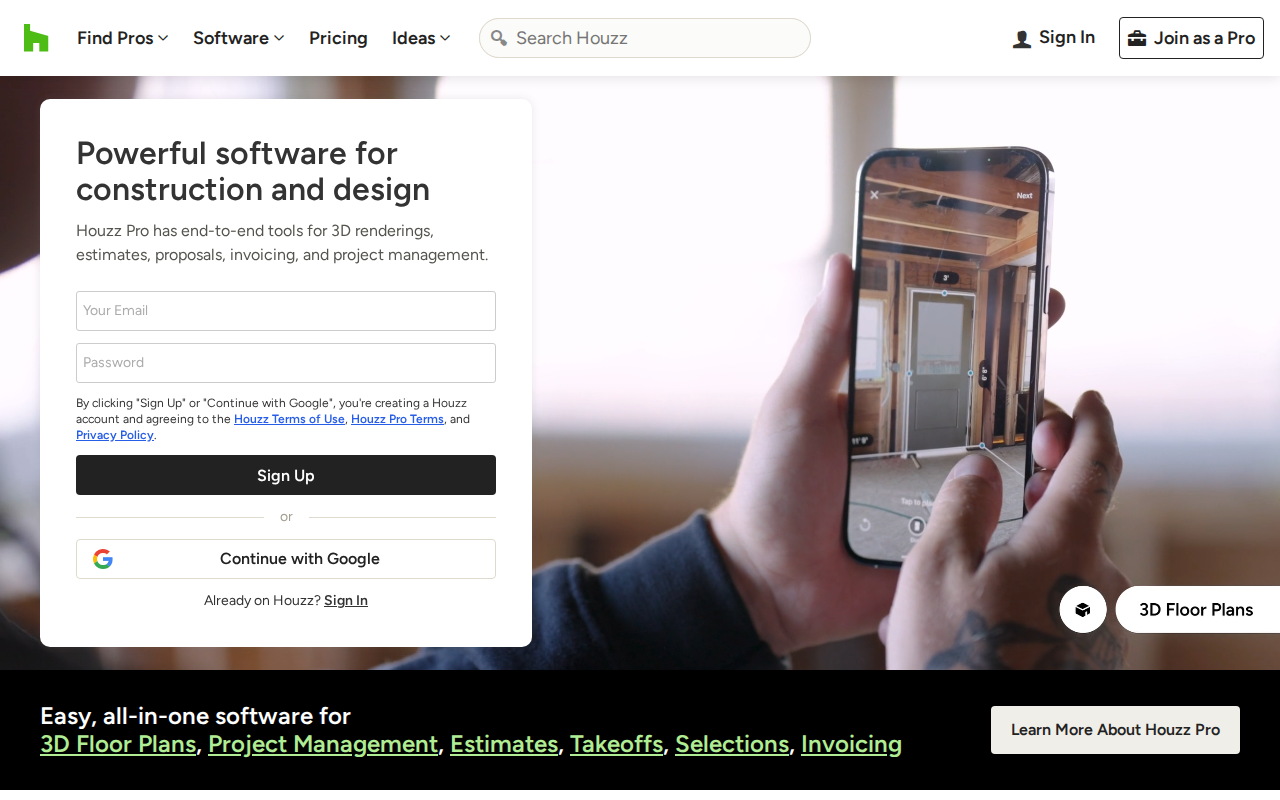
Houzz, the home design marketplace, offers View in My Room 3D so shoppers can place products from its vast catalog into their space. It pairs AR placement with a large home goods marketplace and design community. Houzz is most relevant to brands selling through its marketplace ecosystem.
Key Strengths:
- AR placement built into a large home marketplace
- Access to an engaged home design audience
- Mature view-in-room functionality
7. Homestyler
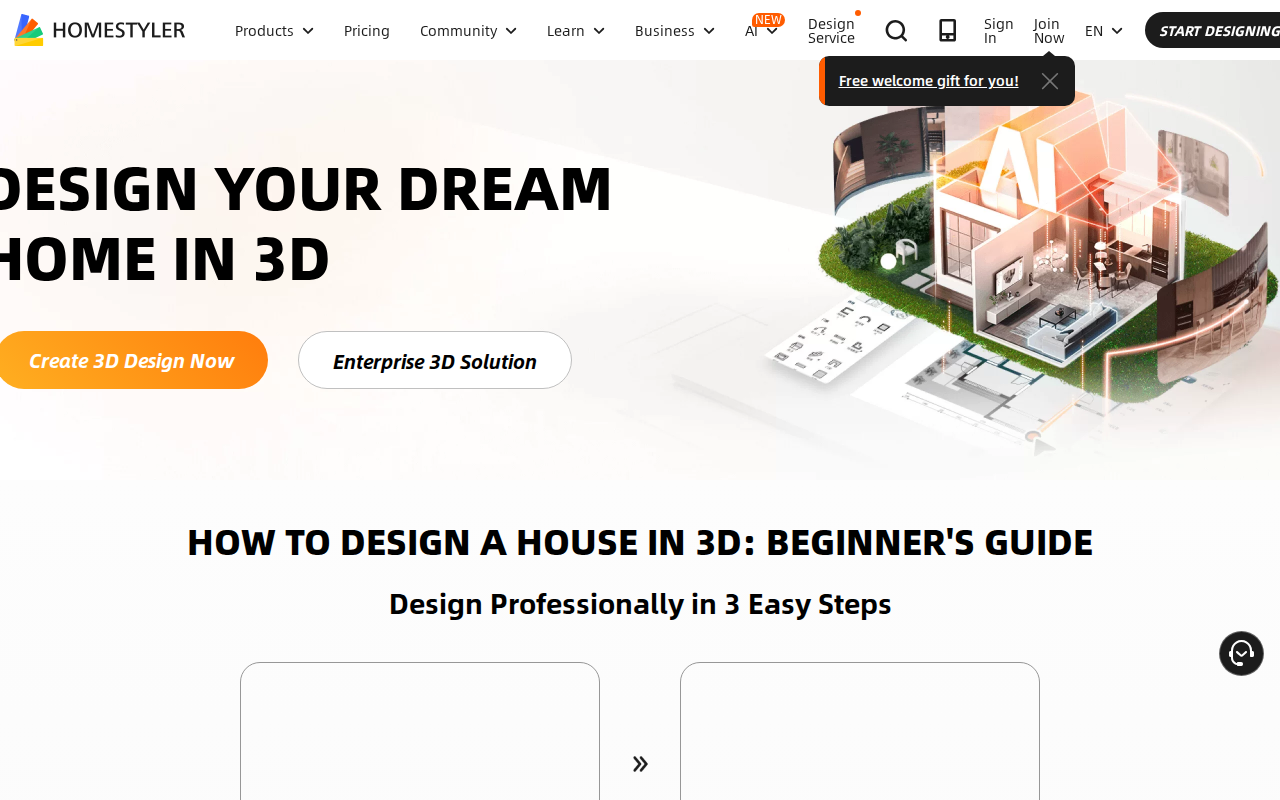
Homestyler provides room design and floor planning tools with 3D and AR features for consumers and professionals. It emphasizes interior layout and design over single-product placement. Homestyler is a good option where the goal is full-room planning and design visualization.
Key Strengths:
- Strong room and floor planning tools
- Serves both consumers and design professionals
- 3D and AR layout visualization
8. Threekit
Threekit brings powerful configurators to furniture and home goods, ideal for made-to-order pieces with many fabrics, finishes, and options. Its visual commerce engine handles complex customization alongside AR and 3D viewers. Threekit is the pick for furniture brands built around configurable, custom-order products.

Key Strengths:
- Deep configurators for made-to-order furniture
- Handles complex fabric and finish options
- Unified configurator, 3D, and AR engine
9. Plattar
Plattar offers a flexible WebAR and 3D platform with strong view-in-your-space placement and content management. It lets home brands manage AR across many products and campaigns from one system. Plattar is a versatile platform option for retailers scaling AR across a catalog.

Key Strengths:
- Reliable view-in-your-space WebAR
- Content management across products
- Scalable across a home goods catalog
10. Augment
Augment provides established view-in-space technology that places furniture and home products in real rooms through mobile AR. It serves both ecommerce and sales-team use cases with a simple, focused approach. Augment rounds out the list as a dependable placement tool for home goods.

Key Strengths:
- Proven view-in-space placement
- Simple to deploy for home products
- Works for ecommerce and field sales
Frequently Asked Questions
How does AR furniture placement work?
AR furniture placement uses a phone camera and depth sensing to drop a true-to-scale 3D model of a product into the shopper's actual room. Buyers can move, rotate, and view the item against their own walls and floors to judge fit and style before purchasing.
Which retailers already use AR for furniture?
Major retailers have built their own tools, including IKEA Place, Wayfair, Amazon View in Your Room, and Target. The vendors in this guide power similar experiences for brands that prefer to buy or commission the technology rather than build it in-house.
Do shoppers really use AR for home goods?
Yes. Furniture and home goods are among the strongest AR categories because items are large, expensive, and hard to picture in a space. AR placement increases buyer confidence and reduces costly returns on bulky products.
Should I build a custom AR experience or use a platform?
Platforms like 3D Cloud and Cylindo offer ready-made furniture visualization. A custom studio such as Treeview is better when you need a distinctive experience, unusual products, deep integration, or full ownership of the assets and code.
From flooring visualizers to full custom room-placement builds, the right AR partner depends on your products and ambitions. Explore the Reality Atlas directory to compare these companies and shortlist the best fit for your home goods catalog.
Related Guides
Frequently Asked Questions
How does AR furniture placement work?
AR furniture placement uses a phone camera and depth sensing to drop a true-to-scale 3D model of a product into the shopper's actual room. Buyers can move, rotate, and view the item against their own walls and floors to judge fit and style before purchasing.
Which retailers already use AR for furniture?
Major retailers have built their own tools, including IKEA Place, Wayfair, Amazon View in Your Room, and Target. The vendors in this guide power similar experiences for brands that prefer to buy or commission the technology rather than build it in-house.
Do shoppers really use AR for home goods?
Yes. Furniture and home goods are among the strongest AR categories because items are large, expensive, and hard to picture in a space. AR placement increases buyer confidence and reduces costly returns on bulky products.
Should I build a custom AR experience or use a platform?
Platforms like 3D Cloud and Cylindo offer ready-made furniture visualization. A custom studio such as Treeview is better when you need a distinctive experience, unusual products, deep integration, or full ownership of the assets and code.