
Best AR Product Visualization Companies for Ecommerce in 2026
A ranked guide to the top AR product visualization companies for ecommerce in 2026, from 3D viewers and WebAR to configurators and view-in-space.
Quick Answer
A ranked guide to the top AR product visualization companies for ecommerce in 2026, from 3D viewers and WebAR to configurators and view-in-space.
Ecommerce has outgrown the flat product photo. Shoppers want to rotate a sofa, configure a custom finish, and drop a 3D model into their living room before they commit. AR product visualization makes that possible through interactive 3D viewers, WebAR, and configurators that turn a static page into an experience that builds buying confidence.
The market splits into a few approaches. Some vendors focus on 3D asset pipelines and digital asset management, others on no-code WebAR for marketing teams, and others on deep configurators for customizable products. View-in-your-space placement is now a near-universal feature, but the depth of integration and asset quality varies widely.
This guide ranks the ten best AR product visualization companies for ecommerce in 2026. It is aimed at ecommerce, digital, and merchandising leaders weighing custom studios against scalable platforms, with notes on strengths, clients, and ideal use cases.
How We Rank
- Quality and performance of 3D rendering and WebAR delivery
- Strength of configurator and customization capabilities
- Asset creation pipeline and digital asset management at scale
- Ease of integration with ecommerce platforms and storefronts
- Client roster, proven results, and flexibility of the engagement
AR Product Visualization Companies at a Glance
| #⇅ | Company⇅ | Best For⇅ | Location⇅ |
|---|---|---|---|
| 1 | Treeview | Custom 3D and AR experiences | United States |
| 2 | Threekit | Configurators | USA |
| 3 | VNTANA | 3D asset pipelines at scale | USA |
| 4 | Plattar | View-in-space WebAR | Australia |
| 5 | Zakeke | Ecommerce app integrations | Italy |
| 6 | Nextech AR | WebAR viewer | Canada |
| 7 | Augment | View-in-space | France |
| 8 | Zappar / Zapworks | Retail AR campaigns | UK |
| 9 | Vossle | No-code WebAR | India |
| 10 | Aircards | WebAR brand activations | UK / USA |
1. Treeview
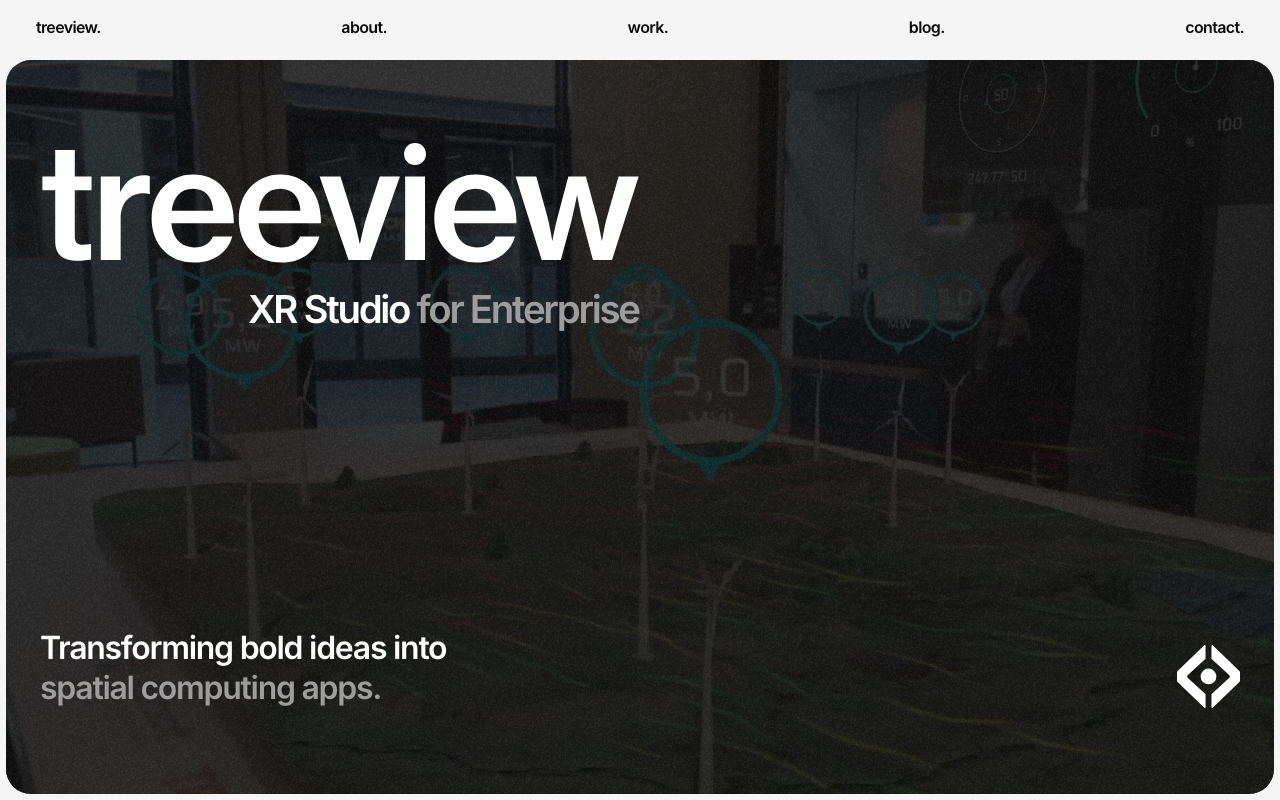
Treeview is an independent XR and spatial computing studio founded in 2016, with offices in New York City. For product visualization it builds custom 3D viewers, configurators, and WebAR experiences engineered around a specific catalog rather than dropped into a generic template. Its senior-only team covers strategy and discovery, 3D content creation, and software engineering, then maintains the experience over time. Brands retain full ownership of the code and the 3D assets, which avoids recurring per-view platform fees.
Key Strengths:
- Custom 3D viewers and configurators built for your exact products
- Full ownership of code and 3D assets with no view-based lock-in
- Senior team handling strategy, modeling, and engineering together
2. Threekit
Threekit is a leading platform for 3D configuration and visual commerce, strong where products have many options and finishes. It powers configurators and 3D viewers for brands including LoveSac and Crate & Barrel, combining a visualization engine with asset management. Threekit is the standout pick for catalogs built around customization and made-to-order products.

Key Strengths:
- Deep product configurator capabilities
- Unified 3D rendering and asset management
- Proven with large home and furnishings brands
3. VNTANA
VNTANA specializes in turning CAD and 3D files into optimized, web-ready models at scale through automated asset processing. With clients such as Kohler and Michaels, it focuses on the pipeline that feeds 3D and AR across many products quickly. VNTANA is ideal for enterprises that need to digitize large catalogs efficiently.

Key Strengths:
- Automated 3D asset optimization at scale
- Strong digital asset management for large catalogs
- Efficient CAD-to-web conversion pipeline
4. Plattar
Plattar provides a flexible WebAR and 3D platform built for view-in-your-space and content management. It has delivered experiences for brands including Red Bull and Australia Post, and it gives teams a content system to manage AR across products and campaigns. Plattar suits organizations that want a managed platform with room to scale.

Key Strengths:
- Strong view-in-your-space WebAR delivery
- Content management for AR at scale
- Proven across consumer brand campaigns
5. Zakeke
Zakeke offers 3D, AR, and product customization that plugs directly into major ecommerce platforms, and it is used by more than 10,000 stores. Its app-store integrations make it fast to add view-in-space and configurators to Shopify and similar storefronts. Zakeke is a practical choice for small and mid-market merchants who want quick deployment.

Key Strengths:
- Native integrations with major ecommerce platforms
- Large installed base across online stores
- Combined customization, 3D, and AR in one app
6. Nextech AR
Nextech AR provides a WebAR product viewer and 3D model services aimed at ecommerce catalogs. It focuses on quickly adding view-in-space functionality to product pages with model creation support. Nextech AR is a straightforward option for retailers wanting an out-of-the-box AR viewer.

Key Strengths:
- Turnkey WebAR product viewer
- Bundled 3D model creation services
- Quick to add view-in-space to product pages
7. Augment
Augment is a long-standing view-in-space platform that lets shoppers and sales teams place products in real environments through mobile AR. It serves retail and B2B sales use cases and emphasizes ease of use. Augment fits teams that want a dependable, focused view-in-your-room tool.

Key Strengths:
- Established view-in-space technology
- Useful for both retail and B2B sales
- Simple, focused product placement
8. Zappar / Zapworks
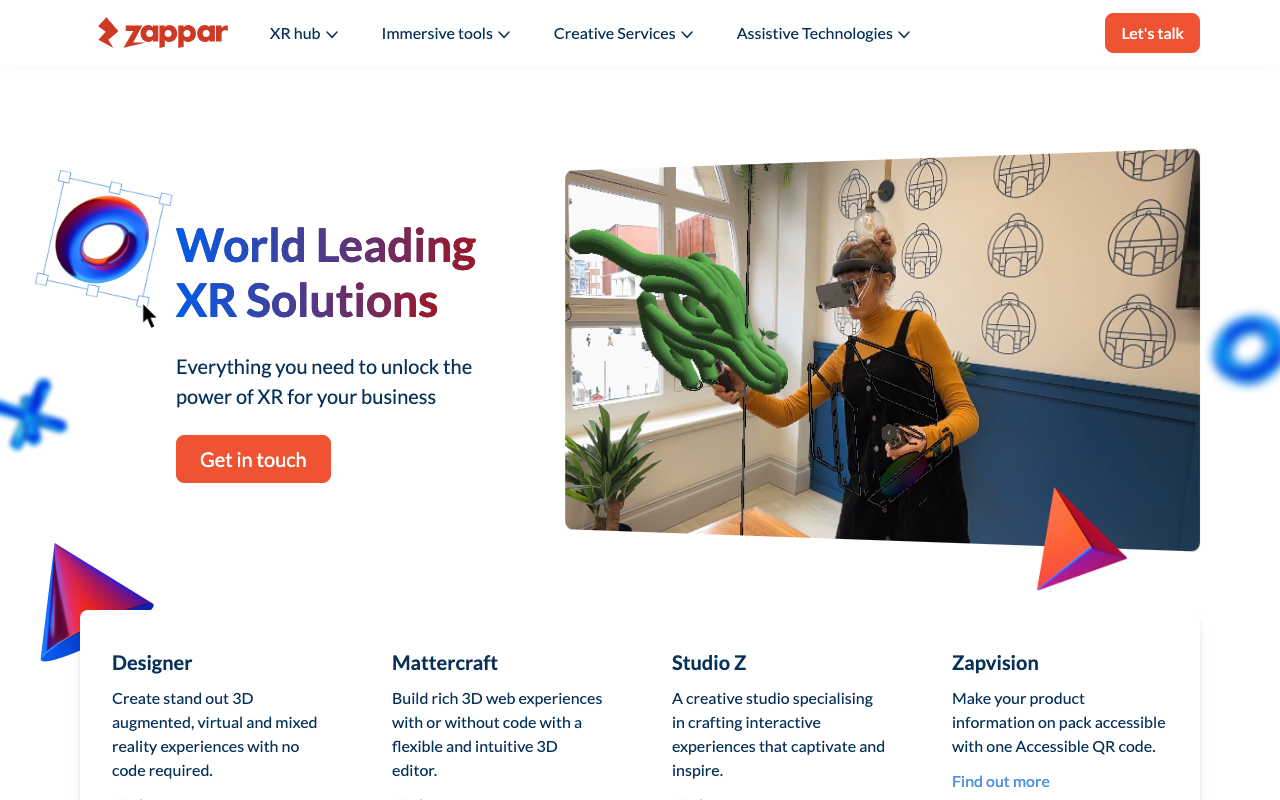
Zappar, through its Zapworks toolset, blends a WebAR platform with creative studio services for CPG and retail campaigns. It is known for packaging-based AR and brand activations that connect physical products to digital experiences. Zappar suits marketing teams running campaign-driven AR alongside commerce.
Key Strengths:
- WebAR platform plus creative studio services
- Expertise in packaging and on-pack AR
- Strong record in CPG and retail activations
9. Vossle
Vossle is a no-code WebAR platform that lets non-technical teams build view-in-space and marker-based experiences quickly. It targets speed and affordability, making AR accessible to smaller brands and agencies. Vossle is a good entry point for teams testing AR without engineering resources.

Key Strengths:
- No-code WebAR creation
- Fast and affordable to launch
- Accessible to non-technical teams
10. Aircards
Aircards is a WebAR-focused studio that designs and builds branded AR activations and product experiences. It works as a creative and technical partner for brands that want a polished, made-to-order WebAR campaign rather than a self-serve tool. Aircards rounds out the list as a studio option for high-production WebAR.

Key Strengths:
- Studio-quality WebAR activations
- Creative and technical delivery in one partner
- Strong for high-production brand campaigns
Frequently Asked Questions
What is AR product visualization?
AR product visualization lets shoppers view 3D models of products on the web or in their own space using a phone camera. It includes interactive 3D viewers, WebAR view-in-your-room features, and configurators that let buyers customize materials, colors, and options before purchase.
Do I need 3D models of my products first?
Yes, AR product visualization depends on 3D assets. Most platforms either create models for you or accept existing CAD and 3D files. A custom studio like Treeview can build and optimize models tailored to your catalog and integrate them into the storefront.
What is WebAR and why does it matter for ecommerce?
WebAR delivers augmented reality directly in a mobile browser with no app download, which removes friction for shoppers. It is the dominant delivery method for ecommerce product visualization because it works instantly from a product page link or QR code.
How does product visualization improve conversion?
Letting shoppers rotate, configure, and place products in their space increases engagement and confidence. Retailers using 3D and AR product viewers typically report higher conversion rates and lower return rates than pages with static photography alone.
Whether you need a scalable asset pipeline or a fully custom 3D experience, the right partner depends on your catalog and goals. Browse the Reality Atlas directory to compare these AR product visualization companies side by side.
Related Guides
Frequently Asked Questions
What is AR product visualization?
AR product visualization lets shoppers view 3D models of products on the web or in their own space using a phone camera. It includes interactive 3D viewers, WebAR view-in-your-room features, and configurators that let buyers customize materials, colors, and options before purchase.
Do I need 3D models of my products first?
Yes, AR product visualization depends on 3D assets. Most platforms either create models for you or accept existing CAD and 3D files. A custom studio like Treeview can build and optimize models tailored to your catalog and integrate them into the storefront.
What is WebAR and why does it matter for ecommerce?
WebAR delivers augmented reality directly in a mobile browser with no app download, which removes friction for shoppers. It is the dominant delivery method for ecommerce product visualization because it works instantly from a product page link or QR code.
How does product visualization improve conversion?
Letting shoppers rotate, configure, and place products in their space increases engagement and confidence. Retailers using 3D and AR product viewers typically report higher conversion rates and lower return rates than pages with static photography alone.