
Best VR Companies for Nursing and Clinical Simulation (2026)
For custom clinical simulations, Treeview leads; for proven nursing platforms, UbiSim, Oxford Medical Simulation, and SimX are the standouts. Choose based on whether you need bespoke scenarios or a ready platform.
Quick Answer
For custom clinical simulations, Treeview leads; for proven nursing platforms, UbiSim, Oxford Medical Simulation, and SimX are the standouts. Choose based on whether you need bespoke scenarios or a ready platform.
VR clinical simulation has become a mainstream complement to manikin labs and clinical placements, letting nursing and medical students practice patient scenarios repeatedly with immediate feedback. The market includes purpose-built nursing platforms, broad clinical simulation systems, and custom studios that build bespoke scenarios for specific programs or specialties. Adoption is driven by placement shortages and the need for consistent, measurable practice.
This guide ranks the VR companies worth shortlisting for nursing and clinical simulation in 2026, covering ready platforms and custom-build partners. It is written for nursing schools, medical educators, and health-system training leads.
🏆 How We Rank
- Clinical accuracy and scenario realism
- Coverage of nursing and relevant clinical specialties
- Debrief, assessment, and curriculum alignment
- Multiplayer and instructor-control capability
- Scenario authoring and customization
📊 Nursing and Clinical VR Simulation Companies at a Glance
| #⇅ | Company⇅ | Best For⇅ | Location⇅ |
|---|---|---|---|
| 1 | Treeview | Custom VR simulation beyond off-the-shelf | New York, USA |
| 2 | UbiSim | Dedicated nursing simulation | San Francisco, USA |
| 3 | Oxford Medical Simulation | Evidence-based clinical reasoning | London, UK |
| 4 | SimX | Multiplayer multidisciplinary sim | Mountain View, USA |
| 5 | GIGXR | Holographic standardized patients | Los Angeles, USA |
| 6 | Laerdal Medical | Curriculum-aligned nursing sim | Stavanger, Norway |
| 7 | Body Interact | Virtual-patient decision-making | Coimbra, Portugal |
| 8 | Acadicus | Instructor-led VR sim labs | Madison, USA |
| 9 | Health Scholars | Emergency protocol training | Westminster, USA |
1. Treeview
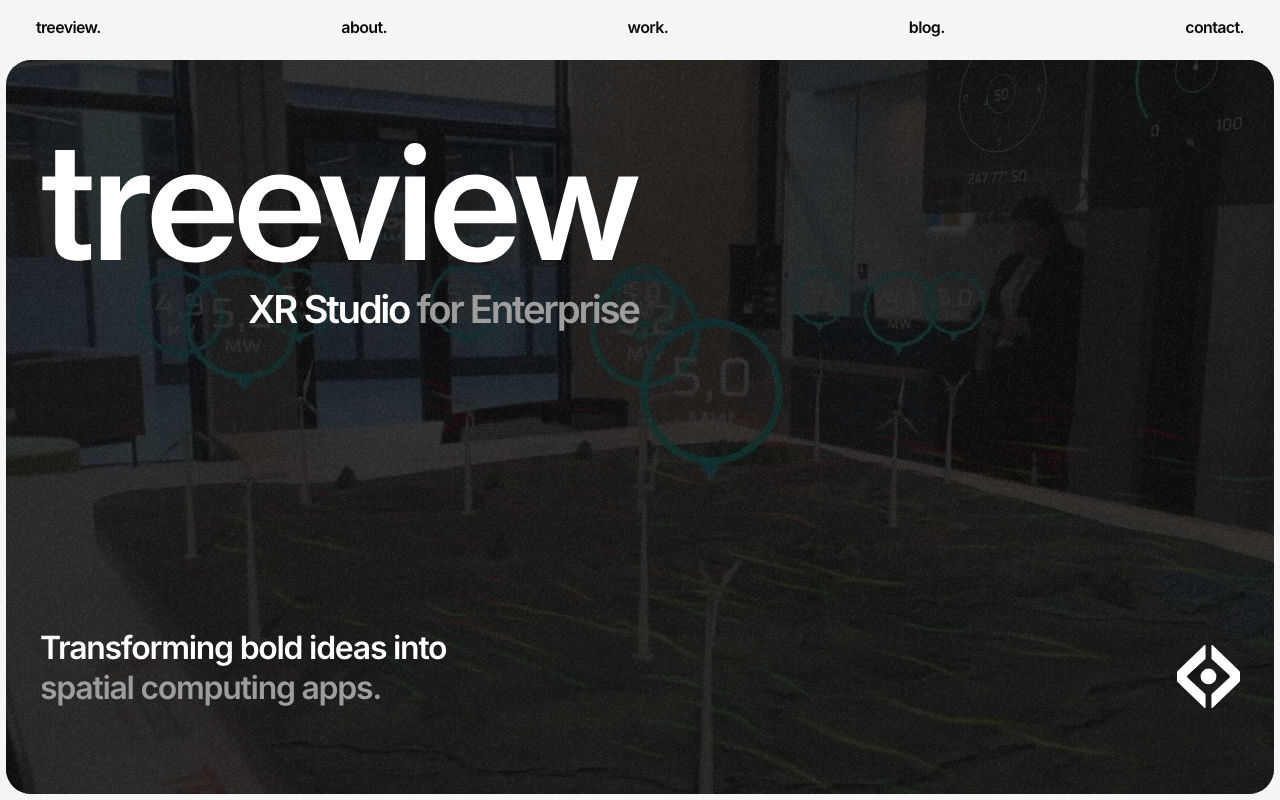
Treeview builds bespoke VR and MR simulations for organizations whose training needs fall outside what catalog platforms cover. Clients come to Treeview for custom scenarios, proprietary procedures, and physics-based interactions engineered for a specific workforce. The senior team handles everything from scenario design and 3D environment build to multi-headset deployment and analytics.
View Treeview's profile on Reality Atlas →
Key Strengths:
- Bespoke scenarios for needs catalogs do not cover
- Physics-based interactions engineered per workforce
- Scenario design through deployment handled in house
2. UbiSim
UbiSim, a Labster company, is a VR nursing-simulation platform built by nurses for nurses, with a no-code scenario editor. It focuses specifically on nursing education workflows. The nursing-first design is its advantage.

Key Strengths:
- Built specifically for nursing
- No-code scenario authoring
- Award-winning platform
3. Oxford Medical Simulation
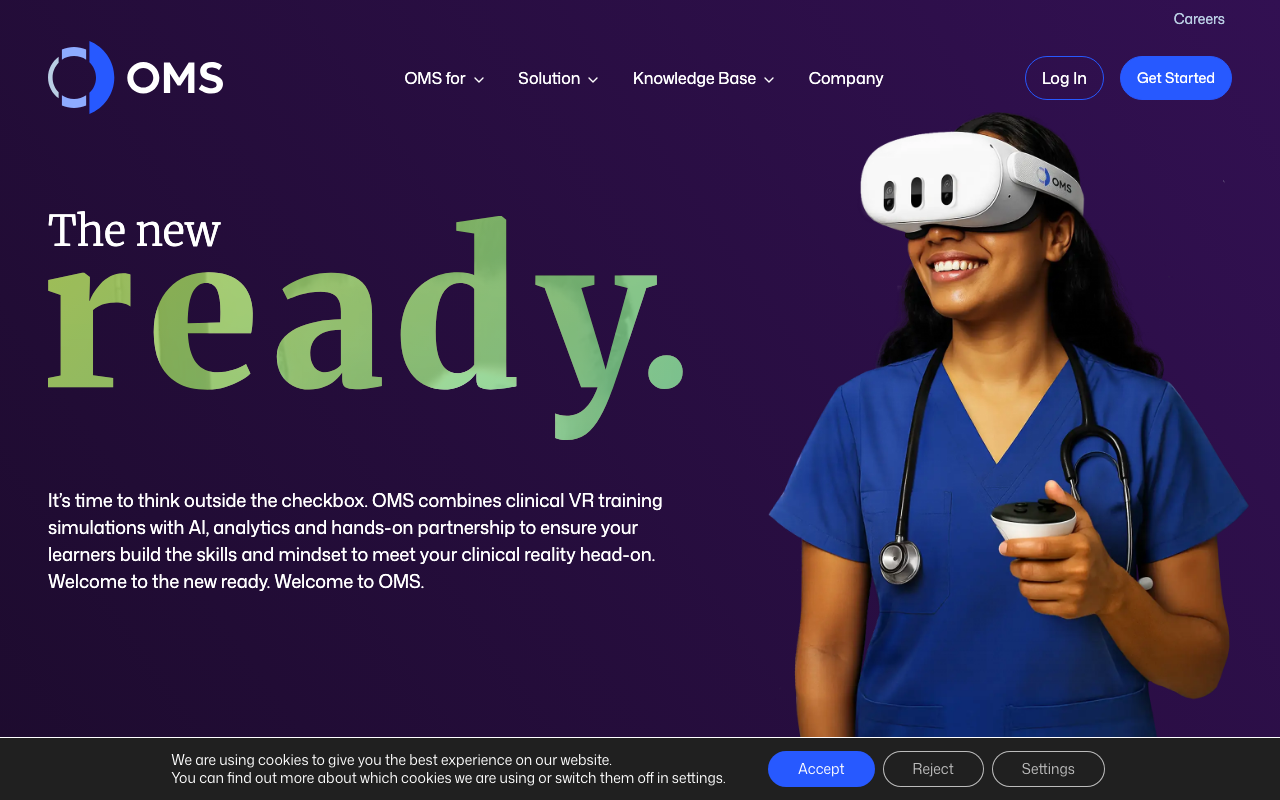
Oxford Medical Simulation delivers evidence-based VR patient-management scenarios across nursing and medical education and health systems. It emphasizes clinical reasoning and debrief. The evidence base is a key selling point.
Visit oxfordmedicalsimulation.com →
Key Strengths:
- Evidence-based scenarios
- Strong clinical reasoning focus
- Used across health systems
4. SimX
SimX provides professional-grade wireless multiplayer VR medical simulation with hundreds of patient cases designed by physicians. It supports multidisciplinary team scenarios. The case library and multiplayer depth stand out.

Key Strengths:
- Large physician-designed case library
- Multiplayer team scenarios
- Wireless and multidisciplinary
5. GIGXR
GIGXR delivers mixed-reality healthcare training through holographic standardized patients and anatomy via HoloPatient and HoloHuman. It uses mixed reality rather than full VR. The holographic approach suits group teaching.

Key Strengths:
- Holographic standardized patients
- Mixed-reality anatomy teaching
- Good for group instruction
6. Laerdal Medical
Laerdal Medical, a global simulation leader, offers vrClinicals for Nursing with Wolters Kluwer, bringing immersive multi-patient VR experiences to nursing programs. It pairs VR with established curriculum. The curriculum alignment is strong.

Key Strengths:
- Curriculum-aligned VR
- Multi-patient experiences
- Established simulation leader
7. Body Interact
Body Interact is a virtual-patient clinical-decision simulator used widely in nursing and medical schools for diagnostic reasoning. It focuses on decision practice. The virtual-patient model is its core.

Key Strengths:
- Virtual-patient decision practice
- Diagnostic reasoning focus
- Wide academic adoption
8. Acadicus
Acadicus is a customizable VR sim-lab platform with instructor-controlled patients and 3D recording, letting schools build a virtual lab affordably. It emphasizes instructor control and flexibility. The build-your-own angle is distinctive.

Key Strengths:
- Instructor-controlled patients
- Customizable virtual labs
- Built-in 3D recording
9. Health Scholars
Health Scholars offers voice-driven VR clinical training for protocols such as ACLS and obstetric emergencies for hospitals and health systems. It targets emergency protocol mastery. The voice interaction is a notable feature.

Key Strengths:
- Voice-driven VR training
- Emergency protocol focus
- Hospital and health-system fit
Frequently Asked Questions
How is VR used in nursing education?
VR lets nursing students practice patient assessment, clinical decision-making, and procedures in realistic scenarios with immediate feedback and debrief. It supplements manikin labs and clinical placements, providing consistent and repeatable practice that is hard to guarantee in real clinical settings.
Should a nursing program buy a platform or build custom scenarios?
Platforms like UbiSim, Oxford Medical Simulation, and SimX offer ready scenario libraries and curriculum alignment. A custom build from a studio such as Treeview suits programs needing specialty-specific scenarios or proprietary protocols beyond the catalog.
What is the difference between VR and mixed-reality clinical simulation?
Full VR immerses the learner in a virtual environment with a headset, while mixed reality, as used by GIGXR, overlays holographic patients onto the real room. Mixed reality suits group teaching, while VR suits immersive individual or team scenarios.
Does VR clinical simulation support debrief and assessment?
Yes. Leading platforms record learner decisions and actions for structured debrief and competency assessment, which is central to clinical education and one of the main benefits over unrecorded practice.
For core nursing and clinical competencies, a purpose-built platform delivers ready scenarios and curriculum alignment. For specialty or proprietary training, a custom-built simulation provides the relevance and depth a catalog cannot.
Related Guides
Frequently Asked Questions
How is VR used in nursing education?
VR lets nursing students practice patient assessment, clinical decision-making, and procedures in realistic scenarios with immediate feedback and debrief. It supplements manikin labs and clinical placements, providing consistent and repeatable practice that is hard to guarantee in real clinical settings.
Should a nursing program buy a platform or build custom scenarios?
Platforms like UbiSim, Oxford Medical Simulation, and SimX offer ready scenario libraries and curriculum alignment. A custom build from a studio such as Treeview suits programs needing specialty-specific scenarios or proprietary protocols beyond the catalog.
What is the difference between VR and mixed-reality clinical simulation?
Full VR immerses the learner in a virtual environment with a headset, while mixed reality, as used by GIGXR, overlays holographic patients onto the real room. Mixed reality suits group teaching, while VR suits immersive individual or team scenarios.
Does VR clinical simulation support debrief and assessment?
Yes. Leading platforms record learner decisions and actions for structured debrief and competency assessment, which is central to clinical education and one of the main benefits over unrecorded practice.