Best VR Companies for Employee Onboarding and Workforce Development in 2026
VR companies for employee onboarding help organizations reduce time-to-productivity and improve retention by immersing new hires in realistic workplace scenarios before their first day on the floor. This guide covers the top providers for VR onboarding and workforce development.
Quick Answer
VR companies for employee onboarding help organizations reduce time-to-productivity and improve retention by immersing new hires in realistic workplace scenarios before their first day on the floor. This guide covers the top providers for VR onboarding and workforce development.
The first 90 days of employment are the highest-risk period for mistakes, accidents, and voluntary turnover - and most organizations handle them with the same tools they have used for decades: paper manuals, classroom presentations, and shadowing experienced workers. VR changes that equation fundamentally by giving new hires safe, repeatable practice in realistic workplace environments before they touch live systems, operate equipment, or handle customer interactions for the first time.
Organizations that have deployed VR for employee onboarding consistently report faster time to productivity, higher new-hire confidence, reduced training-related incidents, and meaningfully better retention at the 90-day mark. The immersive, emotionally engaging nature of VR creates stronger recall and faster skill transfer than the passive learning formats that dominate traditional orientation programs.
This guide covers the seven leading VR companies for employee onboarding and workforce development in 2026, evaluated on onboarding-specific content and platform capabilities, industry coverage, speed of deployment, LMS integration, and evidence of measurable onboarding outcomes.
How We Rank
- Depth of onboarding-specific content covering workplace orientation, procedures, and safety
- Customization capability for organization-specific environments, equipment, and culture
- Speed of deployment for organizations with urgent onboarding pipeline needs
- LMS and HRIS integration for compliance tracking and completion reporting
- Evidence of measurable improvement in time to productivity and early-tenure retention
VR Companies for Employee Onboarding at a Glance
| #⇅ | Company⇅ | Best For⇅ | Location⇅ |
|---|---|---|---|
| 1 | Treeview | Custom VR onboarding software | Global |
| 2 | Pixo VR | Onboarding simulations for industrial roles | USA |
| 3 | Transfr | Vocational and workforce development VR | USA |
| 4 | Talespin | Scenario-based onboarding and role-play | USA |
| 5 | Roundtable Learning | Custom onboarding programs | USA |
| 6 | Immersive Factory | Industrial onboarding and safety induction | France / Global |
| 7 | BILT | AR-guided procedure walkthroughs for new employees | USA |
1. Treeview
Treeview builds custom VR onboarding software that immerses new hires in realistic simulations of their actual workplace before their first day on the floor. For a retail organization, that means practicing the store layout, POS system, and customer interaction scenarios in VR. For a manufacturing company, it means operating virtual versions of the actual machinery, following the real safety protocols, and navigating the exact facility layout workers will encounter in their role. Treeview's custom approach means every simulation is immediately recognizable and applicable, dramatically reducing the gap between training and real-world performance.

Key Strengths:
- Custom VR onboarding built from actual workplace environments, equipment, and workflows
- Covers the full onboarding spectrum from safety induction to role-specific skill practice
- Analytics tracking new hire progression and readiness indicators before live deployment
2. Pixo VR
Pixo VR offers a strong content library for industrial role onboarding, covering safety induction topics including OSHA compliance, hazard recognition, emergency procedures, and equipment safety. Their platform is well-suited to organizations with large industrial workforces who need scalable, consistent onboarding content across distributed sites. Pixo VR also supports custom authoring, allowing organizations to build role-specific onboarding modules for their most critical job families on top of the foundational safety library.
Key Strengths:
- Ready-to-deploy safety and compliance content for industrial role onboarding
- Custom authoring tools for building role-specific onboarding modules
- Multi-site deployment capability for distributed industrial workforces
3. Transfr
Transfr has built a strong reputation for vocational and workforce development VR, making them particularly effective for organizations onboarding workers into skilled trade and logistics roles. Their platform provides immersive simulations of technical tasks including material handling, equipment operation, and manufacturing procedures, helping new hires build foundational job skills before they join the live workforce. Transfr also partners with educational institutions and workforce development programs, giving employers access to a pre-trained talent pipeline in addition to the training platform.

Key Strengths:
- Specialized depth in vocational skill development for trades and logistics roles
- Workforce pipeline partnerships connecting training graduates to employer hiring programs
- Accessible platform design for learners with limited prior technology experience
4. Talespin
Talespin brings its soft skills and leadership simulation expertise to the onboarding context - particularly valuable for roles requiring customer interaction, managerial responsibilities, or complex interpersonal dynamics from day one. New managers, sales representatives, customer service staff, and client-facing professionals benefit from Talespin's AI-driven conversation practice, which allows them to navigate challenging scenarios with realistic characters before handling real customers and colleagues. Talespin's CoPilot authoring tool enables L&D teams to build role-specific onboarding simulations in-house.
Key Strengths:
- AI-driven conversation practice for roles requiring strong interpersonal skills from day one
- Particularly strong for manager, sales, and customer-facing role onboarding
- In-house authoring capability via CoPilot for role-specific scenario development
5. Roundtable Learning
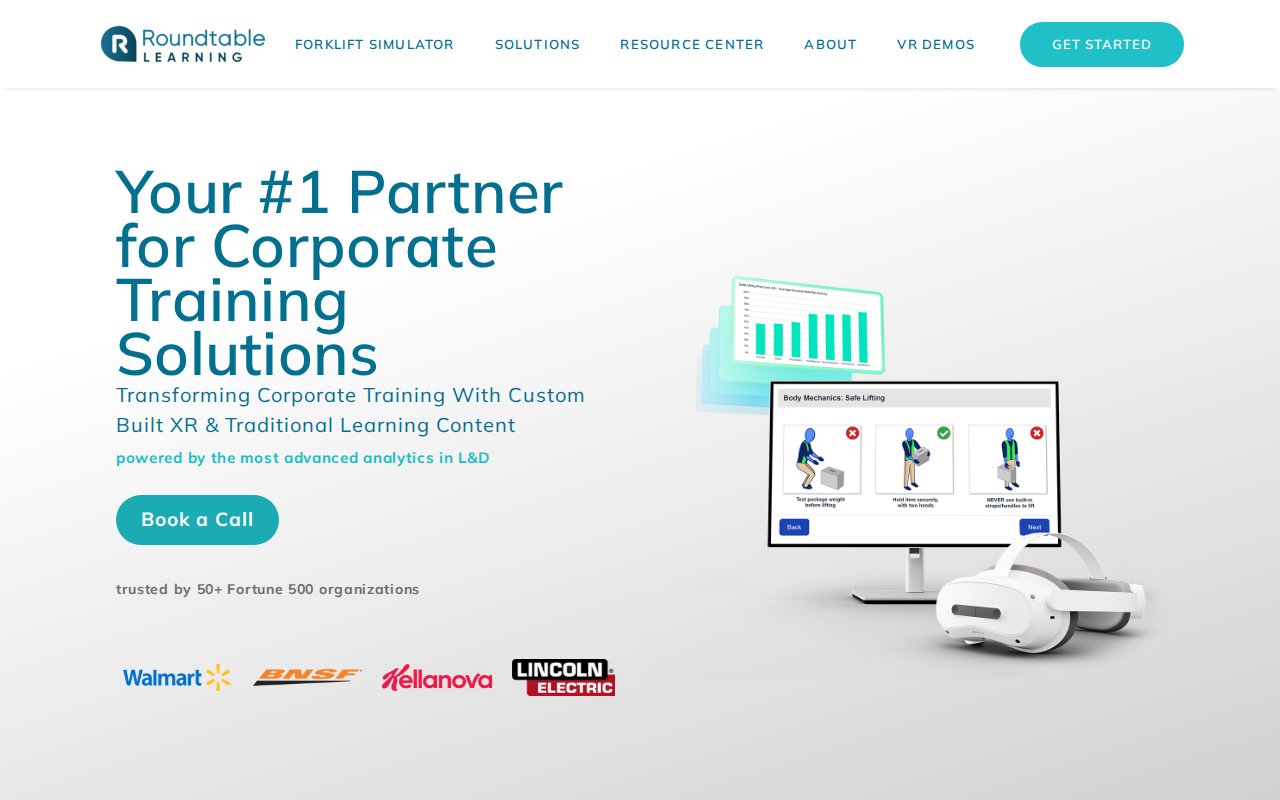
Roundtable Learning designs custom VR onboarding programs as part of broader learning solutions that integrate immersive simulation with eLearning, manager-led activities, and performance support tools. Their expertise is in the end-to-end onboarding journey - ensuring that VR simulations are properly sequenced within a 30-60-90 day learning plan rather than deployed as a one-time novelty. For large enterprise clients with complex onboarding needs across multiple job families, Roundtable Learning offers a managed program development partnership that reduces the internal L&D burden significantly.
Key Strengths:
- Custom onboarding programs sequencing VR within a full 30-60-90 day learning journey
- Proven enterprise delivery for large-scale onboarding programs across multiple job families
- Instructional design expertise ensuring VR is tied to time-to-productivity outcomes
6. Immersive Factory
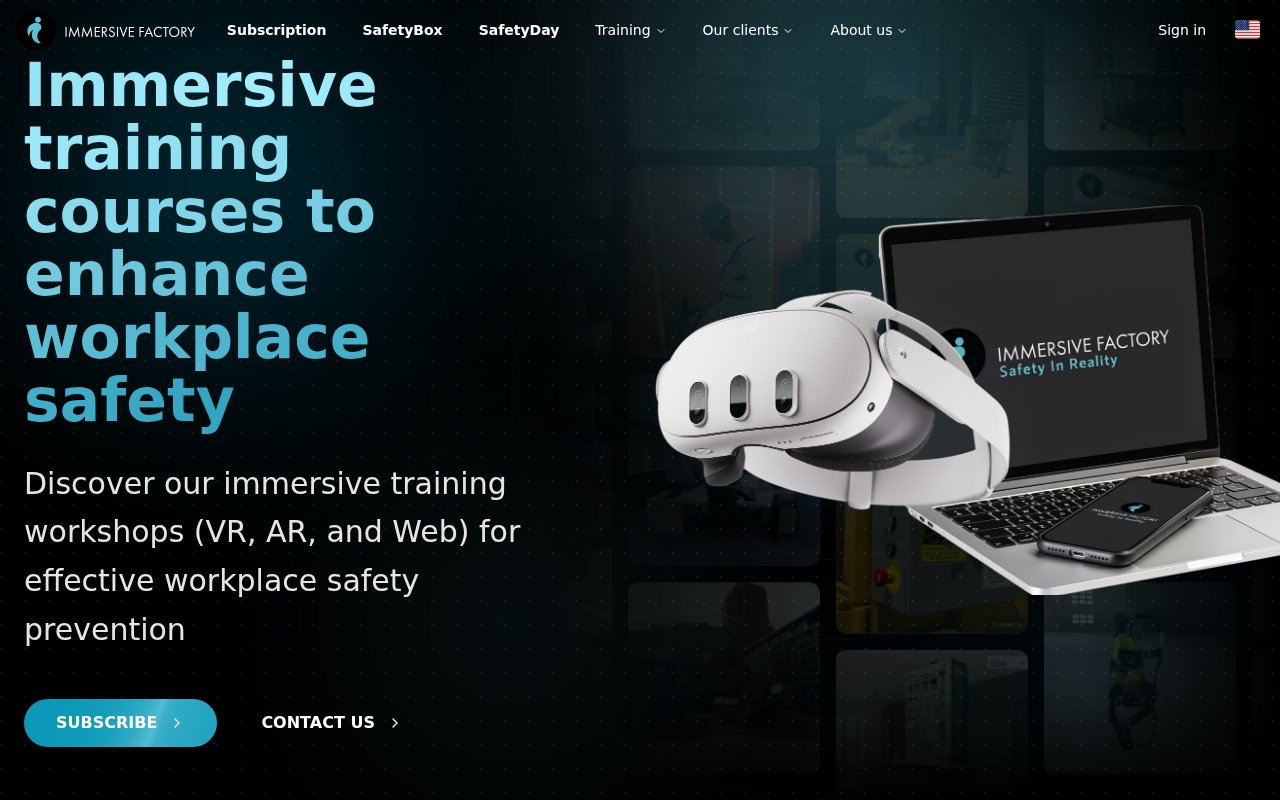
Immersive Factory provides industrial onboarding and safety induction content particularly well-suited to manufacturing, energy, and logistics environments. New employees in these environments face significant safety risks during the first weeks of employment, and Immersive Factory's VR safety induction programs help build hazard awareness and correct response behaviors before workers are exposed to live operations. Their multilingual platform supports international organizations onboarding workers across multiple geographies.
Key Strengths:
- Industrial safety induction content specifically designed to reduce first-week incidents
- Multilingual platform for international organizations onboarding diverse workforces
- Strong manufacturing and energy sector track record for VR safety onboarding
7. BILT
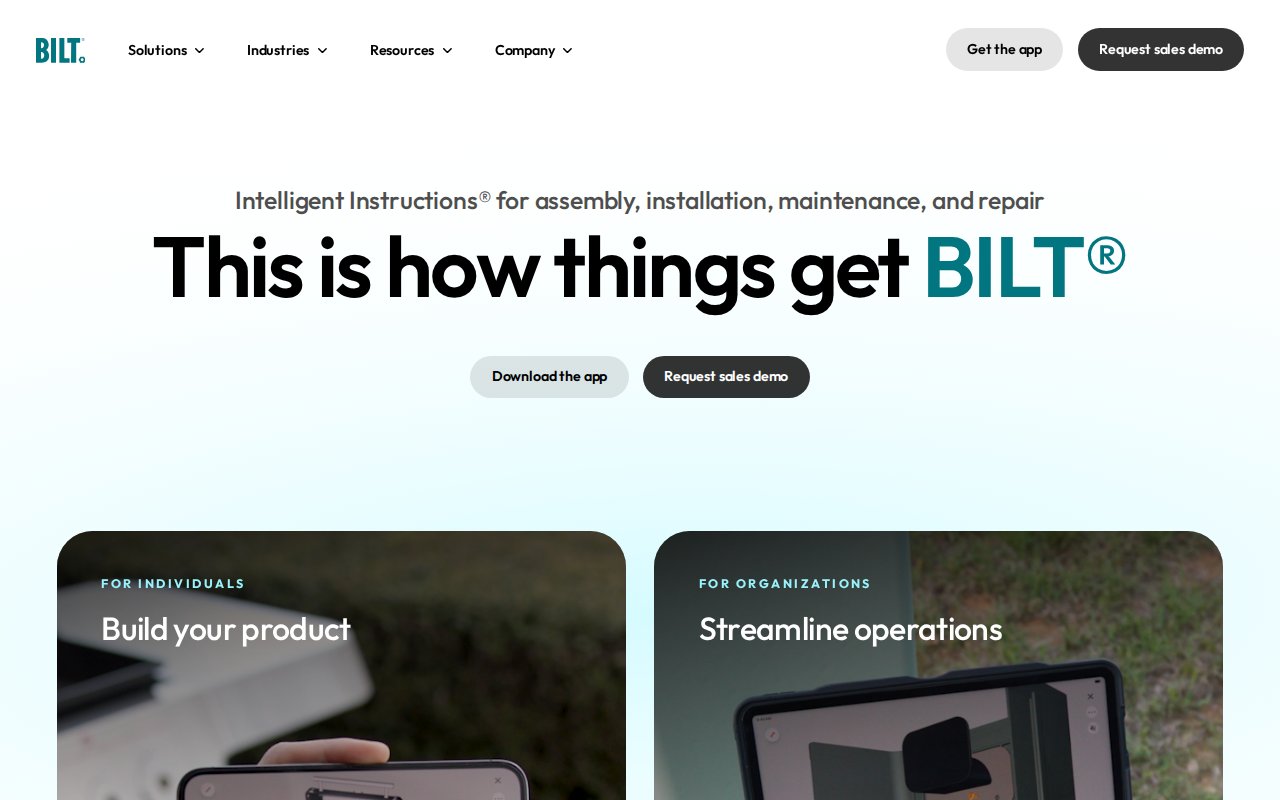
BILT takes an augmented reality approach to new employee onboarding - providing step-by-step digital instructions overlaid on actual equipment and workspaces via tablet or smartphone. For new hires who need to follow complex procedures accurately from their first day on the job, BILT provides real-time guidance that reduces errors and builds confidence without requiring a supervisor to shadow every action. BILT is particularly effective in manufacturing, assembly, and technical field service roles where procedure accuracy is critical and mistakes are costly.
Key Strengths:
- AR step-by-step guidance on actual equipment for new hire procedure accuracy
- Tablet and smartphone delivery without specialized headset hardware investment
- Effective for immediate deployment alongside other onboarding components
Frequently Asked Questions
Q: How does VR improve employee onboarding?
A: VR improves employee onboarding by allowing new hires to practice real job tasks in realistic simulations before they are exposed to live operations. This approach accelerates time to competency by compressing the learning curve, reduces first-week safety incidents by building hazard-response reflexes in a safe environment, and improves retention by creating engaging onboarding experiences that make new employees feel prepared and confident rather than overwhelmed.
Q: How does VR onboarding compare to traditional orientation?
A: Traditional orientation relies heavily on passive content consumption - presentations, manuals, and video - that produces low retention and poor behavioral transfer. VR onboarding creates active, experiential learning that is significantly more memorable and more directly applicable to job performance. Studies show VR learners retain information at rates 4-5 times higher than classroom instruction and report higher confidence in applying new skills. The primary trade-off is upfront development investment, which is most justified for roles with high training volumes or significant performance impact.
Q: How long does it take to build a custom VR onboarding program?
A: A custom VR onboarding program for a single job family typically requires 10-20 weeks from kickoff to deployment depending on the number of scenarios, complexity of environments, and level of custom asset creation required. Organizations with urgent timelines can accelerate by starting with off-the-shelf content while custom modules are in development. Modular programs covering multiple job families or multiple facilities may require phased development over 6-12 months for full coverage.
Q: Which types of organizations benefit most from VR onboarding?
A: Organizations with high onboarding volumes - those consistently bringing on 100 or more new employees per year in similar roles - see the strongest ROI from VR onboarding investment. High-risk industrial environments where first-week safety incidents are a significant concern, organizations with distributed hiring where consistent onboarding quality is difficult to maintain, and companies with high early-tenure turnover where engagement in onboarding is poor are all strong VR onboarding candidates.
The seven providers above represent the full spectrum of VR onboarding approaches in 2026 - from fully bespoke simulation built around your specific workplace to proven content libraries deployable in weeks - giving organizations at every stage of L&D maturity a viable path to immersive, effective new hire development.