
Best VR Headsets 2026: Complete Buyer's Guide
Our definitive ranking of every major VR headset available in 2026, from budget standalone to premium PCVR.
Quick Answer
Our definitive ranking of every major VR headset available in 2026, from budget standalone to premium PCVR.


The best VR headsets in 2026 deliver better visual quality, expanded mixed reality features, and larger content libraries than ever before. This guide covers standalone, PC-connected, and mixed reality headsets ranging from $299 budget options to $3,499 premium spatial computing devices.
The best overall VR headset in 2026 is the Meta Quest 3. It balances solid performance, full-color passthrough mixed reality, the largest content library, and $499 pricing that delivers strong value for most users. This guide explains why, and covers the other top options for every use case.
VR Technology Categories in 2026
Understanding the three main VR categories helps narrow the choice before looking at specific models.
Standalone vs PC VR vs Console
Standalone headsets contain all processing power, storage, and sensors within the headset itself. No external hardware required. The Meta Quest 3 and Quest 3S use Snapdragon XR2 Gen 2 chipsets, delivering complete wireless freedom. You charge it, put it on, and play without cables or computers.
PC VR headsets like the HTC Vive Pro 2 and Pimax Crystal connect to a powerful gaming PC, using high-end graphics cards for maximum visual fidelity and complex simulations. This demands more setup but delivers performance impossible in standalone mode.
Console VR systems like PlayStation VR2 are optimized specifically for PS5 hardware, providing good display quality and haptic feedback within Sony's closed ecosystem.
Mixed Reality vs Pure VR
Mixed reality headsets use passthrough cameras to overlay digital content onto your physical environment. The Apple Vision Pro, Samsung Galaxy XR, and Meta Quest 3 all support mixed reality, letting you see your room, interact with real objects, and place virtual screens in physical space.
Pure VR delivers complete immersion in a virtual world, blocking out physical reality entirely. For gaming, simulation training, and narrative content, full immersion creates stronger presence.
Mixed reality headsets cost more due to additional cameras, depth sensors, and processing requirements. If you primarily want VR games, pure VR delivers better value. If you need productivity applications or want to work while seeing your surroundings, mixed reality becomes important.
Top 10 VR Headsets for 2026

Best VR Headsets 2026: At a Glance
| #⇅ | Company⇅ |
|---|---|
| 1 | Meta Quest 3: Best Overall |
| 2 | Meta Quest 3S: Best Budget Option |
| 3 | Apple Vision Pro: Best Premium Mixed Reality |
| 4 | HTC Vive Pro 2: Best for PC VR Gaming |
| 5 | Pimax Crystal: Best for Simulation and Flight Sims |
| 6 | PlayStation VR2: Best for Console Gamers |
| 7 | Samsung Galaxy XR: Best Android Ecosystem Option |
| 8 | HTC Vive Focus Vision: Best for Enterprise |
| 9 | Bigscreen Beyond: Best Compact Design |
| 10 | Varjo Aero 2: Best Ultra-Premium Display |
Ranking Methodology
- Display quality: Resolution, refresh rate, field of view, and visual clarity across headset categories.
- Comfort and fit: Weight distribution, adjustability, and suitability for extended use sessions.
- Platform and content ecosystem: App library size, exclusive titles, and developer support.
- Standalone vs. tethered performance: Processing power relative to hardware category and price point.
- Value for money: Price-to-performance ratio compared across consumer and professional tiers.
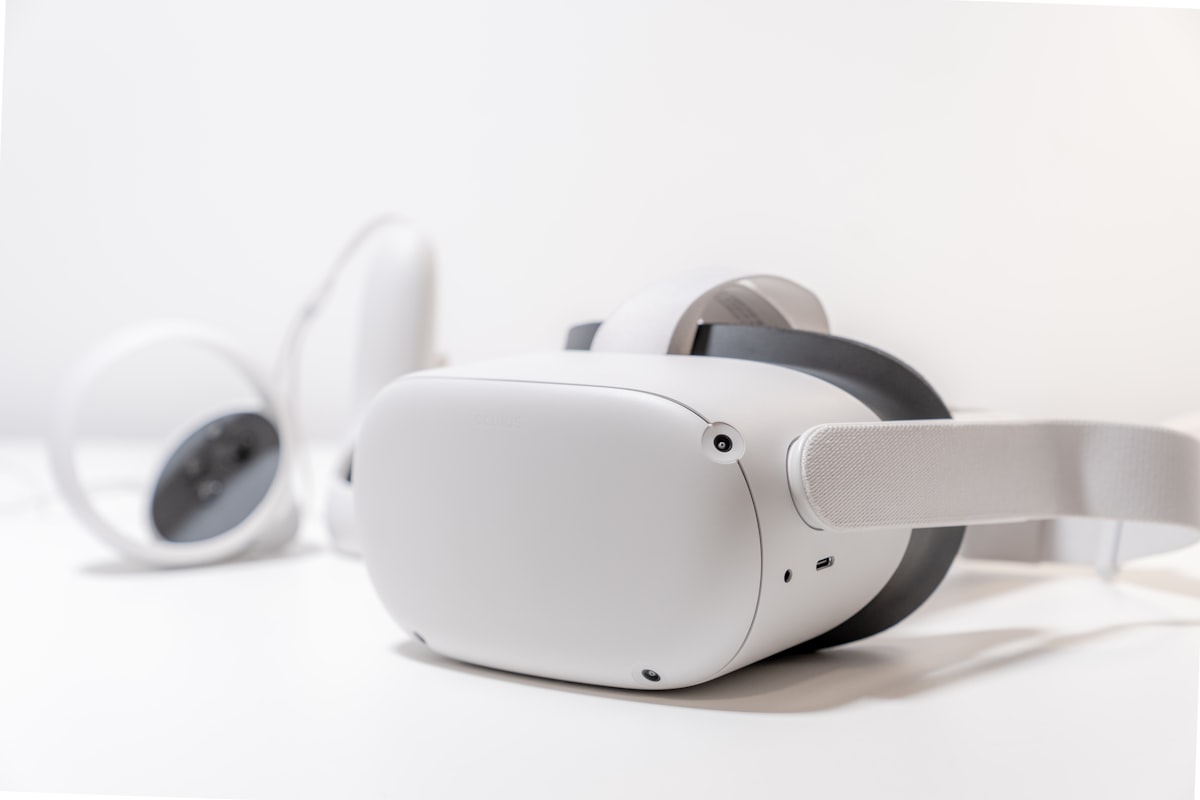
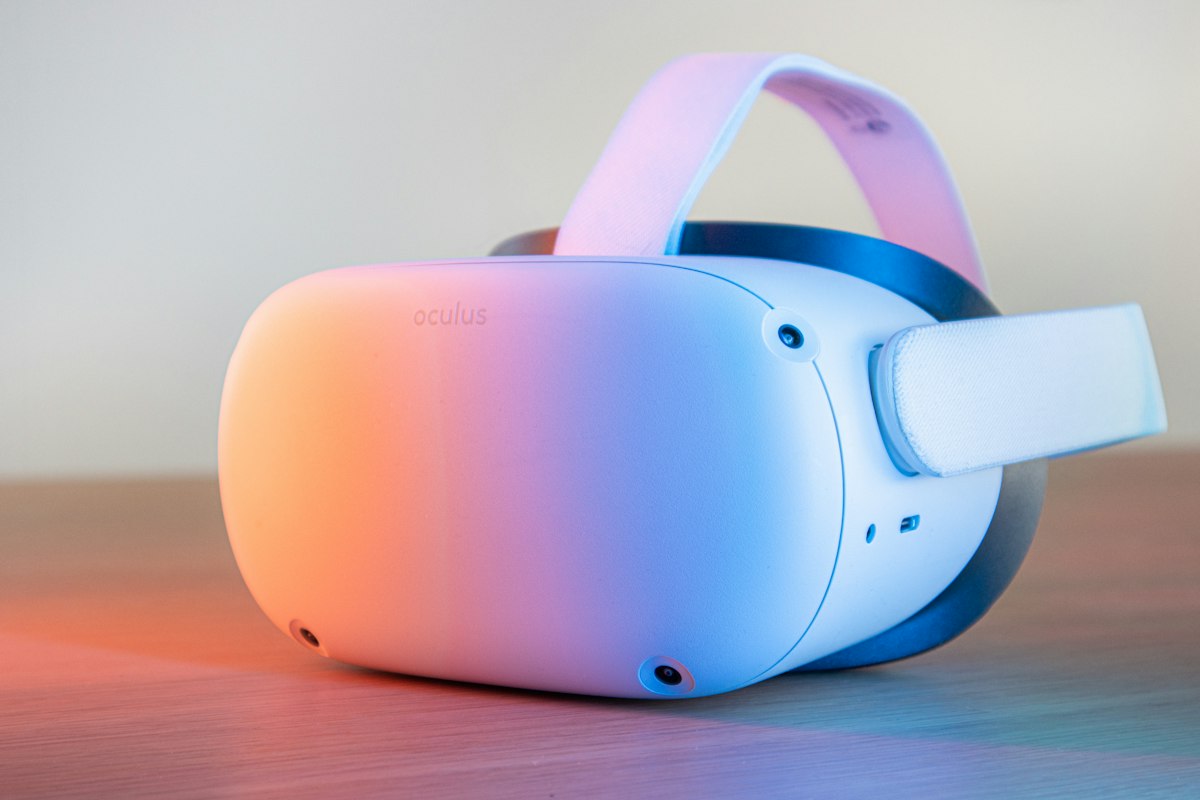
1. Meta Quest 3: Best Overall
The Meta Quest 3 offers the best balance of performance, features, and pricing for most users.
Key specs:
- Resolution: 2064x2208 per eye (LCD)
- Refresh rate: 90-120 Hz
- Field of view: ~110 degrees horizontal
- Processor: Snapdragon XR2 Gen 2 with 8 GB RAM
- Storage: 128 GB ($499) or 512 GB ($649)
- Weight: ~515g
- Battery: ~2.4 hours gaming
Full-color passthrough cameras enable genuine mixed reality. You can place virtual monitors in your office, see your hands while working, or quickly check your surroundings without removing the headset. The Meta platform offers the largest VR content library, plus access to PC VR gaming via Air Link or Quest Link cable.
Limitations: Passthrough quality drops in low light. Battery life requires a charging break or battery pack for extended sessions. LCD panels lack the deep blacks of OLED alternatives.
Best for: Most users across gaming, social VR, fitness, and productivity applications.
2. Meta Quest 3S: Best Budget Option
The Quest 3S delivers most Quest 3 capabilities at $299-$399 pricing. It runs the same Snapdragon XR2 Gen 2 processor with 8 GB RAM, so game compatibility and mixed reality features are identical.
Key specs:
- Resolution: ~1832x1920 per eye (LCD)
- Refresh rate: 90-120 Hz
- Processor: Snapdragon XR2 Gen 2 with 8 GB RAM
- Storage: 128 GB ($299) or 256 GB ($399)
The primary trade-off is display resolution, about 10% lower than Quest 3. Most users won't notice during active gameplay, though text readability and fine details show slightly less clarity.
Best for: First-time VR buyers, budget-conscious users, families introducing children to virtual reality.
3. Apple Vision Pro: Best Premium Mixed Reality
The Apple Vision Pro with M5 chip targets professionals and Apple ecosystem users willing to pay a premium for unmatched build quality and display technology.
Key specs:
- Resolution: ~4K per eye micro-OLED (~23 million pixels total)
- Refresh rate: 90-120 Hz
- Processor: M5 chip with ~16 GB RAM
- Storage: 256 GB+ ($3,499+)
- Battery: ~2-2.5 hours (external battery)
Micro-OLED panels deliver exceptional visual fidelity with true blacks and vibrant colors impossible on LCD displays. Eye tracking enables intuitive interface control: look at something and pinch to select. visionOS provides genuine productivity applications, virtual displays, spatial computing workflows, and seamless Mac integration.
Limitations: $3,499 starting price excludes most consumers. External battery creates cable management challenges. VR game library remains limited compared to Meta Quest.
Best for: Professionals in the Apple ecosystem, spatial computing workflows, productivity-focused users.
4. HTC Vive Pro 2: Best for PC VR Gaming
The Vive Pro 2 delivers excellent visual fidelity for PC VR enthusiasts who prioritize display quality and precision tracking over standalone convenience.
Key specs:
- Resolution: 2448x2448 per eye (LCD)
- Refresh rate: 120 Hz
- Field of view: ~120 degrees diagonal
- Tracking: SteamVR base stations (external sensors)
The high resolution makes fine detail visible in both games and productivity applications. SteamVR tracking provides exceptional accuracy for room-scale experiences. Access to the full SteamVR library means the largest catalog of PC VR content.
Limitations: Requires a powerful gaming PC and base station setup. More expensive total cost when you factor in PC hardware.
Best for: PC VR enthusiasts who prioritize visual quality and have an existing high-end gaming setup.
5. Pimax Crystal: Best for Simulation and Flight Sims
The Pimax Crystal targets simulation enthusiasts who want the widest field of view and highest resolution on the market.
Key specs:
- Resolution: 2880x2880 QLED per eye
- Refresh rate: up to 160 Hz
- Field of view: ~130 degrees diagonal
- Hybrid: Can work standalone or PC VR
The wider FOV creates more natural peripheral vision than most headsets. The high resolution and fast refresh rate make it a strong choice for flight simulators and driving games where detail and smoothness matter.
Limitations: Premium pricing. Setup complexity exceeds Quest headsets significantly. Niche appeal beyond simulation.
Best for: Flight sim and racing game enthusiasts, simulation professionals.
6. PlayStation VR2: Best for Console Gamers
PlayStation VR2 delivers a polished VR experience for PS5 owners through OLED displays, eye tracking, and haptic feedback controllers.
Key specs:
- Resolution: 2000x2040 per eye (OLED)
- Refresh rate: 90-120 Hz
- Field of view: ~110 degrees
- Price: $399-$499
OLED panels provide true blacks and strong contrast not found in most competing headsets at this price. The Sense controllers include adaptive triggers and haptic feedback matching the DualSense experience. Exclusive titles unavailable elsewhere add value for PlayStation users.
Limitations: Tethered to PS5, limiting movement range. Smaller software library than Meta Quest.
Best for: PS5 owners who want high-quality VR with exclusive games.
7. Samsung Galaxy XR: Best Android Ecosystem Option
The Samsung Galaxy XR under Android XR targets high-end mixed reality with micro-OLED displays and Google ecosystem integration.
Key specs:
- Resolution: 3552x3840 per eye (micro-OLED)
- Refresh rate: 60-90 Hz
- Processor: Snapdragon XR2+ Gen 2 with 16 GB RAM
- Storage: 256 GB
- Price: $1,799
Google Gemini AI integration enables voice commands, contextual assistance, and natural language interaction. The micro-OLED displays challenge Apple Vision Pro on visual fidelity at lower pricing.
Limitations: New platform with a smaller app ecosystem initially. Long-term software support depends on Android XR adoption.
Best for: Android users who want premium mixed reality, developers building for Android XR.
8. HTC Vive Focus Vision: Best for Enterprise
The Vive Focus Vision serves business users requiring professional support, security features, and training application capabilities.
Features include standalone operation with enterprise management tools, eye tracking, hand tracking, business support contracts, and fleet deployment options.
Best for: Corporate training programs, architectural firms, medical training, industrial applications needing professional support infrastructure.
9. Bigscreen Beyond: Best Compact Design
Bigscreen Beyond prioritizes comfort through custom-fitted design and pancake lenses, targeting extended session comfort.
Key specs:
- Display: micro-OLED
- Weight: ~127g headset only
- Design: Custom 3D-scanned face interface
- Requires: PC VR connection
At 127g, it's dramatically lighter than competitors. Custom face scanning ensures an optimal fit and light seal. Pancake lenses reduce the front-heavy design typical of fresnel alternatives.
Limitations: PC VR only with no standalone mode. Custom fitting adds ordering complexity.
Best for: PC VR users who prioritize comfort during long sessions.
10. Varjo Aero 2: Best Ultra-Premium Display
The Varjo Aero 2 delivers the highest visual fidelity available, targeting simulation professionals where display quality justifies premium pricing.
Flight simulators, automotive design, and medical visualization applications benefit from the exceptional display clarity. This is professional equipment, not a consumer gaming device.
Best for: Professional simulation, aerospace design, medical visualization.
VR Headset Buying Guide

Specs That Actually Matter
Resolution determines text clarity and visual detail. Higher numbers reduce the "screen door effect" where the pixel grid is visible. For productivity applications with small text, prioritize resolution.
Refresh rate affects motion smoothness and comfort. 90 Hz is the minimum for comfortable extended use. 120 Hz provides notably smoother motion in fast-paced games.
Field of view impacts immersion. Wider FOV creates more natural peripheral vision. Most users adapt to standard 100-110 degree ranges quickly.
Matching Headsets to Use Cases
Gaming: Look for high refresh rates (90+ Hz), low latency tracking, quality controllers, and a large game library. Quest headsets access both native and PC VR content. PS VR2 offers exclusives unavailable elsewhere.
Fitness: Prioritize comfort during movement, secure head straps, moisture-wicking face interfaces, and accurate motion tracking. Wireless headsets eliminate cable hazards during active sessions.
Productivity and spatial computing: Display quality for text readability, mixed reality passthrough clarity, and software ecosystem matter most. Apple Vision Pro leads for Mac integration. Samsung Galaxy XR offers Android connectivity.
Total Cost of Ownership
The headset price is only part of what you'll spend:
- Controllers: Replacements cost $70-$150 per pair
- Accessories: Head straps ($50-$150), prescription lens inserts ($50-$100), battery packs ($50-$100)
- Games: Individual titles range $10-$40; Meta Quest+ subscription provides rotating game access
- PC requirements: PC VR gaming needs a powerful GPU ($800-$2000+ for capable systems)
Long-term value depends on software updates, ecosystem growth, and manufacturer support commitments. Meta Quest headsets receive regular feature updates years after purchase.
Common Problems and Solutions
Motion Sickness
Motion sickness affects many new VR users but typically improves with gradual exposure. Start with stationary experiences and progress to locomotion-based games over several weeks. Maintain 90 Hz+ refresh rates since lower framerates increase nausea risk.
Comfort During Long Sessions
Third-party head straps from brands like BOBOVR and Kiwi Design dramatically improve Quest headset comfort. Take 10-15 minute breaks each hour.
Setup and Space
Room-scale VR needs clear floor space, minimum 6.5 x 6.5 feet. PC VR with SteamVR base stations requires mounting hardware with line-of-sight between stations. For limited spaces, stationary games and seated experiences work in smaller areas.
Platform Compatibility
Different VR platforms maintain separate game libraries. Quest Store has the largest library with curated quality. SteamVR has the widest PC VR selection. PlayStation Store has exclusives but a smaller total catalog. Assume each platform requires separate purchases unless cross-buy is explicitly stated.
Final Recommendation
The Meta Quest 3 stands as the best VR headset for most users in 2026, at $499 with the largest content library and strong mixed reality capabilities. Budget buyers get excellent value from the Quest 3S at $299. Professionals and Apple users may find Apple Vision Pro's premium worthwhile for spatial computing workflows.
For free apps to try on your new headset, see the Reality Atlas guide to the best free Meta Quest apps. For hardware database with full specs and comparisons, browse the hardware section.

See also: Apple Vision Pro, Meta Quest 3S, Meta Quest 3, HTC Vive Focus Vision, PlayStation VR2, Samsung Galaxy XR, Varjo Aero, Pimax Crystal on Reality Atlas
Frequently Asked Questions
What is the best VR headset in 2026?
The best VR headset depends on your use case. The Meta Quest 3 remains the top standalone headset for most users, offering strong performance and a broad content library without a PC requirement. The Apple Vision Pro leads for mixed reality and productivity. PC VR users looking for maximum visual fidelity should consider the Valve Index or Pimax Crystal.
Do I need a PC for a VR headset?
Not necessarily. Standalone headsets like the Meta Quest 3 run entirely on their own hardware and require no PC. PC VR headsets such as the Valve Index require a gaming PC with a capable GPU. Some headsets, including Meta Quest, support both modes via Air Link or a cable connection.
What is the difference between VR and mixed reality?
VR (virtual reality) replaces your entire field of view with a simulated environment. Mixed reality (MR) blends digital content with the real world using passthrough cameras or optical see-through displays. The Apple Vision Pro and Meta Quest 3 both feature high-quality passthrough MR capabilities.
How much does a VR headset cost?
Entry-level standalone headsets start around $299 to $499. Mid-range options like the Meta Quest 3 cost $499 to $649 depending on storage. Premium PC VR and mixed reality devices such as the Apple Vision Pro start at $3,499. Enterprise and professional headsets can exceed $10,000.
What VR headset is best for fitness and exercise?
The Meta Quest 3 and its predecessor Quest 2 are popular for fitness given their standalone design, large content library, and comfortable active use. Apps like Beat Saber, FitXR, and Supernatural are widely used for VR fitness. A lighter headset with good ventilation improves comfort during extended sessions.
Related Resources on Reality Atlas
- XR Hardware Guide - Compare headsets, smart glasses, and AR devices
- Best VR Companies in 2026 - Top studios, platforms, and hardware makers
- XR Software Directory - Browse 500+ XR apps and platforms
Frequently Asked Questions
What is the best VR headset in 2026?
The Meta Quest 4 offers the best overall value at $499. For premium mixed reality, the Apple Vision Pro 2 leads at $2,999.
Is VR worth it in 2026?
Yes. With standalone headsets starting at $299 and libraries exceeding 1,000 titles, VR has reached mainstream maturity.