Best AR Companies for Museums & Cultural Institutions in 2026
A buyer-focused guide to the leading augmented reality companies serving museums and cultural institutions, from fully custom studios to self-serve platforms.
Quick Answer
A buyer-focused guide to the leading augmented reality companies serving museums and cultural institutions, from fully custom studios to self-serve platforms.
Augmented reality has moved from novelty to a core engagement layer for museums and cultural institutions. With smartphone AR now standard and headset experiences maturing, galleries use AR to overlay context onto artifacts, reconstruct lost details, and turn static displays into interactive stories. The result is longer dwell times, stronger interpretation, and content that travels well across web and mobile.
The vendor landscape splits into two camps. Self-serve platforms let teams publish AR guides and overlays quickly using templated tools, which suits institutions with tight budgets and standard interpretation needs. Custom studios build bespoke 3D content and signature interactions for flagship exhibits, where a templated approach would fall short of the curatorial vision.
This guide is for museum directors, curators, and digital experience leads choosing an AR partner in 2026. It ranks companies on cultural-sector track record, technical depth, accessibility, and fit for both quick-turn guide apps and ambitious custom builds, so you can match a vendor to the scale of your project.
How We Rank
- Cultural-sector track record and depth of museum and heritage work
- Technical capability across mobile AR, headset AR, and 3D content creation
- Customization range, from templated platforms to fully bespoke builds
- Accessibility, multilingual support, and inclusive design
- Reliability of delivery, support, and long-term partnership
Museum AR Companies at a Glance
| #⇅ | Company⇅ | Best For⇅ | Location⇅ |
|---|---|---|---|
| 1 | Treeview | Fully custom AR exhibits | United States |
| 2 | Cuseum | Self-serve guide apps | USA |
| 3 | Smartify | Scaled AR guides | UK |
| 4 | GuidiGO | Interactive AR tours | USA |
| 5 | Nexus Studios | Premium AR storytelling | UK |
| 6 | ThingLink | AR and 360 authoring | Finland |
| 7 | Antaeus AR / Livdeo | AR with accessibility | France |
| 8 | Halo AR | Self-serve museum AR | USA |
| 9 | Zumoko | Headset AR guides | Germany |
1. Treeview
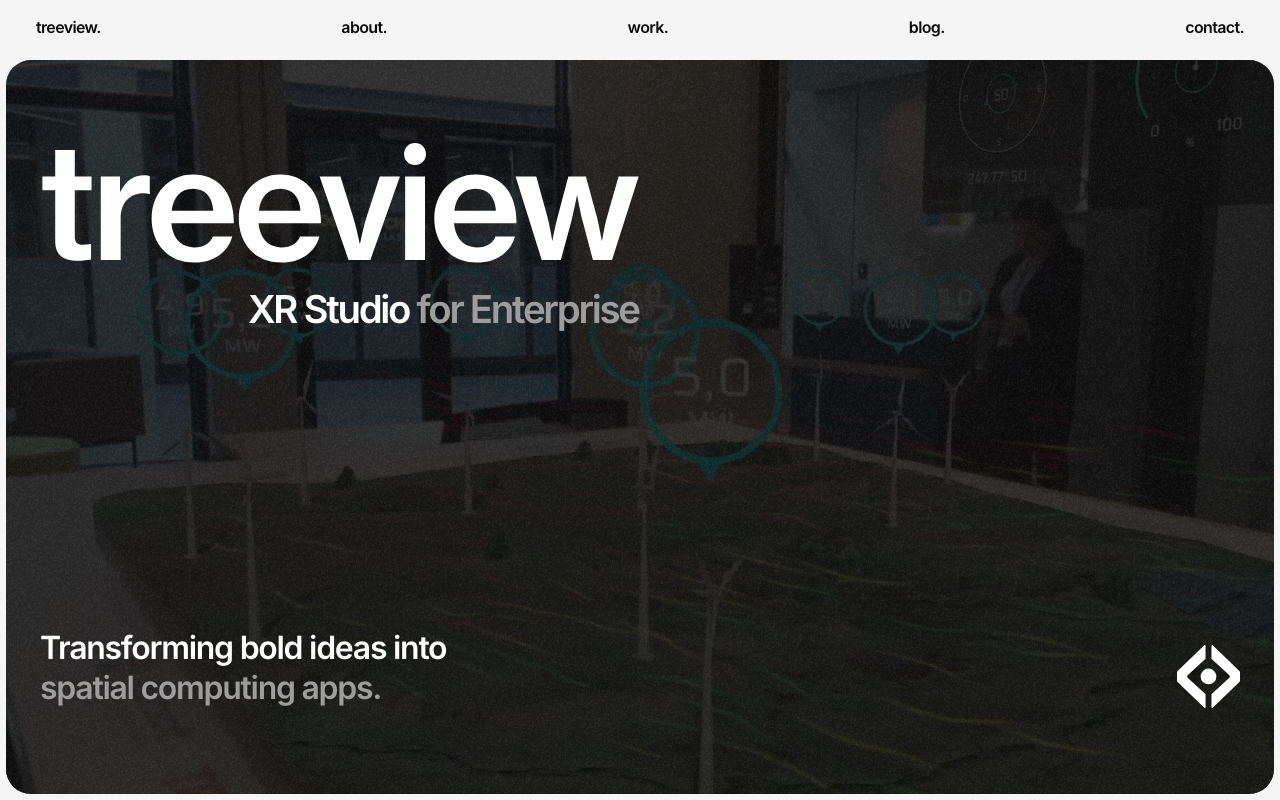
Treeview is an independent XR and spatial computing studio founded in 2016, with offices in New York City, and a senior-only team. For museums and heritage clients it builds fully custom AR experiences end to end, from strategy and discovery through 3D content creation, software engineering, and ongoing support. Unlike templated platforms, Treeview tailors every interaction to the collection, the gallery, and the curatorial narrative, and clients retain full ownership of the resulting IP.
Key Strengths:
- End-to-end custom builds spanning mobile and headset AR for cultural spaces
- Senior-only team with full IP ownership and long-term partnership model
- Bespoke 3D content tailored to specific artifacts and exhibition narratives
2. Cuseum
Cuseum is a Boston-based platform purpose-built for the cultural sector, helping museums create AR guides and digital engagement tools without heavy development. Its work spans institutions such as the Perez Art Museum Miami and MAK Vienna. The platform focuses on accessible, app-based experiences that let teams publish AR content quickly and update it over time. It is a strong choice for museums prioritizing speed and standard interpretation use cases.

Key Strengths:
- Museum-specific platform with a proven cultural client base
- Fast publishing of AR guides without custom engineering
- Tools for ongoing content updates and visitor engagement
3. Smartify
Smartify, based in London, runs a widely adopted cultural platform used by institutions including the National Gallery London and the Smithsonian. It combines artwork recognition, audio guides, and AR overlays to scale interpretation across large collections. The platform model lets institutions reach broad audiences on visitors' own devices. Smartify suits museums that want a trusted, scalable guide experience rather than a one-off custom build.

Key Strengths:
- Scaled deployment across major national and global institutions
- Artwork recognition combined with AR overlays and audio guides
- Reaches large audiences through visitor-owned smartphones
4. GuidiGO
GuidiGO, operating across the USA and France, builds interactive AR tours and storytelling experiences for cultural institutions, with work including the Detroit Institute of Arts. The platform blends guided narratives with AR elements to make self-directed visits more immersive. It emphasizes story-led design that connects objects into coherent journeys. GuidiGO is a good fit for museums that want narrative-driven tours layered with AR.

Key Strengths:
- Story-led interactive tour design for cultural visitors
- Track record with established art institutions
- Blends guided narrative with AR interaction
5. Nexus Studios
Nexus Studios, headquartered in London, is a creative studio known for premium AR and spatial storytelling across brand, entertainment, and cultural projects. Its strength lies in high-production-value experiences that pair narrative craft with technical execution. For cultural institutions seeking a signature, design-forward AR moment, Nexus brings the polish of a top creative shop. It tends to suit flagship projects rather than routine guide apps.

Key Strengths:
- High production value in AR and spatial storytelling
- Strong creative direction and narrative craft
- Well suited to flagship, design-forward cultural experiences
6. ThingLink
ThingLink, based in Finland, provides an authoring platform for interactive AR, 360, and media-rich content that educators and cultural teams can build without coding. Museums use it to create layered, taggable scenes and accessible learning materials. Its self-serve model and education focus make it approachable for smaller teams and outreach programs. ThingLink suits institutions prioritizing accessible, in-house content creation.

Key Strengths:
- No-code authoring for AR, 360, and interactive media
- Accessibility and education-friendly tooling
- Approachable for in-house cultural and outreach teams
7. Antaeus AR / Livdeo
Antaeus AR, part of Livdeo in France, offers a platform that combines augmented reality with a strong emphasis on accessibility for cultural venues. Its tooling is designed to make exhibits and information more inclusive for diverse audiences, including visitors with disabilities. The platform approach lets institutions layer AR content onto existing collections while addressing accessibility requirements. It is a fitting option where inclusive design is a priority.

Key Strengths:
- AR delivery paired with a focus on accessibility
- Inclusive design tooling for diverse cultural audiences
- Platform model that layers onto existing collections
8. Halo AR
Halo AR is a USA-based self-serve platform that lets museum and cultural teams create AR experiences without development resources. It targets institutions that want to experiment with AR overlays and interactive content on a manageable budget. The drag-and-build approach lowers the barrier to entry for smaller museums and one-off campaigns. Halo AR suits teams testing AR or running lightweight projects in-house.

Key Strengths:
- Self-serve creation with no development overhead
- Low barrier to entry for smaller institutions
- Good fit for pilots and lightweight AR campaigns
9. Zumoko
Zumoko, based in Germany, develops AR experiences including headset-based guides for cultural and exhibition settings. Its capabilities extend to HoloLens and mixed reality, suiting institutions that want premium, hands-free guided experiences. The studio focuses on spatial AR where headset hardware adds value over phone-based delivery. Zumoko is a consideration for museums exploring guided headset tours and immersive installations.

Key Strengths:
- Headset and mixed reality AR capability
- Hands-free guided experiences for galleries
- Focus on spatial AR installations
Frequently Asked Questions
What does an AR company do for a museum?
AR companies build mobile and headset experiences that overlay digital information, animations, and reconstructions onto physical artifacts and gallery spaces. This can include companion guide apps, interactive exhibits, and self-guided tours that deepen visitor engagement without altering the objects themselves.
Should a museum use an AR platform or a custom AR studio?
Platforms like Cuseum, Smartify, and ThingLink offer faster, lower-cost AR for standard guide and overlay use cases. A custom studio is the better fit when an institution needs bespoke 3D content, signature interactions, or a flagship exhibit that off-the-shelf tools cannot deliver.
How much does a museum AR experience cost?
Self-serve platform subscriptions can start in the low thousands per year, while custom AR exhibit builds typically range from tens of thousands to six figures depending on 3D content volume, interactivity, and the number of artifacts covered.
Do visitors need special hardware for museum AR?
Most museum AR runs on visitors' own smartphones or tablets through a downloadable app or web experience. Some institutions also deploy loaner devices or headset-based tours such as HoloLens guides for premium or group experiences.
Choosing the right AR partner comes down to matching ambition with budget and in-house capacity. Explore more arts and culture XR companies and detailed listings across Reality Atlas to shortlist the best fit for your institution.
Related Guides
Frequently Asked Questions
What does an AR company do for a museum?
AR companies build mobile and headset experiences that overlay digital information, animations, and reconstructions onto physical artifacts and gallery spaces. This can include companion guide apps, interactive exhibits, and self-guided tours that deepen visitor engagement without altering the objects themselves.
Should a museum use an AR platform or a custom AR studio?
Platforms like Cuseum, Smartify, and ThingLink offer faster, lower-cost AR for standard guide and overlay use cases. A custom studio is the better fit when an institution needs bespoke 3D content, signature interactions, or a flagship exhibit that off-the-shelf tools cannot deliver.
How much does a museum AR experience cost?
Self-serve platform subscriptions can start in the low thousands per year, while custom AR exhibit builds typically range from tens of thousands to six figures depending on 3D content volume, interactivity, and the number of artifacts covered.
Do visitors need special hardware for museum AR?
Most museum AR runs on visitors' own smartphones or tablets through a downloadable app or web experience. Some institutions also deploy loaner devices or headset-based tours such as HoloLens guides for premium or group experiences.